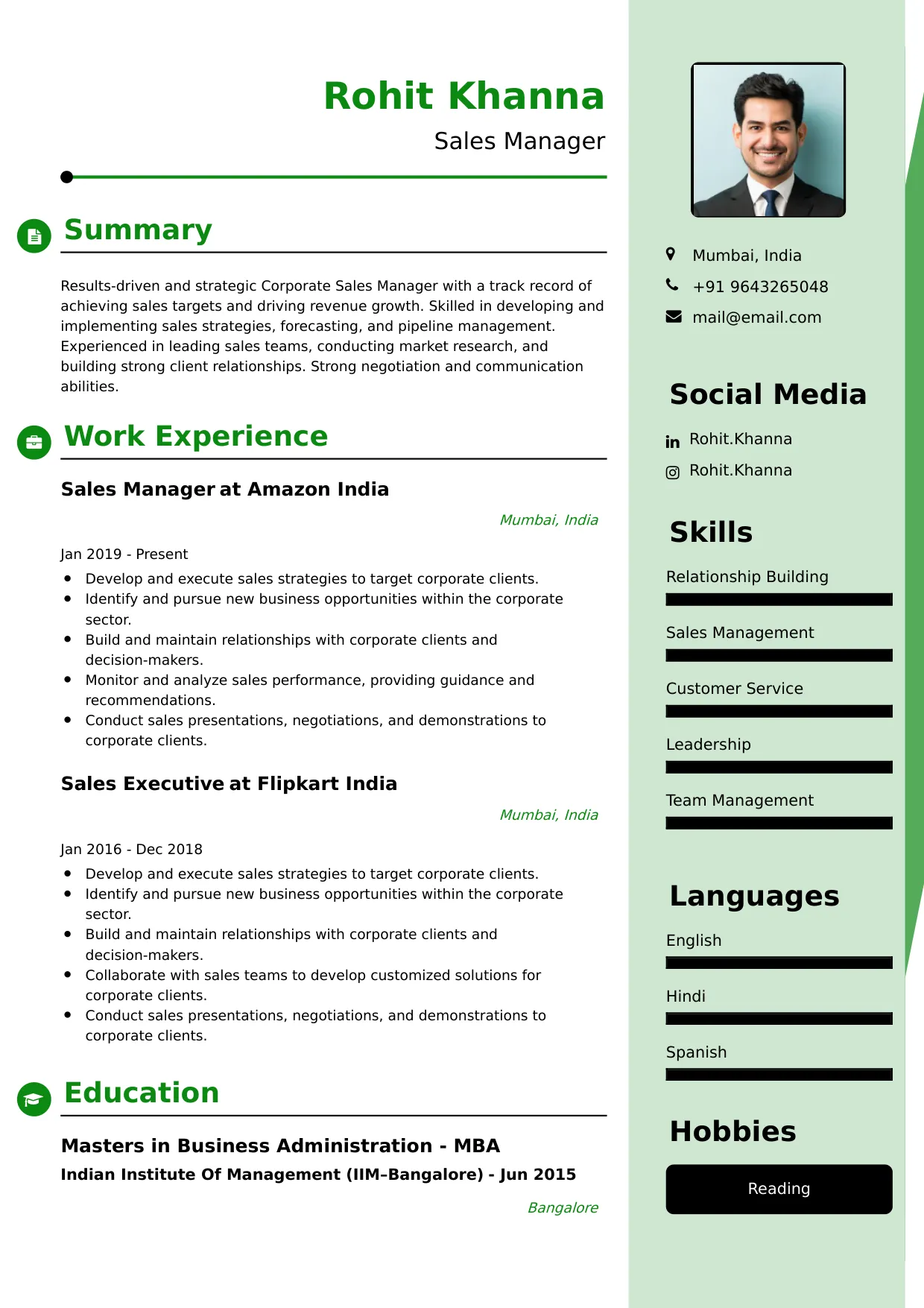
Gifted and Talented Teacher
Welcome to our Gifted and Talented (G/T) Teacher resume sample page! This expertly crafted resume template is designed to showcase your expertise in developing and delivering specialized, differentiated curriculum, implementing acceleration and enrichment strategies, and identifying/assessing high-ability students. Whether you're an ascending educator or a seasoned specialist, this sample highlights key skills like curriculum compacting, asynchronous learning, cognitive assessment interpretation, differentiation for 2e (twice-exceptional) students, and program advocacy tailored to meet top school districts’ demands. Use this guide to create a compelling resume that stands out and secures your next career opportunity.
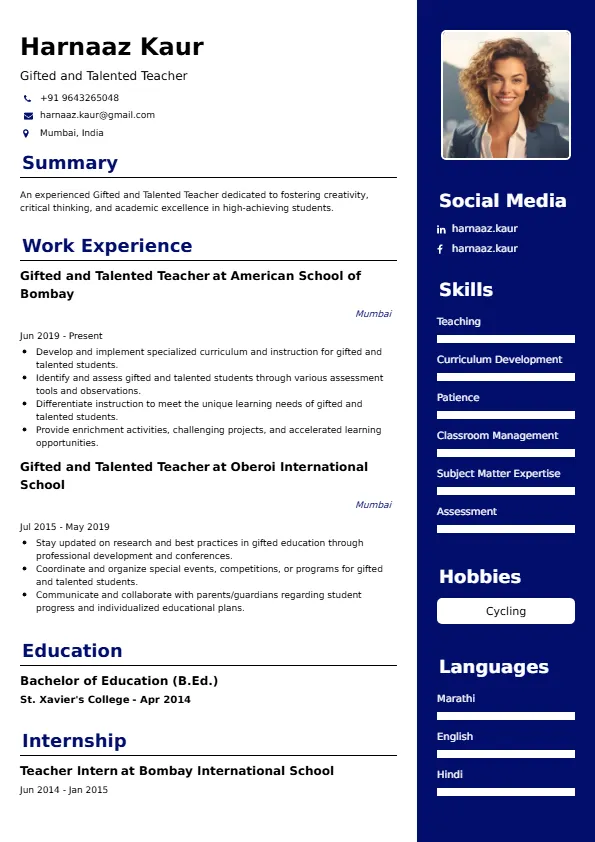
Superbresume.com empowers G/T Teachers to craft resumes that highlight their specialized curriculum development and cognitive differentiation expertise. Our platform offers customizable templates tailored for specialty education roles, emphasizing skills like program design/evaluation, cluster grouping strategies, mentoring, and consultation with general education teachers. With ATS-optimized formats, expert-written content suggestions, and real-time resume analysis, we ensure your resume aligns with job descriptions. Showcase your experience in significantly increasing G/T student identification, leading curriculum enrichment projects, or demonstrating measurable achievement gains in high-ability learners with confidence. Superbresume.com helps you create a polished, results-driven resume that grabs hiring managers’ attention and lands interviews.
How to Write a Resume for a Gifted and Talented Teacher
Craft a Targeted Summary: Write a 2-3 sentence summary highlighting your active teaching certification/endorsement (G/T), expertise in specialized curriculum development and differentiation, and success in identifying and maximizing the potential of diverse high-ability students.
Use Reverse-Chronological Format: List recent G/T specialist, resource, or teaching roles first, focusing on measurable student identification, curriculum design, and acceleration achievements.
Highlight Certifications/Endorsements: Include credentials like G/T Endorsement/Certification (State-specific), Master’s Degree in Gifted Education, or specialized training in G/T assessment (e.g., cognitive ability tests) to boost credibility.
Quantify Achievements: Use metrics, e.g., “Increased G/T student identification by 30% through implementing culturally sensitive, non-traditional screening protocols,” or “Developed 10 project-based learning (PBL) units that resulted in 1.5 years of academic acceleration for 90% of G/T students,” to show impact.
Incorporate Keywords: Use terms like “Gifted Education,” “Curriculum Differentiation (Tiering/Compacting),” “Acceleration Strategies (Vertical/Horizontal),” “2e (Twice-Exceptional) Students,” “Cognitive Assessment Interpretation,” “Program Evaluation,” or “Project-Based Learning (PBL)” from job descriptions for ATS.
Detail Instructional/Consulting Skills: List expertise in curriculum models (e.g., Renzulli, Kaplan), talent development methods, general education teacher consultation, parent communication, and formal assessment interpretation in a dedicated skills section.
Showcase Program Initiatives: Highlight 3-4 key curriculum or identification initiatives (e.g., implementing a science mentorship program, redesigning the identification matrix), detailing the methodology and the measured student/program outcome.
Emphasize Soft Skills: Include creativity, critical thinking, advocacy (for G/T students), strong communication (with parents/teachers), and deep understanding of cognitive/social-emotional needs of gifted learners.
Keep It Concise: Limit your resume to 1-2 pages, focusing on relevant specialized teaching, curriculum design, and program advocacy experience.
Proofread Thoroughly: Eliminate typos or jargon for a professional document.
Identification Equity and Diversity: Focus on implementing screening and identification protocols that actively reduce bias and increase the representation of diverse and traditionally underserved populations in G/T programs.
Differentiation for Twice-Exceptional (2e) Students: Highlight specific experience supporting G/T students who also have learning disabilities or behavioral/emotional challenges, utilizing specialized strategies (e.g., executive function support).
Social-Emotional Needs of the Gifted: Showcase expertise in addressing the unique social-emotional needs of gifted learners, including perfectionism, asynchronous development, and imposter syndrome.
Curriculum Compacting and Acceleration: Detail successful use of curriculum compacting, grade skipping, or single-subject acceleration to provide a rigorous, individualized pace for advanced learners.
Consultation and Co-Teaching: Emphasize strong collaborative skills, providing ongoing consultation and professional development to general education teachers on differentiation techniques.
Metrics-Driven Achievements: Use results like “Increased the percentage of identified low-income G/T students by 10 points” or “Received a 95% satisfaction rate from parents regarding program communication and advocacy.”
Technology for Enrichment: Include experience utilizing advanced EdTech tools, coding platforms, or virtual resources to provide sophisticated enrichment opportunities beyond the general curriculum.
Program Evaluation and Stakeholder Reporting: Highlight experience collecting and reporting quantitative and qualitative data to the school board, state regulators, and parent groups to advocate for continued program funding.
20 Key Skills for a Gifted and Talented Teacher Resume
| Gifted Education Curriculum Design (Rigor/Depth) | Curriculum Differentiation (Compacting, Tiering) |
| Acceleration Strategies (Subject/Grade Skip) | Cognitive Assessment Interpretation (e.g., CogAT, WISC) |
| Twice-Exceptional (2e) Student Support | Consultation & Collaboration (General Education) |
| Project-Based Learning (PBL) Design | Social-Emotional Needs of the Gifted |
| G/T Student Identification & Screening | Program Evaluation & Data Reporting |
| Creative Thinking & Problem-Solving Instruction | Parent Advocacy & Communication |
| Mentoring & Talent Development | LMS/EdTech for Enrichment |
| Aynchronous Learning Models | Curriculum Content Mastery (Specialty Subject) |
| Instructional Adaptability | Equity & Access in Identification |
10 Do’s for a Gifted and Talented Teacher Resume
Tailor Your Resume: Customize for the specific grade level (K-12) and the program model (e.g., pull-out, resource room, cluster grouping).
Highlight Certifications/Endorsements: List G/T Endorsement/Certification and relevant advanced degrees prominently.
Quantify Achievements: Include metrics on student identification rate increase, measured acceleration gains, or student participation in advanced programming.
Use Action Verbs: Start bullet points with verbs like “differentiated,” “designed,” “accelerated,” “identified,” or “mentored.”
Showcase Curriculum Strategies: Detail specific, advanced curriculum models or enrichment projects that provided rigor and depth for G/T students.
Include Soft Skills: Highlight creativity, critical thinking, strong communication (with all stakeholders), and advocacy for the gifted population.
Optimize for ATS: Use standard education section titles and incorporate key G/T specific terms.
Keep It Professional: Use a clean, consistent font and academic layout.
Emphasize Differentiation: Clearly articulate expertise in adjusting content, process, product, and environment for high-ability learners.
Proofread Carefully: Ensure no typos or errors in curriculum or assessment details.
10 Don’ts for a Gifted and Talented Teacher Resume
Don’t Overload with Jargon: Avoid confusing, internal school or district acronyms; use standardized G/T and education terminology.
Don’t Exceed Two Pages: Keep your resume concise, focusing on high-impact specialized teaching and program advocacy.
Don’t Omit Dates: Include full dates for education, licensure, and employment for context.
Don’t Use Generic Templates: Tailor your resume specifically to the specialized instruction and unique needs of G/T students.
Don’t List Irrelevant Skills: Focus on differentiation, acceleration, assessment, and G/T program management.
Don’t Skip Metrics: Quantify results wherever possible; link achievements to identification rates, student growth, or program effectiveness.
Don’t Use Complex Formats: Avoid highly stylized elements or confusing graphics.
Don’t Ignore Social-Emotional Needs: Include examples of supporting the unique affective needs of gifted learners.
Don’t Include Outdated Experience: Omit non-teaching or non-specialized jobs over 15 years old.
Don’t Forget to Update: Refresh for new program evaluation results, successful identification protocol implementations, or advanced curriculum development projects.
5 FAQs for a Gifted and Talented Teacher Resume
Prioritize G/T endorsement, curriculum differentiation (compacting/tiering), acceleration strategies, cognitive assessment interpretation, and program advocacy.
Use standard education section titles, avoid graphics, and include keywords like “2e,” “Curriculum Compacting,” and “PBL.”
Yes, quantifying the increase in identified G/T students, especially from underrepresented groups, is a powerful metric.
Detail the specific strategies used (e.g., Renzulli model, curriculum compacting) and the positive impact on student engagement and academic acceleration.
Use a reverse-chronological format to emphasize your most recent, high-impact specialized teaching and program leadership achievements.
Get 5x more interviews with our crafted Resumes. We make resumes that land jobs.

Get a Free Customized Cover Letter with Resume Expert Advice
with every resume order placed, you will get a free Customized Cover letter.