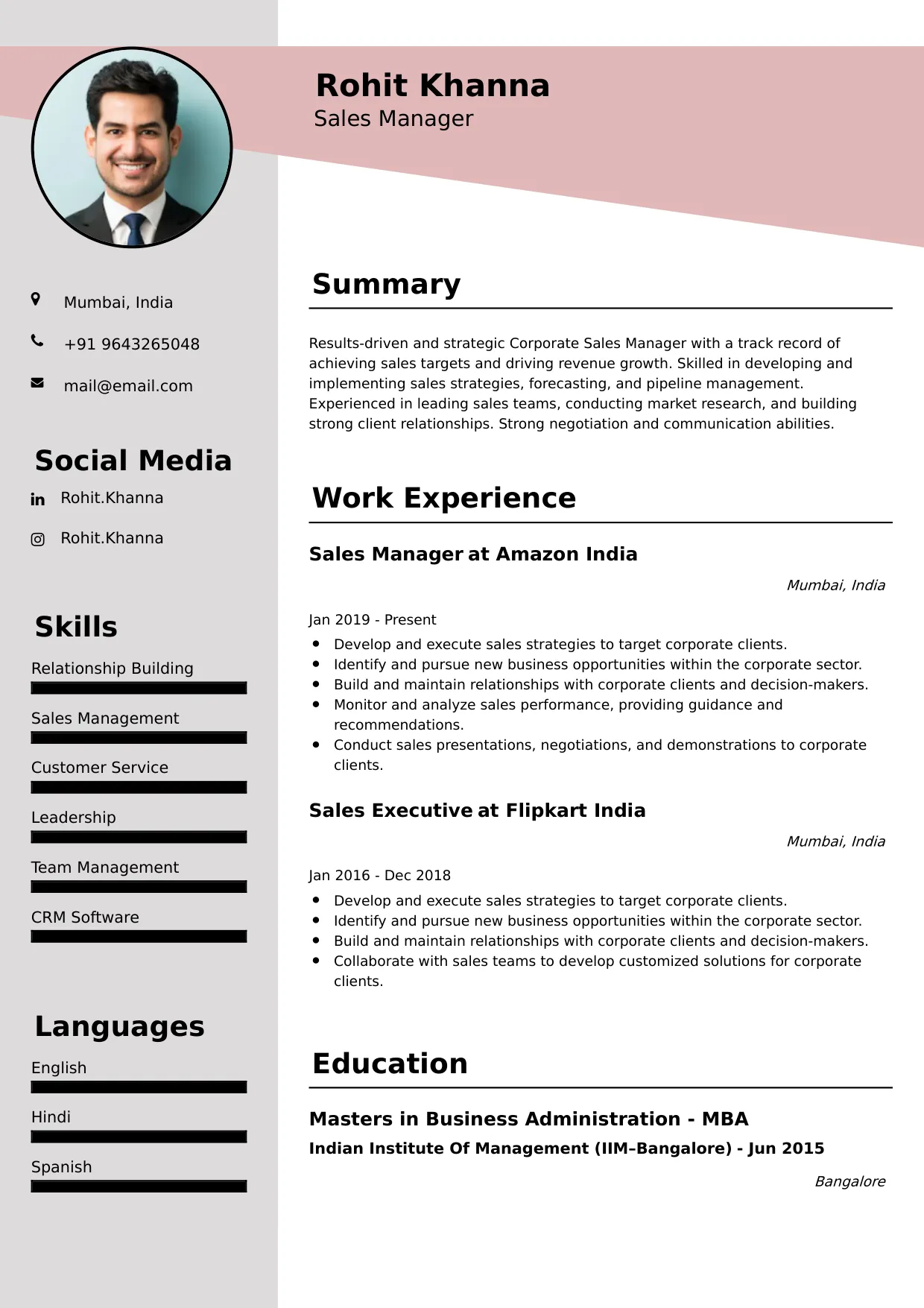
Educational Content Developer
Welcome to our Educational Content Developer resume sample page! This expertly crafted resume template is designed to showcase your expertise in designing, developing, and producing engaging digital and multimedia instructional assets, training modules, and e-learning courses. Whether you're an instructional designer or a media specialist, this sample highlights key skills like Articulate Storyline/Rise, video production, adult learning theory, and Learning Management System (LMS) integration tailored to meet top EdTech, corporate L&D, or higher education demands. Use this guide to create a compelling resume that stands out and secures your next career opportunity.
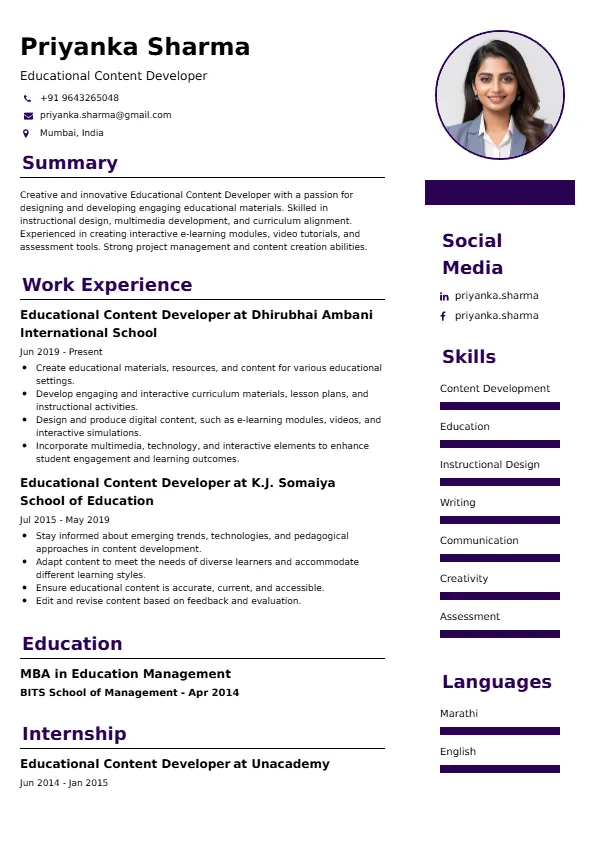
Superbresume.com empowers Educational Content Developers to craft resumes that highlight their multimedia creation and instructional design expertise. Our platform offers customizable templates tailored for e-learning and development roles, emphasizing skills like SCORM/xAPI packaging, graphic design, interactive simulation creation, and rapid prototyping. With ATS-optimized formats, expert-written content suggestions, and real-time resume analysis, we ensure your resume aligns with job descriptions. Showcase your experience in converting static content into dynamic e-learning, improving course completion rates, or developing high-quality video training series with confidence. Superbresume.com helps you create a polished, results-driven resume that grabs hiring managers’ attention and lands interviews.
How to Write a Resume for an Educational Content Developer
Use Reverse-Chronological Format: List recent instructional design, e-learning development, or multimedia creation roles first, focusing on production and delivery.
Highlight Certifications/Portfolio: Include credentials like Certified Professional in Training and Development (CPTD), Articulate Storyline Certification, or relevant degrees (M.S./M.A. in ID) and feature a digital portfolio link to boost credibility.
Quantify Achievements: Use metrics, e.g., “Developed 15 e-learning modules that increased knowledge retention by 30%,” or “Reduced external training costs by $50K annually by creating high-fidelity internal video courses,” to show impact.
Incorporate Keywords: Use terms like “Instructional Design (ID),” “Articulate Storyline/Rise,” “E-learning Development,” “LMS Integration (SCORM/xAPI),” “Video Production,” “Adult Learning Theory,” or “Rapid Prototyping” from job descriptions for ATS.
Detail Technical Skills: List proficiency with specific authoring tools, video/audio editing software (e.g., Adobe Premiere, Audition), graphic design tools (e.g., Photoshop), and coding knowledge (HTML/CSS for customization) in a dedicated skills section.
Showcase Development Projects: Highlight 3-4 key e-learning courses or training assets developed, detailing the target audience, the instructional model used (ADDIE/SAM), and the measured learning/performance result.
Emphasize Soft Skills: Include creativity, project management (managing content deadlines), attention to detail (quality assurance), and collaboration (with SMEs and stakeholders).
Keep It Concise: Limit your resume to 1-2 pages, focusing on relevant instructional design, development, and multimedia production experience.
Proofread Thoroughly: Eliminate typos or jargon for a professional document.
Microlearning and Just-in-Time Content: Highlight experience designing short, focused learning modules (microlearning) and delivering them via mobile or performance support systems.
Gamification and Immersive Learning: Showcase experience implementing gamified elements, scenario-based branching, or developing content for VR/AR training environments.
Data Standards (SCORM/xAPI): Detail technical proficiency in packaging courses using SCORM and, increasingly, xAPI (Tin Can API) for advanced tracking of learner activity beyond the LMS.
Video Content Strategy and Production: Emphasize end-to-end video development skills, from scriptwriting and storyboarding to shooting, editing, and deployment for instructional purposes.
Metrics-Driven Achievements: Use results like “Increased course completion rate by 20% by restructuring content into microlearning modules” or “Received a 4.8/5.0 average satisfaction rating across 10 developed courses.”
Accessibility (Section 508/WCAG): Include experience ensuring all e-learning content, videos, and interactions meet digital accessibility standards.
Agile Instructional Design (SAM): Highlight using rapid development models (like the Successive Approximation Model - SAM) to quickly iterate and deploy content in agile environments.
Choose Superbresume.com to craft an Educational Content Developer resume that stands out in the competitive L&D and EdTech sectors. Our platform offers tailored templates optimized for ATS, ensuring your skills in multimedia development, authoring tools, and instructional design principles shine. With expert guidance, pre-written content, and real-time feedback, we help you highlight achievements like increasing knowledge retention or reducing training costs. Whether you develop corporate compliance courses or academic e-modules, our tools make it easy to create a polished, results-driven resume. Trust Superbresume.com to showcase your expertise in maximizing learning effectiveness through engaging digital content. Start building your career today!
20 Key Skills for an Educational Content Developer Resume
| E-learning Authoring (Articulate Storyline/Rise) | Instructional Design (ADDIE/SAM) |
| LMS Integration (SCORM/xAPI) | Video Production & Editing (Adobe Premiere) |
| Adult Learning Theory (Andragogy) | Gamification & Interactive Design |
| Curriculum Development & Mapping | Graphics & Media Editing (Photoshop) |
| Rapid Prototyping | Needs Assessment (Kirkpatrick Model) |
| Assessment & Evaluation Design | Accessibility Compliance (WCAG) |
| HTML/CSS (Basic) | Subject Matter Expert (SME) Interviewing |
| Project Management (Content Timeline) | Microlearning Design |
| Scriptwriting & Storyboarding | Quality Assurance (QA) Testing |
| Communication (with Stakeholders) | Technical Troubleshooting (LMS Issues) |
10 Do’s for an Educational Content Developer Resume
Tailor Your Resume: Customize it for the sector (corporate training, academic e-course development) and the primary tools used for course creation.
Highlight Certifications/Portfolio: List CPTD, specialized tool certifications, and include a link to your e-learning development portfolio.
Quantify Achievements: Include metrics such as knowledge retention improvement, course completion rates, cost savings, or the volume and complexity of content developed.
Use Action Verbs: Begin statements with verbs like developed, designed, produced, integrated, or converted.
Showcase Development Projects: Describe the content created (e.g., interactive simulations, 30-minute compliance courses), the tools used, and measurable outcomes achieved.
Include Soft Skills: Emphasize creativity, project management rigor, attention to detail, and effective collaboration with SMEs.
Optimize for ATS: Use standard section titles and incorporate key instructional design models and software terminology.
Keep It Professional: Maintain a clean layout, consistent font, and polished formatting.
Emphasize ID Process: Clearly explain how you apply instructional design models (ADDIE, SAM) to ensure content effectiveness.
Proofread Carefully: Ensure all technical and instructional terms are accurate and free of errors.
10 Don’ts for an Educational Content Developer Resume
Don’t Overload with Jargon: Avoid confusing internal company acronyms; use standardized instructional design and media development terminology.
Don’t Exceed Two Pages: Keep your resume concise, focusing on relevant content development and instructional design achievements.
Don’t Omit Dates: Include employment dates to provide clear career context.
Don’t Use Generic Templates: Tailor your resume specifically to the multimedia and instructional design responsibilities of a Content Developer.
Don’t List Irrelevant Skills: Focus on authoring tools, media production, instructional design theory, and LMS integration.
Don’t Skip Metrics: Quantify results wherever possible, linking content development to learning outcomes or efficiency gains.
Don’t Use Complex Formats: Avoid highly stylized layouts or graphics that distract from your achievements.
Don’t Ignore Technology: Clearly indicate proficiency with all software tools used for content creation and integration (e.g., Articulate, Premiere, SCORM).
Don’t Include Outdated Experience: Omit low-level administrative or non-instructional design roles over 15 years old.
Don’t Forget to Update: Regularly refresh your resume to reflect mastery of new tools, successful course launches, and positive program evaluation data.
5 FAQs for an Educational Content Developer Resume
Prioritize Articulate Storyline/Rise proficiency, instructional design methodology, SCORM/xAPI integration, and multimedia production skills (video and graphics).
Use standard section titles, avoid graphics, and include keywords like “LMS Integration,” “Adult Learning Theory,” and “Gamification.”
Yes—a link to a digital portfolio showcasing your e-learning modules, videos, and design documents is highly valuable and often expected by employers.
Include the initial completion rate, describe the instructional design intervention you implemented (such as microlearning), and provide the resulting quantified improvement in completion or engagement.
Use a reverse-chronological format to emphasize your most recent, high-impact e-learning development and instructional design achievements.
Get 5x more interviews with our crafted Resumes. We make resumes that land jobs.

Get a Free Customized Cover Letter with Resume Expert Advice
with every resume order placed, you will get a free Customized Cover letter.