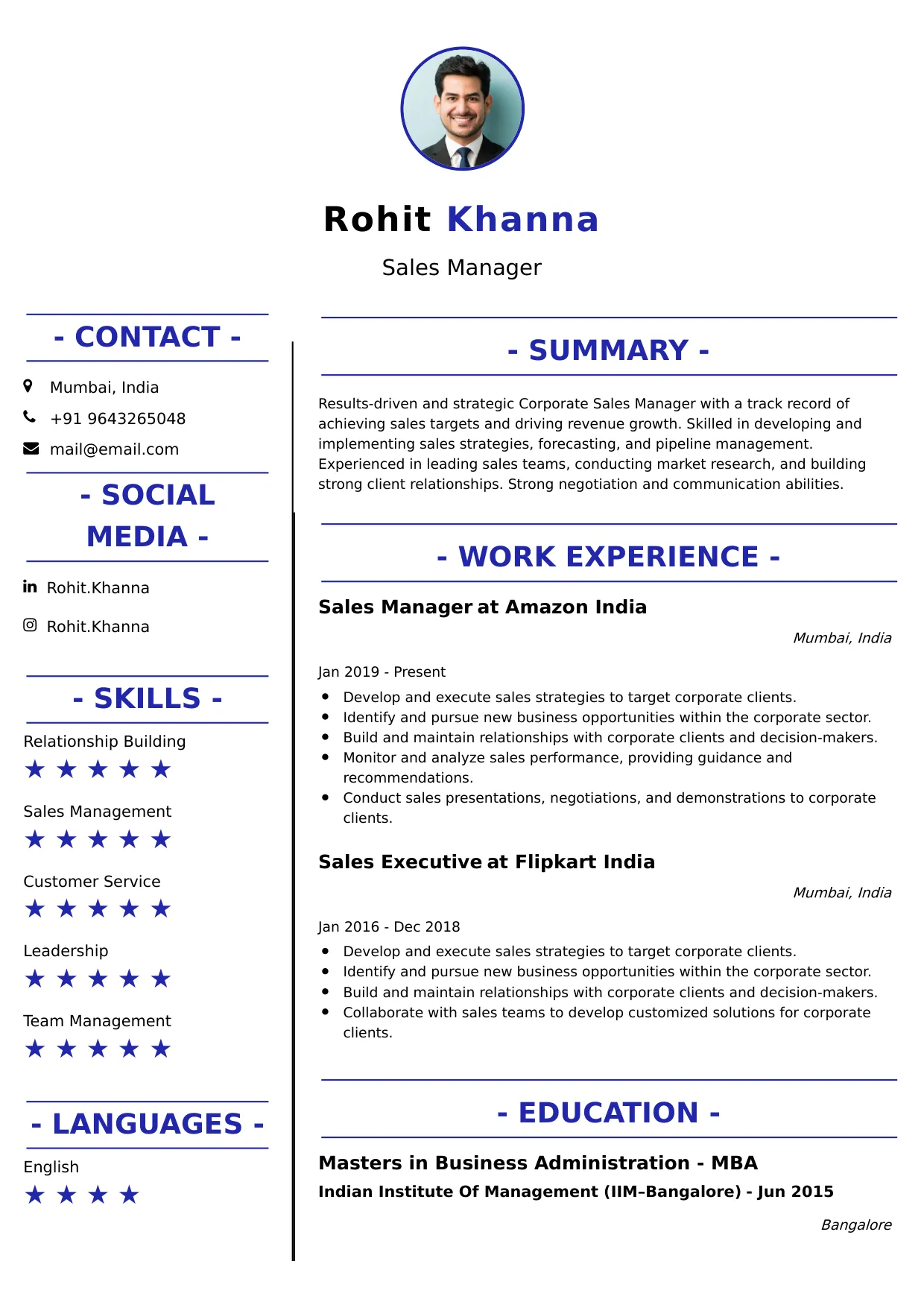
Media Planner
Welcome to our Media Planner resume sample page! This expertly crafted resume template is designed to showcase your expertise in researching target audiences, developing comprehensive media strategies (digital, social, traditional), selecting optimal channels, and creating media flowcharts to meet campaign reach and branding goals. Whether you work for a brand or an agency, this sample highlights key skills like Audience Research, Media Mix Optimization, Planning Software (e.g., Nielsen/Comscore/MRI), Budget Allocation, and Strategic Recommendation tailored to meet top advertising and media demands. Use this guide to create a compelling resume that stands out and secures your next career opportunity.
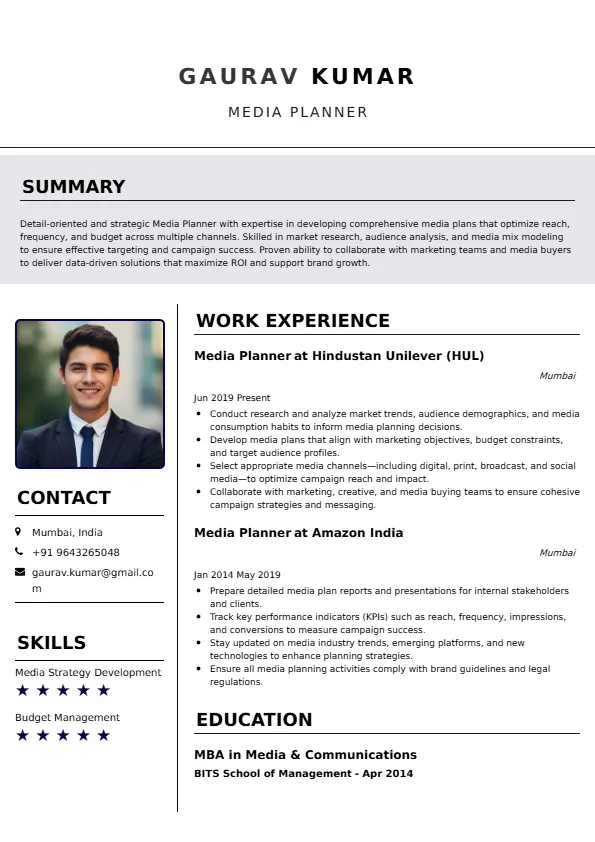
Superbresume.com empowers Media Planners to craft resumes that highlight their strategic audience targeting and effective budget allocation expertise. Our platform offers customizable templates tailored for media roles, emphasizing skills like demographic analysis, reach/frequency optimization, cross-channel integration, and presentation of strategic plans to clients. With ATS-optimized formats, expert-written content suggestions, and real-time resume analysis, we ensure your resume aligns with job descriptions. Showcase your experience in developing multi-million dollar media plans, identifying key untapped audience segments, or providing strategic recommendations that significantly boosted campaign effectiveness with confidence. Superbresume.com helps you create a polished, results-driven resume that grabs hiring managers’ attention and lands interviews.
How to Write a Resume for a Media Planner
Craft a Targeted Summary: Write a 2-3 sentence summary highlighting your expertise in full-cycle media planning, proficiency in audience research and budget allocation across digital/traditional channels, and success in developing strategic plans that achieve measurable reach and awareness goals.
Use Reverse-Chronological Format: List recent media planning, media strategy, or marketing research roles first, focusing on measurable planning achievements and strategic impact.
Highlight Certifications/Training: Include credentials like Google Analytics Certified, specialized media planning software training (e.g., Nielsen/Comscore), or relevant digital marketing/communication degrees to boost credibility.
Quantify Achievements: Use metrics, e.g., “Developed annual media plans (digital/TV/Print) with a total budget of $15M, delivering 20% higher target reach than industry benchmarks,” or “Identified a new, high-value audience segment using MRI data, leading to a 10% more efficient media mix,” to show impact.
Incorporate Keywords: Use terms like “Media Mix Strategy,” “Audience Research (Nielsen/Comscore/MRI),” “Budget Allocation,” “Media Flowchart Development,” “Reach & Frequency,” “Digital/Traditional Planning,” “Strategic Recommendation,” or “Media Planning Software” from job descriptions for ATS.
Detail Strategy/Technical Skills: List proficiency with specific planning tools (Nielsen, Comscore), data analysis (Excel), presentation software, demographic/psychographic analysis, and media math (CPM, GRP, CPP) in a dedicated skills section.
Showcase Planning Success: Highlight 3-4 key planning projects or recommendations (e.g., launching a targeted Gen Z campaign, optimizing TV/OTT balance, justifying budget reallocation), detailing the audience, the strategic insight, and the measured success (reach, awareness, efficiency).
Emphasize Soft Skills: Include strategic thinking, analytical rigor, strong presentation skills (selling the plan), communication (client/buyer liaison), and creative problem-solving.
Keep It Concise: Limit your resume to 1-2 pages, focusing on relevant media strategy, planning, and analytical experience.
Proofread Thoroughly: Eliminate typos or jargon for a professional document.
Cross-Channel Integration (Digital/Traditional/OTT): Focus on expertise designing holistic media mixes that strategically integrate emerging channels (e.g., Connected TV/OTT, TikTok) with traditional channels (Linear TV, OOH) for maximum synergistic impact.
Data-Driven Audience Segmentation: Highlight advanced skills utilizing first-party data and third-party tools (DMPs) to define highly specific, high-value audience segments for targeted media placement.
Programmatic Strategy Oversight: Showcase experience directing media buyers on programmatic strategies, ensuring bidding, audience segments, and brand safety align with the strategic media plan.
Effectiveness Measurement and Reporting: Detail expertise defining key performance indicators (KPIs) for media campaigns (e.g., Brand Lift, Ad Recall) and collaborating with analytics teams to measure post-campaign effectiveness.
Budget Scenario Modeling: Emphasize skills in building complex planning models that simulate multiple budget levels, risk scenarios, and media channel shifts to maximize ROI/reach under different constraints.
Metrics-Driven Achievements: Use results like “Successfully reallocated a $2M budget, resulting in a 15% increase in media efficiency (e.g., lower CPM/CPP)” or “Developed a media mix that boosted brand awareness in the target demographic by 10 points.”
Privacy and Measurement Challenges: Include knowledge of the challenges presented by data privacy regulations (GDPR, CCPA) and the shift away from third-party cookies on media measurement.
Client Presentation and Strategy Rationale: Highlight strong communication skills in presenting complex media plans and providing clear, compelling strategic rationale to senior clients and internal stakeholders.
Choose Superbresume.com to craft a Media Planner resume that stands out in the competitive advertising strategy sector. Our platform offers tailored templates optimized for ATS, ensuring your skills in audience research, media mix strategy, and budget allocation shine. With expert guidance, pre-written content, and real-time feedback, we help you highlight achievements like boosting campaign reach or improving media efficiency. Whether you plan for digital or traditional channels, our tools make it easy to create a polished, results-driven resume. Trust Superbresume.com to showcase your expertise in translating marketing goals into effective, strategic media placements. Start building your career today!
20 Key Skills for a Media Planner Resume
| Media Mix Strategy & Allocation | Audience Research & Targeting (Demographics/Psychographics) |
| Media Planning Software (Nielsen, Comscore, MRI) | Reach & Frequency Optimization |
| Budget Forecasting & Allocation | Cross-Channel Integration (Digital, TV, Print) |
| Media Math (CPM, GRP, CPP) | Strategic Recommendation & Rationale |
| Presentation Skills (Client/Executive) | Digital/Programmatic Strategy (Oversight) |
| Data Analysis (Excel Modeling) | Competitive Media Spend Analysis |
| Post-Campaign Effectiveness Measurement | Vendor/Publisher Relations |
10 Do’s for a Media Planner Resume
Tailor Your Resume: Customize for the specific media focus (e.g., emphasize digital/programmatic planning, emphasize traditional TV/Radio planning).
Highlight Certifications/Training: List relevant media planning software or data analysis certifications prominently.
Quantify Achievements: Include metrics on budget size planned (dollar amount), efficiency gains (lower CPM/CPP), reach/frequency achieved, or impact on brand awareness/sales.
Use Action Verbs: Start bullet points with verbs like “planned,” “strategized,” “allocated,” “researched,” or “optimized.”
Showcase Strategic Plans: Detail the methodology and the strategic, quantified reach/efficiency result of 3-4 key media plans.
Include Soft Skills: Highlight strategic thinking, analytical rigor, strong presentation skills, and attention to detail (budget).
Optimize for ATS: Use standard marketing section titles and incorporate key planning, research, and metric terms.
Keep It Professional: Use a clean, consistent font and professional layout.
Emphasize Audience and Strategy: Clearly articulate expertise in using research to define who to reach and where to reach them most effectively.
Proofread Thoroughly: Eliminate typos or jargon for a professional document.
10 Don’ts for a Media Planner Resume
Don’t Overload with Jargon: Avoid confusing, internal agency or niche media acronyms; use standardized planning and research terminology.
Don’t Exceed Two Pages: Keep your resume concise, focusing on high-impact media planning and strategic achievements.
Don’t Omit Dates: Include employment dates for career context.
Don’t Use Generic Templates: Tailor your resume specifically to the strategic, analytical duties of a Media Planner.
Don’t List Irrelevant Skills: Focus on audience research, media mix, budgeting, and strategic recommendations.
Don’t Skip Metrics: Quantify results wherever possible; budget size, reach/frequency, and efficiency are key metrics.
Don’t Use Complex Formats: Avoid highly stylized elements or confusing graphics.
Don’t Ignore Technology/Data: Include mastery of planning software and data analysis for strategic decisions.
Don’t Include Outdated Experience: Omit low-level administrative or non-media planning jobs over 15 years old.
Don’t Forget to Update: Refresh for new planning software mastery, successful plan implementations, or advanced cross-channel strategy development.
5 FAQ's for a Media Planner Resume
"Designed 360-degree media plans integrating Print, OOH, Digital, and Linear TV for a $5M campaign."
Mention proficiency in Comscore, Nielsen, or MRI-Simmons for audience profiling.
"Utilized psychographic data to pivot ad placements, increasing reach within the Gen-Z demographic by 25%."
Yes. "Conducted quarterly competitive spend analysis to identify 'Share of Voice' (SOV) opportunities."
"Presented media strategies to Fortune 500 clients, maintaining a 100% plan approval rate."
Get 5x more interviews with our crafted Resumes. We make resumes that land jobs.

Get a Free Customized Cover Letter with Resume Expert Advice
with every resume order placed, you will get a free Customized Cover letter.