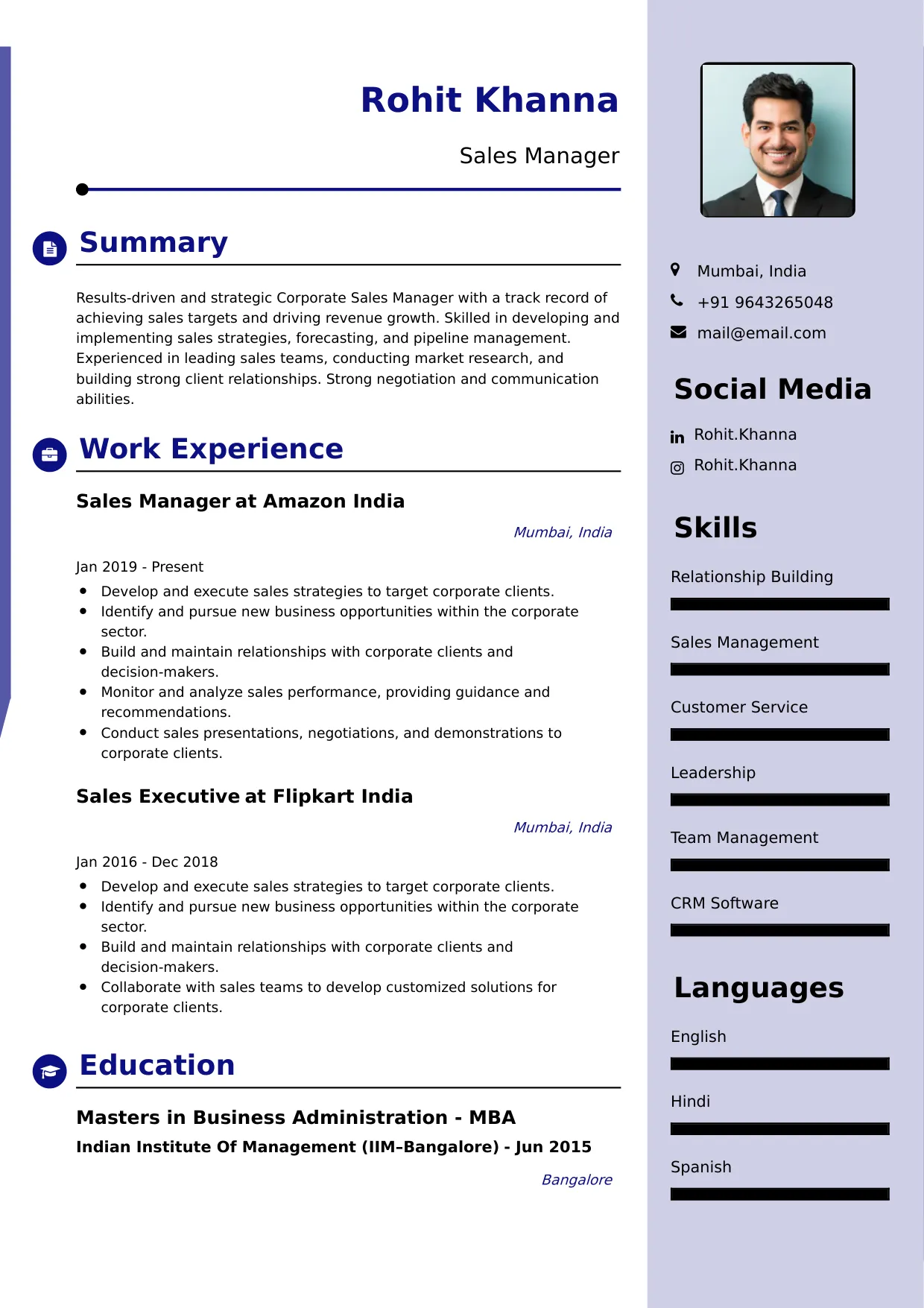
Rigger
Welcome to our Rigger resume sample page! This expertly crafted resume template is designed to showcase your expertise in planning, assembling, and securing lifting and hoisting equipment, conducting inspections, and ensuring the safe and efficient movement of heavy loads in construction, maritime, entertainment, or industrial settings. Whether you work on cranes, scaffolding, or theatrical rigging, this sample highlights key skills like Rigging Principles, Equipment Inspection, Knot Tying/Splicing, Load Calculation, and Safety Compliance (OSHA/ASME) tailored to meet top industrial demands. Use this guide to create a polished, results-driven resume that stands out and secures your next career opportunity.
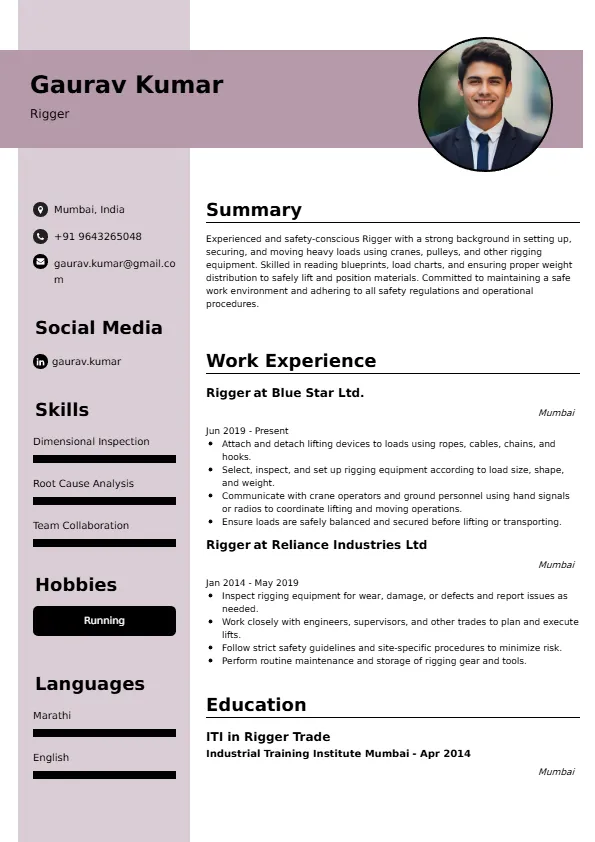
Superbresume.com empowers Riggers to craft resumes that highlight their technical safety and load management expertise. Our platform offers customizable templates tailored for high-risk operational roles, emphasizing skills like advanced knot/splice mastery, complex load balancing/signaling, equipment certification and tagging, and adherence to strict lifting protocols. With ATS-optimized formats, expert-written content suggestions, and real-time resume analysis, we ensure your resume aligns with job descriptions. Showcase your experience in consistently achieving zero lifting incidents, successfully rigging and hoisting complex, heavy materials, or maintaining flawless compliance during pre-lift safety checks with confidence. Superbresume.com helps you create a polished, results-driven resume that grabs hiring managers’ attention and lands interviews.
How to Write a Resume for a Rigger
Craft a Targeted Summary: Write a 2-3 sentence summary highlighting your certification, extensive experience in safe rigging and hoisting operations, proficiency in load calculation and equipment inspection, and commitment to strict adherence to OSHA and ASME safety standards.
Use Reverse-Chronological Format: List recent rigger, crane operator, construction, or maritime roles first, focusing on measurable safety and procedural achievements.
Highlight Certifications/Training: Include credentials like NCCCO Certified Rigger (Level I/II), specialized rigging certification (e.g., entertainment, offshore), OSHA 10/30, or relevant trade school/technical training to boost credibility.
Quantify Achievements: Use metrics, e.g., “Successfully rigged and hoisted 500+ critical lifts (up to 50 tons) over 5 years with a zero-incident safety record,” or “Reduced lift preparation time by 15% through standardized equipment staging and checklist adherence,” to show impact.
Incorporate Keywords: Use terms like “Rigging & Hoisting,” “Load Calculation (Weight/Center of Gravity),” “Equipment Inspection (Slings, Shackles),” “Safety Compliance (OSHA/ASME),” “Knot Tying & Splicing,” “Crane Signaling,” or “Lifting Plan Adherence” from job descriptions for ATS.
Detail Technical Skills: List proficiency with specific tools (slings, shackles, hardware), rigging techniques (basket, choker), equipment types (cranes, hoists, chain falls), blueprint reading, and strong communication (signaling) in a comprehensive skills section.
Showcase Safety/Efficiency Projects: Highlight 3-4 key responsibilities or projects (e.g., leading a complex tandem lift, designing a specialized rigging setup, conducting the annual rigging gear inspection), detailing the scope, the challenge, and the quantified safety/efficiency result.
Emphasize Soft Skills: Include meticulous attention to detail, safety vigilance, systematic problem-solving (load balancing), strong communication (signaling), and physical stamina/coordination.
Keep It Concise: Limit your resume to 1 page, focusing on relevant rigging, safety, and operational experience.
Proofread Thoroughly: Eliminate typos or jargon for a professional document.
Advanced Load Calculation and Software: Focus on expertise using load calculation software and advanced math/physics to accurately determine load weight, center of gravity, and rigging capacities for complex, non-symmetric lifts.
Equipment Inspection and Certification Management: Highlight advanced skills in inspecting, retiring, and maintaining lifting gear (slings, shackles, wire rope) and managing the associated regulatory certification and tagging records.
Critical Lift Planning and JSA: Showcase experience participating in or leading the development of detailed Critical Lift Plans (CLP) and Job Safety Analyses (JSA) for high-risk hoisting operations.
Digital Documentation and Reporting: Detail proficiency utilizing tablets or specialized software (e.g., CMMS) to document pre-lift inspections, record incident data, and track rigging equipment inventory.
Offshore and Specialized Rigging (If Applicable): Emphasize training and experience in specific high-risk environments, such as offshore crane operations, subsea rigging, or heavy industrial turnarounds.
Metrics-Driven Achievements: Use results like “Successfully designed and executed a lift plan for a 100-ton module placement” or “Maintained a safety record of zero recordable incidents over X hours of rigging operation.”
Crane Signaling and Communication: Include advanced proficiency in recognized hand signals, radio communication, and understanding the operational limitations of various crane types.
Lifting Gear Maintenance: Highlight hands-on experience inspecting, repairing, and safely storing specialized lifting hardware.
Choose Superbresume.com to craft a Rigger resume that stands out in the critical industrial and construction sector. Our platform offers tailored templates optimized for ATS, ensuring your skills in NCCCO certification, load calculation, and safety compliance shine. With expert guidance, pre-written content, and real-time feedback, we help you highlight achievements like achieving zero lifting incidents or successfully rigging complex, heavy loads. Whether you work with cranes or theatrical rigging, our tools make it easy to create a polished, results-driven resume. Trust Superbresume.com to showcase your expertise in reliable, precise, and safe heavy load management. Start building your career today!
20 Key Skills for a Rigger Resume
| NCCCO Certified Rigger (Level I/II) | Load Calculation & Center of Gravity Determination |
| Equipment Inspection & Certification (Slings, Shackles, Hardware) | OSHA/ASME Safety Compliance (B30 Standards) |
| Crane Signaling & Communication (Hand/Radio) | Knots, Hitches, & Splicing (Rope/Wire) |
| Lifting Plan Development & Adherence (JSA/CLP) | Heavy Equipment Operation (Forklifts, Hoists) |
10 Do’s for a Rigger Resume
Tailor Your Resume: Customize for the specific rigging environment (e.g., construction steel erection, maritime cargo, theatrical).
Highlight Certifications/Training: List NCCCO Rigger certification, OSHA 10/30, and specialized training prominently.
Quantify Achievements: Include metrics on max load weight handled, volume of lifts performed, safety record (zero incidents), or efficiency gains in lift preparation time.
Use Action Verbs: Start bullet points with verbs like “rigged,” “secured,” “calculated,” “inspected,” or “hoisted.”
Showcase Safety and Precision: Detail the methodology and the strategic, quantified safety/efficiency result of 3-4 key rigging projects.
Include Soft Skills: Highlight meticulous detail, safety vigilance, systematic problem-solving, and strong communication.
Optimize for ATS: Use standard construction/industrial section titles and incorporate key rigging and compliance terms.
Keep It Concise: Limit your resume to one page, focusing on relevant rigging, safety, and operational experience.
Emphasize Certification and Load Management: Clearly articulate expertise in safe load calculation and adherence to lifting standards.
Proofread Thoroughly: Eliminate typos or jargon for a professional document.
10 Don’ts for a Rigger Resume
Don’t Overload with Jargon: Avoid confusing, internal company or site acronyms; use standardized rigging and safety terminology.
Don’t Exceed One Page: Keep your resume sharp and focused on the most relevant, measurable duties.
Don’t Omit Dates: Include employment dates for career context.
Don’t Use Generic Templates: Tailor your resume specifically to the technical, safety-critical duties of a Rigger.
Don’t List Irrelevant Skills: Focus on lifting, rigging hardware, load calculation, inspection, and safety compliance.
Don’t Skip Metrics: Quantify results wherever possible; safety record, load size, and efficiency are key metrics.
Don’t Use Complex Formats: Avoid highly stylized elements or confusing graphics.
Don’t Ignore Certification: Include explicit mention of NCCCO or equivalent certifications.
Don’t Include Outdated Experience: Omit non-rigging or non-technical jobs over 10 years old.
Don’t Forget to Update: Refresh for new certification renewals, successful large lift projects, or advanced safety training.
5 FAQ's for a Rigger Resume
The NCCCO (National Commission for the Certification of Crane Operators) is the gold standard.
"Achieved a 0-incident safety record over 5 years while executing complex multi-crane lifts."
Yes. Mention experience with Chain hoists, come-alongs, shackles, slings, and spreader bars.
"Expertly calculated center of gravity and weight distribution for irregular loads up to 50 tons."
Yes. Mention proficiency in standardized hand signals and radio communication for crane operations.
Get 5x more interviews with our crafted Resumes. We make resumes that land jobs.

Get a Free Customized Cover Letter with Resume Expert Advice
with every resume order placed, you will get a free Customized Cover letter.