Product Developer
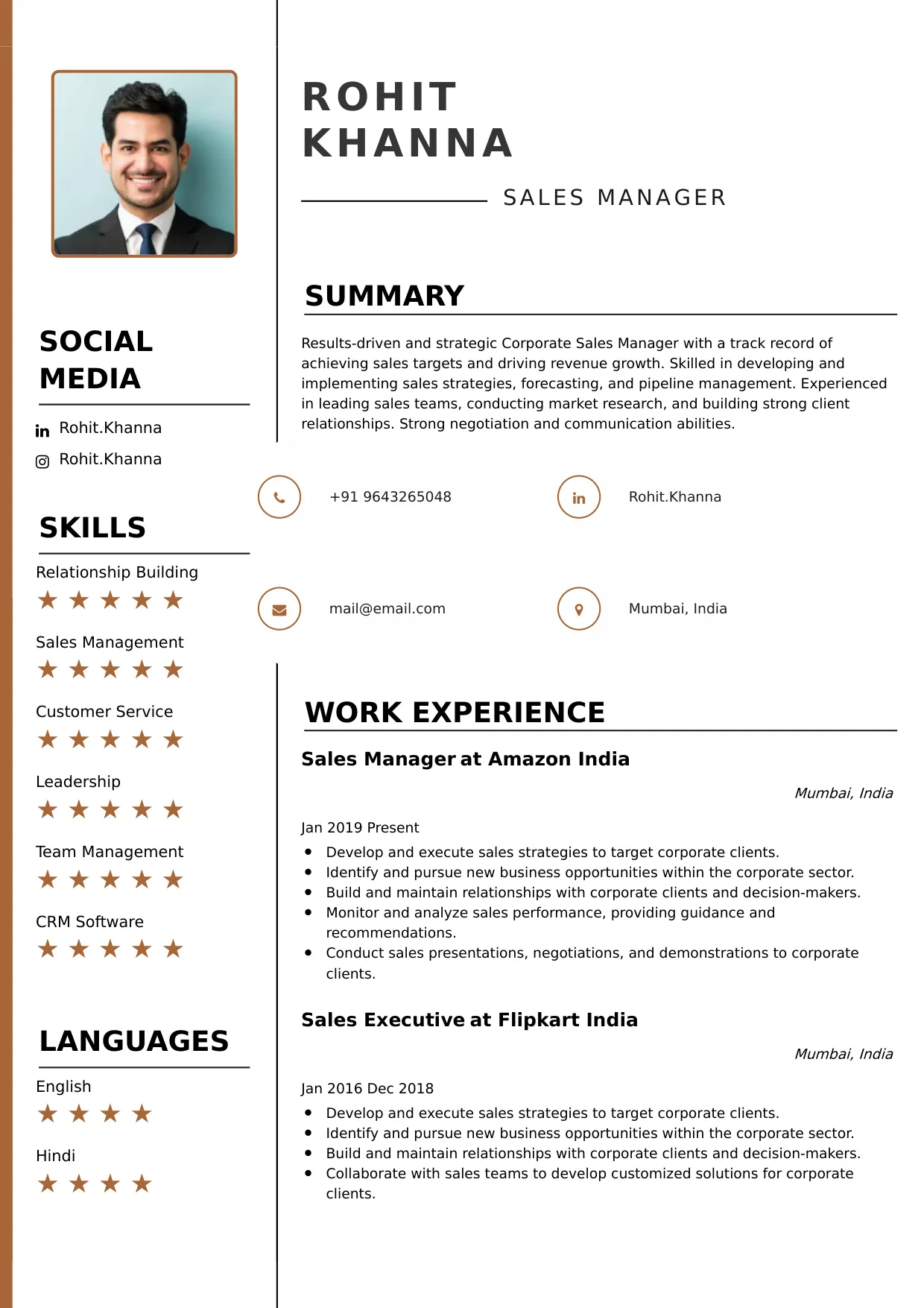
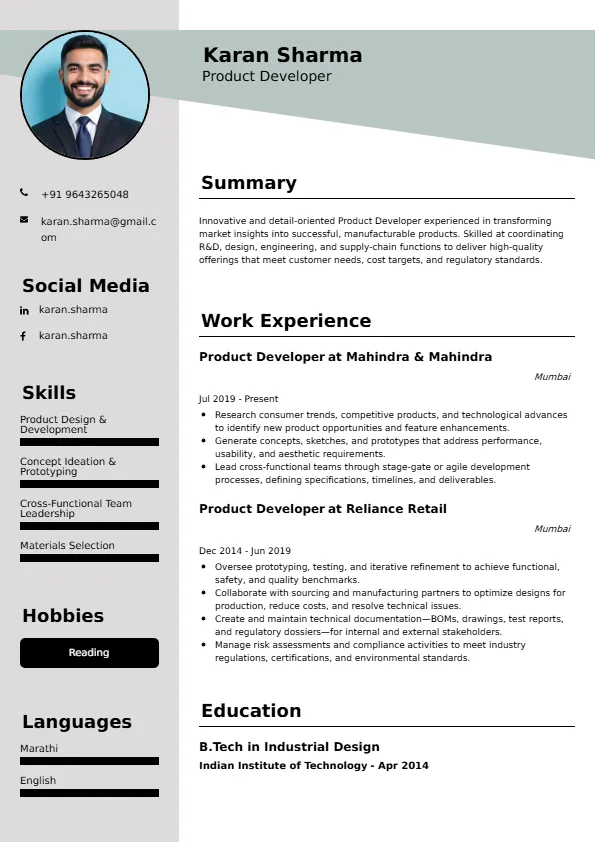
Welcome to our Product Developer resume sample page! This expertly crafted resume template is designed to showcase your expertise in managing the technical development, engineering, and manufacturing process of new or existing physical products (e.g., consumer goods, hardware, apparel). Whether you focus on materials science or production scale-up, this sample highlights key skills like Product Lifecycle Management (PLM), Prototyping & Testing, Manufacturing Process Optimization, Cross-Functional Engineering (R&D/Supply Chain), and Cost/Quality Control tailored to meet top manufacturing and consumer demands. Use this guide to create a polished, results-driven resume that stands out and secures your next career opportunity.
How to Write a Resume for a Product Developer
Craft a Targeted Summary: Write a 2-3 sentence summary highlighting your expertise in full lifecycle physical product development, proficiency in engineering design and manufacturing processes, and success in delivering scalable, high-quality, and cost-effective products to market.
Use Reverse-Chronological Format: List recent product development, R&D engineering, or manufacturing roles first, focusing on measurable technical and production achievements.
Highlight Certifications/Training: Include credentials like PMP (Project Management Professional), Six Sigma, specialized CAD software certifications (e.g., SolidWorks), or relevant engineering degrees (Mechanical/Materials) to boost credibility.
Quantify Achievements: Use metrics, e.g., “Led the development of a consumer product that generated $5M in first-year sales, achieving a 30% reduction in Unit Cost (CoGS),” or “Optimized the manufacturing process for Component X, resulting in a 15% decrease in defect rate (PPM),” to show impact.
Incorporate Keywords: Use terms like “New Product Introduction (NPI),” “Product Lifecycle Management (PLM),” “Design for Manufacturing (DFM),” “Prototyping & Testing (FEA),” “Materials Science,” “Manufacturing Process Optimization (Lean/Six Sigma),” or “Cost of Goods Sold (CoGS) Reduction” from job descriptions for ATS.
Detail Technical/Engineering Skills: List proficiency with specific CAD/CAM software, PLM systems (e.g., PTC Windchill, Siemens Teamcenter), materials testing equipment, statistical process control (SPC), and quality standards (ISO) in a comprehensive skills section.
Showcase Development Projects: Highlight 3-4 key products or components developed, detailing the technical challenge solved (e.g., durability, size, cost), the manufacturing process optimized, and the quantified quality/cost result.
Emphasize Soft Skills: Include systematic problem-solving, attention to detail (specifications), cross-functional collaboration (R&D, Marketing, Supply Chain), project management rigor, and financial awareness.
Keep It Concise: Limit your resume to 1-2 pages, focusing on relevant product development, engineering, and manufacturing experience.
Proofread Thoroughly: Eliminate typos or jargon for a professional document.
Design for Sustainability (DfS): Focus on expertise designing products and selecting materials to minimize environmental impact (e.g., reduced material usage, increased recyclability) and meet ESG targets.
New Product Introduction (NPI) Project Management: Highlight advanced skills leading the NPI phase, ensuring seamless transition from engineering prototype to high-volume manufacturing (Process Scale-Up) under strict timelines.
Advanced Prototyping and Simulation: Showcase proficiency utilizing additive manufacturing (3D printing), rapid tooling, and Finite Element Analysis (FEA) or computational fluid dynamics (CFD) to validate designs digitally before physical testing.
Cost of Goods Sold (CoGS) Optimization: Detail expertise in tear-down analysis, alternative material sourcing, and value engineering to continuously reduce product manufacturing costs without sacrificing quality or performance.
Product Lifecycle Management (PLM) Systems: Emphasize proficiency administering and utilizing PLM software to manage product data, Bills of Materials (BOMs), engineering change orders (ECOs), and compliance documentation globally.
Metrics-Driven Achievements: Use results like “Reduced material cost for Component A by 10% by transitioning from aluminum to a new composite polymer” or “Successfully managed the launch of 10+ new SKUs within the last fiscal year, 100% on time.”
Supplier Quality and Manufacturing Process Audit: Include experience working with international suppliers, auditing manufacturing processes, and enforcing quality standards (e.g., PPAP, APQP).
Cross-Functional Communication: Highlight success in translating complex engineering specifications and production issues clearly to non-technical teams (Marketing, Sales, Finance).
Choose Superbresume.com to craft a Product Developer resume that stands out in the competitive manufacturing and engineering sectors. Our platform offers tailored templates optimized for ATS, ensuring your skills in NPI, DFM, and CoGS reduction shine. With expert guidance, pre-written content, and real-time feedback, we help you highlight achievements like boosting production quality or accelerating time-to-market. Whether you develop hardware or consumer goods, our tools make it easy to create a polished, results-driven resume. Trust Superbresume.com to showcase your expertise in engineering and realizing scalable, high-quality products. Start building your career today!
20 Key Skills for a Product Developer Resume
| New Product Introduction (NPI) Project Management | Design for Manufacturing (DFM) & Assembly (DFA) |
| Product Lifecycle Management (PLM) (BOMs, ECOs) | Prototyping, Testing, & Validation (FEA/CFD) |
| CoGS (Cost of Goods Sold) Reduction | Manufacturing Process Optimization (Injection Molding, Machining) |
| CAD/CAM Proficiency (SolidWorks/AutoCAD) | Materials Selection & Specification |
| Quality Control (SPC, Defect Rate Reduction) | Cross-Functional Engineering (R&D, Supply Chain) |
10 Do’s for a Product Developer Resume
Tailor Your Resume: Customize for the specific product type (e.g., emphasize materials science for apparel, emphasize electronics/hardware for tech products).
Highlight Certifications/Training: List PMP, Six Sigma, or advanced CAD/FEA software certifications prominently.
Quantify Achievements: Include metrics on CoGS reduction (percentage/dollar), defect rate reduction (PPM), NPI time reduction, or product durability improvement.
Use Action Verbs: Start bullet points with verbs like “developed,” “engineered,” “optimized,” “prototyped,” or “led.”
Showcase Development Projects: Detail the methodology and the strategic, quantified quality/cost result of 3-4 key product development projects.
Include Soft Skills: Highlight systematic problem-solving, project management rigor, financial awareness, and cross-functional collaboration.
Optimize for ATS: Use standard engineering/development section titles and incorporate key NPI, PLM, and methodology terms.
Keep It Professional: Use a clean, consistent font and engineering layout.
Emphasize DFM and CoGS: Clearly articulate expertise in designing for manufacturing efficiency and controlling product cost.
Proofread Thoroughly: Eliminate typos or jargon for a professional document.
10 Don’ts for a Product Developer Resume
Don’t Overload with Jargon: Avoid confusing, internal company acronyms; use standardized NPI, engineering, and manufacturing terminology.
Don’t Exceed Two Pages: Keep your resume concise, focusing on high-impact product development and engineering achievements.
Don’t Omit Dates: Include employment dates for career context.
Don’t Use Generic Templates: Tailor your resume specifically to the technical and operational duties of a Product Developer.
Don’t List Irrelevant Skills: Focus on engineering, design, manufacturing process, quality control, and PLM.
Don’t Skip Metrics: Quantify results wherever possible; CoGS, quality (PPM), and NPI time are key metrics.
Don’t Use Complex Formats: Avoid highly stylized elements or confusing graphics.
Don’t Ignore Cross-Functional Work: Include explicit experience liaising between R&D, manufacturing, and supply chain.
Don’t Include Outdated Experience: Omit non-development or non-engineering jobs over 15 years old.
Don’t Forget to Update: Refresh for new PMP/Six Sigma certification, successful product launches, or advanced DFM/FEA skills.
5 FAQ's for a Product Developer Resume
Yes. Focus more on the product lifecycle and the "why" behind the code, rather than just the technical stack.
Highlight times you consulted on product specs to determine what was buildable within the timeline.
If you work in hardware or physical goods, yes. For software, focus on Agile/Scrum.
Describe your role from initial concept and prototyping through to launch and post-launch maintenance.
Relevant ones like AWS, Scrum Master, or specific language certifications are very helpful.
Get 5x more interviews with our crafted Resumes. We make resumes that land jobs.

Get a Free Customized Cover Letter with Resume Expert Advice
with every resume order placed, you will get a free Customized Cover letter.