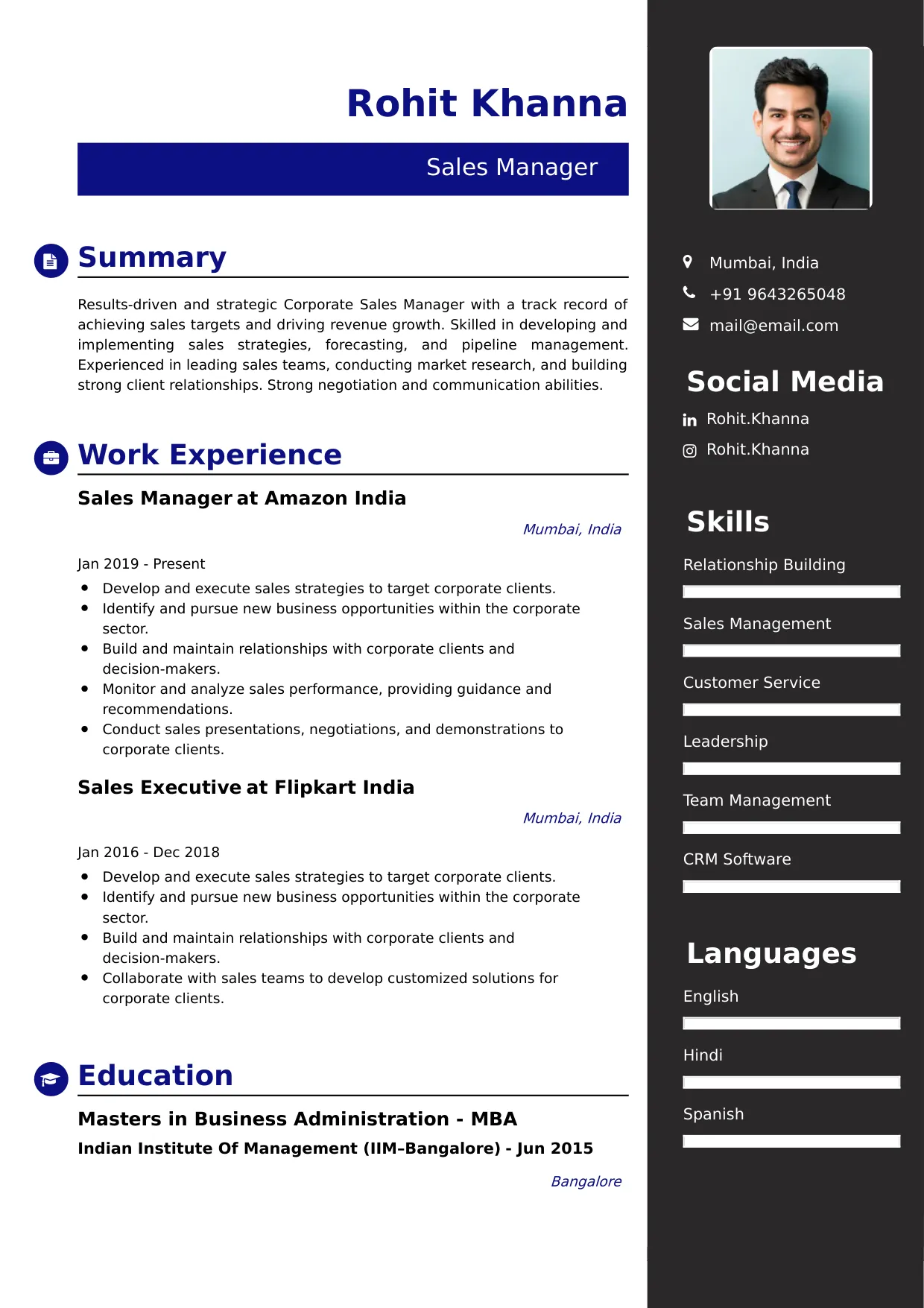
Engine Cadet
Welcome to our Engine Cadet resume sample page! This expertly crafted resume template is designed to showcase your foundational knowledge of marine engineering, watchkeeping duties, machinery operation, and adherence to safety protocols in a vessel's engine room. Whether you are a recent maritime academy graduate or completing your sea time, this sample highlights key skills like STCW compliance, planned maintenance systems (PMS), diesel engine operation, auxiliary equipment maintenance, and engine room safety tailored to meet top shipping companies’ demands. Use this guide to create a compelling resume that stands out and secures your next career opportunity.Build a Standout Engine Cadet Resume with Superbresume.com
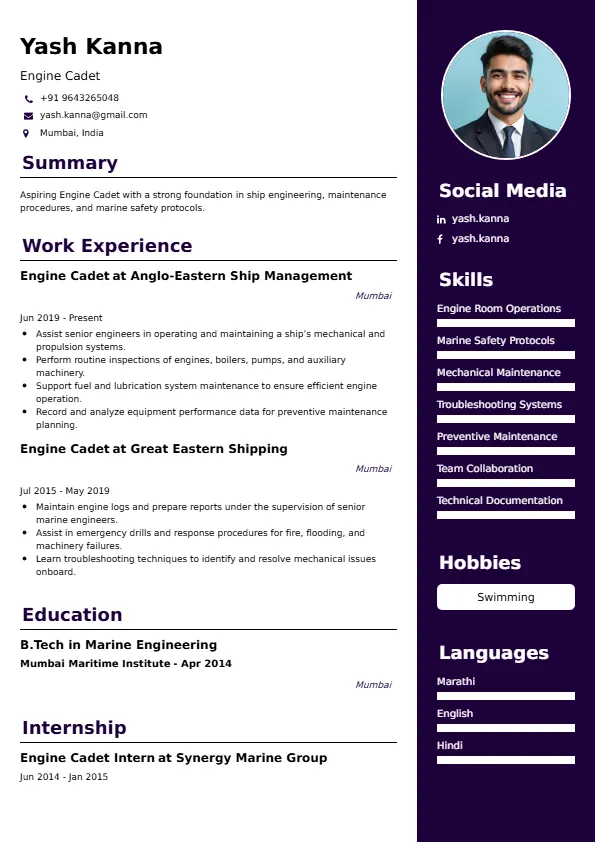
Superbresume.com empowers Engine Cadets to craft resumes that highlight their practical marine engineering training and dedication to machinery maintenance. Our platform offers customizable templates tailored for entry-level seafaring roles, emphasizing skills like diesel/auxiliary engine maintenance, planned maintenance system (PMS) operation, bilge/ballast procedures, and strict adherence to environmental regulations (MARPOL). With ATS-optimized formats, expert-written content suggestions, and real-time resume analysis, we ensure your resume aligns with job descriptions. Showcase your experience in executing watch duties, assisting with equipment overhauls, or maintaining accurate engine room logs with confidence. Superbresume.com helps you create a polished, results-driven resume that grabs hiring managers’ attention and lands interviews.
How to Write a Resume for an Engine Cadet
Use Reverse-Chronological Format: List your maritime academy education and any practical sea service/training periods first, focusing on hands-on engineering duties.
Highlight Certifications: Include essential credentials like STCW Basic Safety Training, Engine Room Watch Rating Certificate, Medical First Aid, and any specific maritime licenses or trade qualifications to boost credibility.
Quantify Achievements: Use metrics, e.g., “Completed 365 days of sea time on vessels over 10,000 GT, assisting 5 major engine overhauls,” or “Managed daily maintenance tasks using the vessel’s PMS for 20+ pieces of auxiliary equipment,” to show practical experience.
Incorporate Keywords: Use terms like “Engine Room Watchkeeping,” “Planned Maintenance System (PMS),” “Diesel Engine Operation,” “Auxiliary Machinery,” “STCW Compliance,” “MARPOL Regulations,” or “Safety Protocols (LOTO)” from job descriptions for ATS.
Detail Technical Skills: List proficiency with specific machinery (e.g., Generators, Pumps, Purifiers), maintenance software (e.g., AMOS, MAXIMO), measurement tools, and basic welding/fitting in a dedicated skills section.
Showcase Sea Service: Highlight specific vessels, gross tonnage (GT), trade routes, and the key engineering duties performed during your training voyages.
Emphasize Soft Skills: Include discipline, physical stamina, technical aptitude, attention to detail (for readings/logs), and teamwork within the engine department.
Keep It Concise: Limit your resume to 1 page, focusing on relevant training and practical sea experience.
Proofread Thoroughly: Eliminate typos or jargon for a professional document.
Environmental Compliance (MARPOL/BWTS): Highlight hands-on experience maintaining and operating equipment related to pollution prevention (e.g., Oily Water Separators, Ballast Water Treatment Systems).
Auxiliary Equipment Troubleshooting: Showcase experience with troubleshooting and maintaining key auxiliary machinery (boilers, air compressors, refrigeration systems).
Engine Resource Management (ERM): Emphasize training and practical application of ERM principles in watchkeeping duties and crew coordination.
Electrotechnical Awareness: Include basic knowledge of ship electrical systems, motor controls, and high-voltage safety (if relevant to vessel type).
Metrics-Driven Achievements: Use results like “Maintained 100% accuracy in logging daily engine room parameters for 6 months” or “Successfully assisted in a drydock preparation process for a 20,000 GT vessel.”
Fuel and Efficiency Monitoring: Include experience assisting engineers with monitoring fuel consumption, engine performance indicators, and optimizing machinery operation.
Firefighting and Safety Leadership: Detail active involvement and leadership roles in engine room safety drills (fire, flooding, confined space entry).
Choose Superbresume.com to craft an Engine Cadet resume that stands out in the competitive maritime engineering field. Our platform offers tailored templates optimized for ATS, ensuring your skills in machinery maintenance, STCW compliance, and watchkeeping duties shine. With expert guidance, pre-written content, and real-time feedback, we help you highlight achievements like logging required sea time or mastering essential engine room protocols. Whether you’re seeking your first berth or advancing your sea time, our tools make it easy to create a polished, results-driven resume. Trust Superbresume.com to showcase your expertise in safe and efficient marine engineering operations. Start building your career today!
20 Key Skills for an Engine Cadet Resume
| Engine Room Watchkeeping | Planned Maintenance System (PMS) Operation |
| Diesel/Auxiliary Engine Maintenance | STCW/SOLAS/MARPOL Compliance |
| Auxiliary Machinery Operation (Pumps, Purifiers) | Safety Protocols (LOTO, Firefighting) |
| Basic Electrical Troubleshooting | Logbook & Record Keeping |
| Bilge & Ballast Procedures | Engine Resource Management (ERM) |
| Mechanical Fitting & Measurement | Inventory Control (Spares) |
| Fuel/Lube Oil Transfer & Testing | Workshop Tool Operation |
| Teamwork & Coordination (Engine Dept.) | Confined Space Entry Protocol |
| Physical Stamina | Attention to Detail (Readings) |
| Condition Monitoring (Vibration/Temp) | Environmental Compliance (OWS/BWTS) |
10 Do’s for an Engine Cadet Resume
Tailor Your Resume: Customize it for the specific vessel type (e.g., merchant, offshore, cruise) and engine plant (e.g., 2-stroke, 4-stroke) the hiring company operates.
Highlight Certifications: List essential STCW endorsements and any trade or technical qualifications prominently.
Quantify Achievements: Include metrics such as sea time logged, GT of vessels served on, or the size/type of machinery assisted with (e.g., overhaul of a 1000kW generator).
Use Action Verbs: Begin statements with verbs like assisted, executed, maintained, operated, or documented.
Showcase Sea Service: Clearly detail the dates, vessel names, and roles during your sea training, emphasizing hands-on duties.
Include Soft Skills: Highlight technical aptitude, discipline, adherence to safety protocols, and teamwork in a high-risk environment.
Optimize for ATS: Use standard maritime section titles and incorporate key engineering and regulatory terminology.
Keep It Professional: Maintain a clean, consistent font and layout suitable for a maritime career.
Emphasize PMS and Compliance: Detail experience using the planned maintenance system and ensuring MARPOL/STCW adherence.
Proofread Carefully: Ensure no typos or technical errors; precision in engineering is critical.
10 Don’ts for an Engine Cadet Resume
Don’t Overload with Jargon: Avoid overly specific or obscure naval terms; stick to industry standards (STCW, MARPOL, PMS).
Don’t Exceed One Page: Keep your entry-level resume concise and focused on training and sea time.
Don’t Omit Dates: Include precise dates for sea service and training to provide regulatory context.
Don’t Use Generic Templates: Tailor your resume specifically to the technical and maintenance duties of an Engine Cadet.
Don’t List Irrelevant Skills: Focus on marine engineering, maintenance, watchkeeping, and safety, not unrelated land-based jobs.
Don’t Skip Metrics: Quantify your sea time and specific maintenance duties whenever possible.
Don’t Use Complex Formats: Avoid highly stylized graphics or complex tables that might confuse ATS.
Don’t Ignore Safety: Always include mention of LOTO, safety drills, and strict adherence to engine room protocols.
Don’t Include Outdated Experience: Omit non-maritime or non-technical jobs unless they demonstrate highly relevant soft skills.
Don’t Forget to Update: Refresh your resume for new training, endorsements, or additional sea time immediately upon completion.
5 FAQs for an Engine Cadet Resume
Prioritize active STCW compliance, Engine Room Watchkeeping, Planned Maintenance System (PMS) operation, and hands-on maintenance or overhaul experience with auxiliary and main machinery.
Use standard maritime section titles, avoid graphics, and include keywords like “PMS,” “LOTO,” and “MARPOL Compliance.”
Yes—listing specific types of machinery, such as 4-stroke diesel generators or centrifugal purifiers, demonstrates practical familiarity and technical competence.
Include relevant coursework, simulator exercises (such as engine room control), and practical workshop training completed at your maritime academy.
Use a reverse-chronological format, placing your maritime education and sea service experiences at the forefront.
Get 5x more interviews with our crafted Resumes. We make resumes that land jobs.

Get a Free Customized Cover Letter with Resume Expert Advice
with every resume order placed, you will get a free Customized Cover letter.