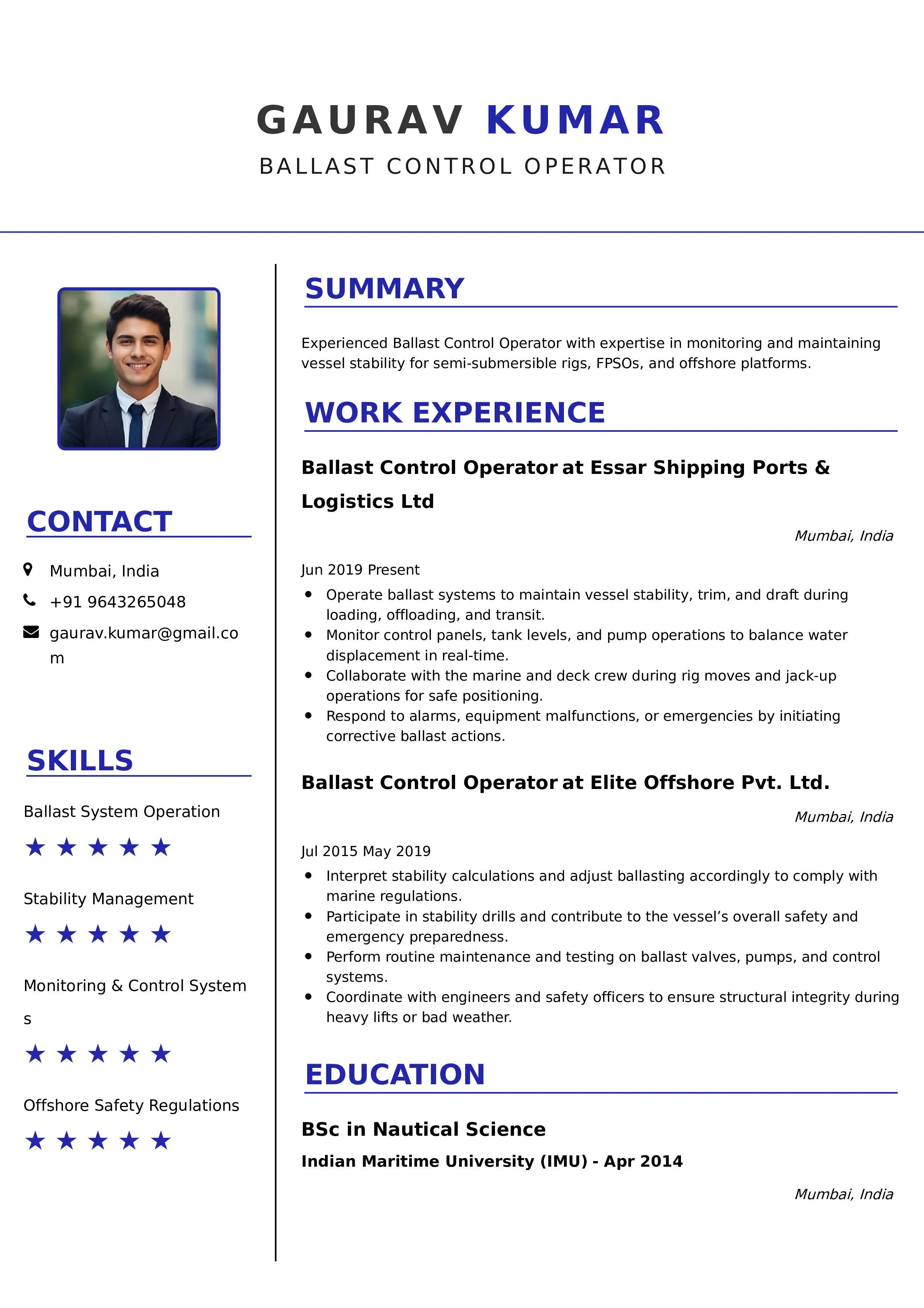
Ballast Control Operator

Welcome to our Ballast Control Operator resume sample page! This expertly crafted resume template is designed to showcase your expertise in offshore operations, ballast system management, and safety compliance in the maritime industry. Whether you're an entry-level candidate or a seasoned professional, this sample highlights key skills like stability control, emergency response, and equipment maintenance, tailored to meet top employers’ demands. Use this guide to create a compelling resume that stands out and secures your next career opportunity.Build a Standout Ballast Control Operator Resume with Superbresume.com

Mid Level
Senior Level
null
Build a Standout Ballast Control Operator Resume with Superbresume.com

Superbresume.com empowers Ballast Control Operators to craft resumes that highlight their offshore expertise and safety skills. Our platform offers customizable templates tailored for maritime roles, emphasizing skills like stability control, emergency response, and equipment maintenance. With ATS-optimized formats, expert-written content suggestions, and real-time resume analysis, we ensure your resume aligns with job descriptions. Showcase your experience in managing ballast systems, ensuring vessel stability, or leading safety drills with confidence. Whether you’re an entry-level operator or a senior professional, Superbresume.com helps you create a polished, results-driven resume that grabs hiring managers’ attention and lands interviews.

How to Write a Resume for a Ballast Control Operator

Craft a Targeted Summary: Write a 2–3 sentence summary highlighting your ballast control experience, safety compliance, and offshore operations, tailored to the job.

Use Reverse-Chronological Format: List recent offshore roles first, focusing on ballast system management or safety protocols.

Highlight Certifications: Include credentials like STCW or Ballast Control Operator certification to boost credibility.

Quantify Achievements: Use metrics, e.g., “Maintained 100% safety compliance in ballast operations,” to show impact.

Incorporate Keywords: Use terms like “ballast control,” “stability management,” or “emergency response” from job descriptions for ATS.

Detail Technical Skills: List tools like ballast control systems, DP systems, or safety software in a skills section.

Showcase Projects: Highlight operations like rig stabilization or safety drills with outcomes.

Emphasize Soft Skills: Include teamwork and problem-solving, demonstrated through crew coordination.

Keep It Concise: Limit your resume to 1–2 pages, focusing on relevant maritime experience.

Proofread Thoroughly: Eliminate typos or jargon for a professional document.

Trends in Ballast Control Operator Resume

Focus on Safety Compliance: Employers prioritize expertise in STCW standards and safety protocols, as 75% of roles require compliance in 2025.

Digital Monitoring Tools: Highlight proficiency in modern digital ballast control systems, reflecting current technological advancements.

Dynamic Positioning (DP): Showcase skills in DP systems for vessel stability and precision operations, a growing industry trend.

Environmental Regulations: Emphasize strict adherence to international and environmental standards in ballast water management.

Emergency Response Leadership: Include experience leading safety and emergency drills, a vital competency for offshore operations.

Metrics-Driven Achievements: Use measurable results such as “reduced downtime by 15%” or “achieved 100% operational safety compliance.”

Crew Coordination: Highlight teamwork and communication skills in coordinating with offshore and onshore teams, as 60% of roles value collaboration.

Automation in Ballast Systems: Include hands-on experience with automated or semi-automated ballast control technologies for efficiency and accuracy.

Why Superbresume.com is Your Best Choice for a Ballast Control Operator Resume
Choose Superbresume.com to craft a Ballast Control Operator resume that stands out in a competitive field. Our platform offers tailored templates optimized for ATS, ensuring your skills in stability control, emergency response, and safety compliance shine. With expert guidance, pre-written content, and real-time feedback, we help you highlight achievements like maintaining vessel stability or leading safety drills. Whether you’re an entry-level operator or a senior professional, our tools make it easy to create a professional, results-focused resume. Trust Superbresume.com to showcase your maritime expertise and land interviews with top employers. Start building your career today!
20 Key Skills for a Ballast Control Operator Resume
                                           
Ballast Control SystemsStability Management
Dynamic PositioningSTCW Compliance
Emergency ResponseSafety Protocols
Equipment MaintenanceOffshore Operations
Environmental ComplianceCrew Coordination
Digital MonitoringRig Stabilization
Safety DrillsIncident Reporting
Technical TroubleshootingData Logging
Risk AssessmentRegulatory Knowledge
TeamworkProblem-Solving

10 Do’s for a Ballast Control Operator Resume

  • Tailor Your Resume: Customize for each ballast control operator job using job description keywords.
  • Highlight Certifications: List credentials like STCW prominently.
  • Quantify Achievements: Include metrics, e.g., “Maintained 100% safety compliance.”
  • Use Action Verbs: Start bullet points with verbs like “managed,” “stabilized,” or “coordinated.”
  • Showcase Projects: Detail operations like rig stabilization with outcomes.
  • Include Soft Skills: Highlight teamwork or problem-solving through crew examples.
  • Optimize for ATS: Use standard section titles and avoid complex formatting.
  • Keep It Professional: Use a clean, consistent font and layout.
  • Add a Portfolio Link: Include a link to a portfolio with operational case studies.
  • Proofread Carefully: Ensure no typos or errors for professionalism.

10 Don’ts for a Ballast Control Operator Resume

  • Don’t Overload with Jargon: Avoid excessive maritime terms that confuse recruiters.
  • Don’t Exceed Two Pages: Keep your resume concise, focusing on relevant experience.
  • Don’t Omit Dates: Include employment dates for career context.
  • Don’t Use Generic Templates: Tailor your resume to ballast control roles.
  • Don’t List Irrelevant Skills: Focus on maritime-specific skills like stability management, not unrelated ones.
  • Don’t Skip Metrics: Quantify results wherever possible.
  • Don’t Use Complex Formats: Avoid ATS-unreadable graphics.
  • Don’t Ignore Soft Skills: Include teamwork and problem-solving examples.
  • Don’t Include Outdated Experience: Omit jobs over 15 years old unless relevant.
  • Don’t Forget to Update: Refresh for trends like digital ballast systems or DP.

Prioritize stability management, STCW compliance, and emergency response. Include certifications like Ballast Control Operator training. 

Use standard section titles, avoid graphics, and include keywords like “ballast control” or “safety protocols.” 

Yes, a portfolio with operational case studies can set you apart. 

Detail operation scope, tools used (e.g., DP systems), and outcomes like improved stability. 

Use a reverse-chronological format to emphasize recent offshore achievements.

Get Your Professional Resume Written by Experts !

Get 5x more interviews with our crafted Resumes. We make resumes that land jobs.

Build Resume

Get a Free Customized Cover Letter with Resume Expert Advice

with every resume order placed, you will get a free Customized Cover letter.

Build Your ATS Resume in 5 Minutes!