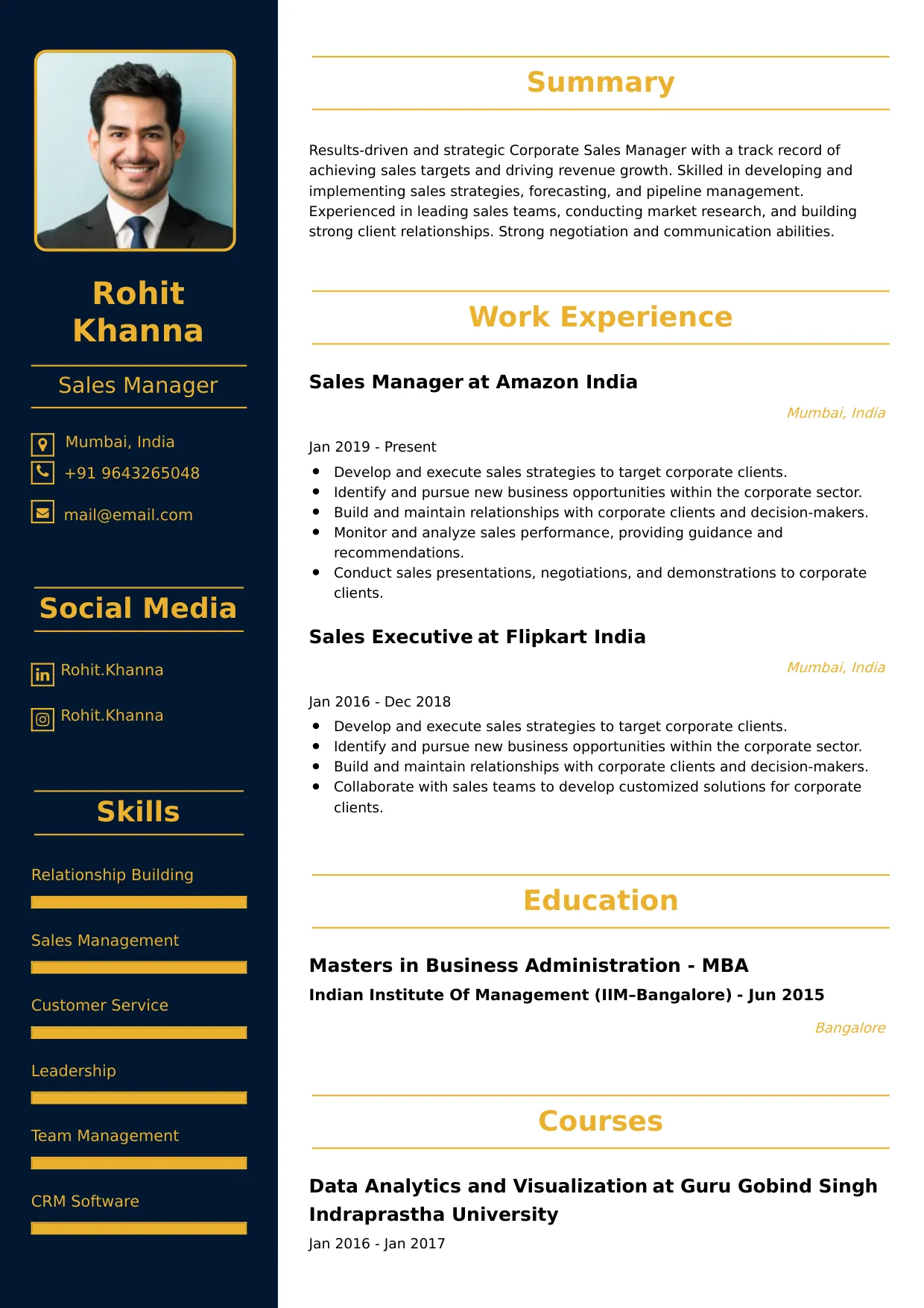
Neurosurgeon
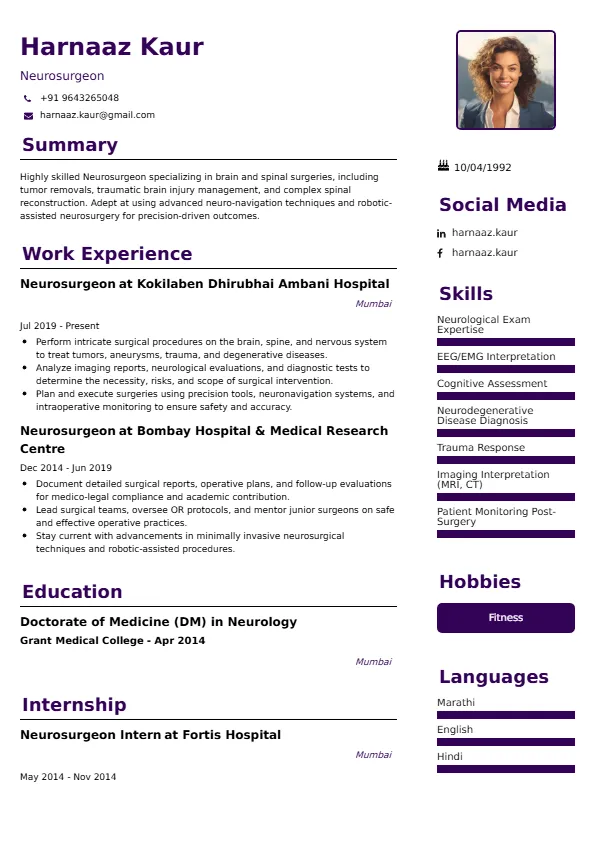
Welcome to our Neurosurgeon (Physician) resume sample page! This expertly crafted resume template is designed to showcase your expertise in performing complex surgical procedures on the brain, spine, and peripheral nerves, managing neurosurgical critical care, trauma, and adhering to strict patient safety and quality standards. Whether you are completing your residency/fellowship or a seasoned attending, this sample highlights key skills like Cranial/Spinal Surgery (Open & Minimally Invasive), Surgical Critical Care, Trauma Team Leadership (ATLS), Neuro-Oncology/Vascular, and Clinical Research tailored to meet top academic medical center and hospital demands. Use this guide to create a compelling resume that stands out and secures your next career opportunity.
How to Write a Resume for a Neurosurgeon
Craft a Targeted Summary: Write a 2-3 sentence summary highlighting your Board Certification (ABNS), extensive clinical experience, high-volume procedural expertise (cranial, vascular, and spine), and commitment to surgical quality, safety, and academic contribution.
Use Reverse-Chronological Format: List professional practice roles, fellowships, and residency first, focusing on procedural volume, subspecialty focus, and academic contributions.
Highlight Certifications/Licensure: Include essential credentials like Board Certification (ABNS), state medical licensure, DEA registration, ATLS, ACLS, and subspecialty fellowships (e.g., Neuro-Oncology, Endovascular) to boost credibility.
Quantify Achievements: Use metrics, e.g., “Performed 250+ major cranial and spinal surgical cases annually, with 60% utilizing complex, minimally invasive techniques,” or “Reduced post-operative surgical site infection (SSI) rate by 50% in spinal cases through protocol implementation,” to show impact.
Incorporate Keywords: Use terms like “Cranial Neurosurgery,” “Spinal Surgery (Fusion/Decompression),” “Minimally Invasive Neurosurgery,” “Neuro-Oncology/Vascular,” “Surgical Critical Care,” “Intraoperative Monitoring (IOM),” or “ABNS Certified” from job roles for ATS.
Detail Procedural/Technical Skills: List specific procedures mastered (e.g., micro-neurosurgery, spine fixation, neuro-endoscopy, aneurysm clipping) and proficiency with advanced imaging guidance, neuronavigation, and surgical robotics in a comprehensive skills section.
Showcase Research/Academic: Highlight involvement in clinical trials (PI/Co-I), peer-reviewed publications, teaching residents/fellows, or leadership roles (e.g., Director of Neurosurgery Residency Program).
Emphasize Soft Skills: Include decisive leadership (OR/Trauma Bay), surgical precision, clear communication (to patients/families/teams), emotional resilience, and rigorous adherence to patient safety protocols.
Keep It Concise: Limit your resume to 1-2 pages, focusing on medical training, clinical specialty practice, and procedural/academic contributions.
Proofread Thoroughly: Eliminate typos or jargon for a professional document.
Minimally Invasive Spine and Cranial Surgery: Focus heavily on high-volume experience and advanced training in microscopic, endoscopic, and tubular techniques for both spinal and cranial procedures to minimize patient morbidity.
Neuro-Robotics and Advanced Navigation: Highlight proficiency utilizing surgical robots (e.g., ROSA, Mazor), advanced neuronavigation systems, and intraoperative imaging (iMRI/iCT) for enhanced precision and safety.
Surgical Critical Care Management: Showcase deep expertise in managing complex neurosurgical ICU patients, including ICP monitoring, ventilator management, and post-operative stroke/hemorrhage protocols.
Clinical Trials and Outcomes Research: Emphasize involvement in research, particularly outcomes studies related to complication rates, length of stay, and functional recovery following neurosurgical procedures.
Multidisciplinary Tumor Boards: Detail experience leading or participating in neuro-oncology tumor boards, collaborating with medical/radiation oncologists, and managing complex treatment planning for brain/spine tumors.
Metrics-Driven Achievements: Use results like “Maintained a surgical complication rate 50% below the national average for complex spine fusion procedures” or “Successfully reduced average patient length of stay (LOS) post-craniotomy by 2 days.”
Telehealth and Virtual Consults: Include experience utilizing virtual platforms for pre-operative consultations, post-operative follow-up, and supporting regional hospitals with remote coverage.
Advanced Pain and Functional Neurosurgery: Highlight expertise in procedures related to chronic pain, epilepsy, or movement disorders (e.g., VNS insertion, DBS lead placement).
Choose Superbresume.com to craft a Neurosurgeon resume that stands out in the most demanding surgical specialty. Our platform offers tailored templates optimized for ATS, ensuring your skills in procedural mastery, advanced technology, and ABNS certification shine. With expert guidance, pre-written content, and real-time feedback, we help you highlight achievements like achieving low complication rates or leading impactful surgical outcomes research. Whether you focus on spine or cranial surgery, our tools make it easy to create a polished, results-driven resume. Trust Superbresume.com to showcase your expertise in high-acuity, complex nervous system surgery. Start building your career today!
20 Key Skills for a Neurosurgeon Resume
| Board Certification (ABNS) | Cranial & Spinal Neurosurgery (Open/Minimally Invasive) |
| Neuro-Robotics & Neuronavigation (Da Vinci, ROSA) | Surgical Critical Care Management |
| Trauma Team Leadership (ATLS) | Vascular & Tumor Neurosurgery |
| Intraoperative Monitoring (IOM) | Neuro-Endoscopy & Advanced Imaging Guidance |
| Complex Spine Fixation & Reconstruction | Clinical Trials & Outcomes Research |
| Pre- & Post-Operative Management (Neuro ICU) | Advanced Pain/Functional Procedures (DBS) |
10 Do’s for a Neurosurgeon Resume
Tailor Your Resume: Customize for the specific practice focus (e.g., academic spine surgery, private cranial vascular practice, trauma center).
Highlight Certifications/Licensure: List Board Certification (ABNS), active state license, and subspecialty fellowships prominently.
Quantify Achievements: Include metrics on procedural volume (annual major cases), complication rate reduction, research funding, or successful residency program leadership.
Use Action Verbs: Start bullet points with verbs like “performed,” “managed,” “led,” “reduced,” or “published.”
Showcase Procedural Mastery: Detail the high-volume nature and the complexity of surgical cases performed (open, microscopic, robotic).
Include Soft Skills: Highlight decisive leadership, surgical precision, strong communication, and commitment to patient safety.
Optimize for ATS: Use standard medical section titles and incorporate key neurosurgical, procedural, and technology terms.
Keep It Professional: Use a clean, consistent font and medical/academic layout.
Emphasize Advanced Technology: Clearly state expertise with surgical robotics, neuronavigation, and intraoperative imaging.
Proofread Thoroughly: Eliminate typos or jargon for a professional document.
10 Don’ts for a Neurosurgeon Resume
Don’t Overload with Jargon: Avoid confusing, internal hospital or system acronyms; use standardized medical and neurosurgical terminology.
Don’t Exceed Two Pages: Keep your resume concise, focusing on high-level clinical specialty, procedural volume, and academic output.
Don’t Omit Dates: Include full dates for education, residency, fellowship, and practice for credentialing purposes.
Don’t Use Generic Templates: Tailor your resume specifically to the high-acuity, complex duties of a Neurosurgeon.
Don’t List Irrelevant Skills: Focus on cranial/spinal surgery, critical care, trauma, research, and advanced technology.
Don’t Skip Metrics: Quantify results wherever possible; link clinical work to procedural volume, complication rates, and research output.
Don’t Use Complex Formats: Avoid highly stylized elements or confusing graphics.
Don’t Ignore Trauma/Critical Care: Include explicit experience managing neurosurgical critical care and trauma activations.
Don’t Include Outdated Experience: Omit non-medical or pre-residency jobs unless highly relevant to research or leadership.
Don’t Forget to Update: Refresh for new successful quality improvement initiatives, continued education/certification renewals, or advanced robotic training.
5 FAQ's for a Neurosurgeon Resume
Group by category: "Cranial (Tumor/Vascular): 500 cases; Spine (Complex/MIS): 800 cases; Functional: 100 cases."
Yes. Mention experience with Stereotactic Navigation (StealthStation), Gamma Knife, and Robotic-Assisted Spine Surgery.
Mention "achieved a 20% reduction in 30-day surgical readmissions through enhanced perioperative protocols."
Briefly note your experience with "Level I Trauma neurosurgical call" and managing acute intracranial emergencies.
For hospital-based roles, yes. Mention "Mentored 15 residents/fellows in advanced neuro-microdissection techniques."
Get 5x more interviews with our crafted Resumes. We make resumes that land jobs.

Get a Free Customized Cover Letter with Resume Expert Advice
with every resume order placed, you will get a free Customized Cover letter.