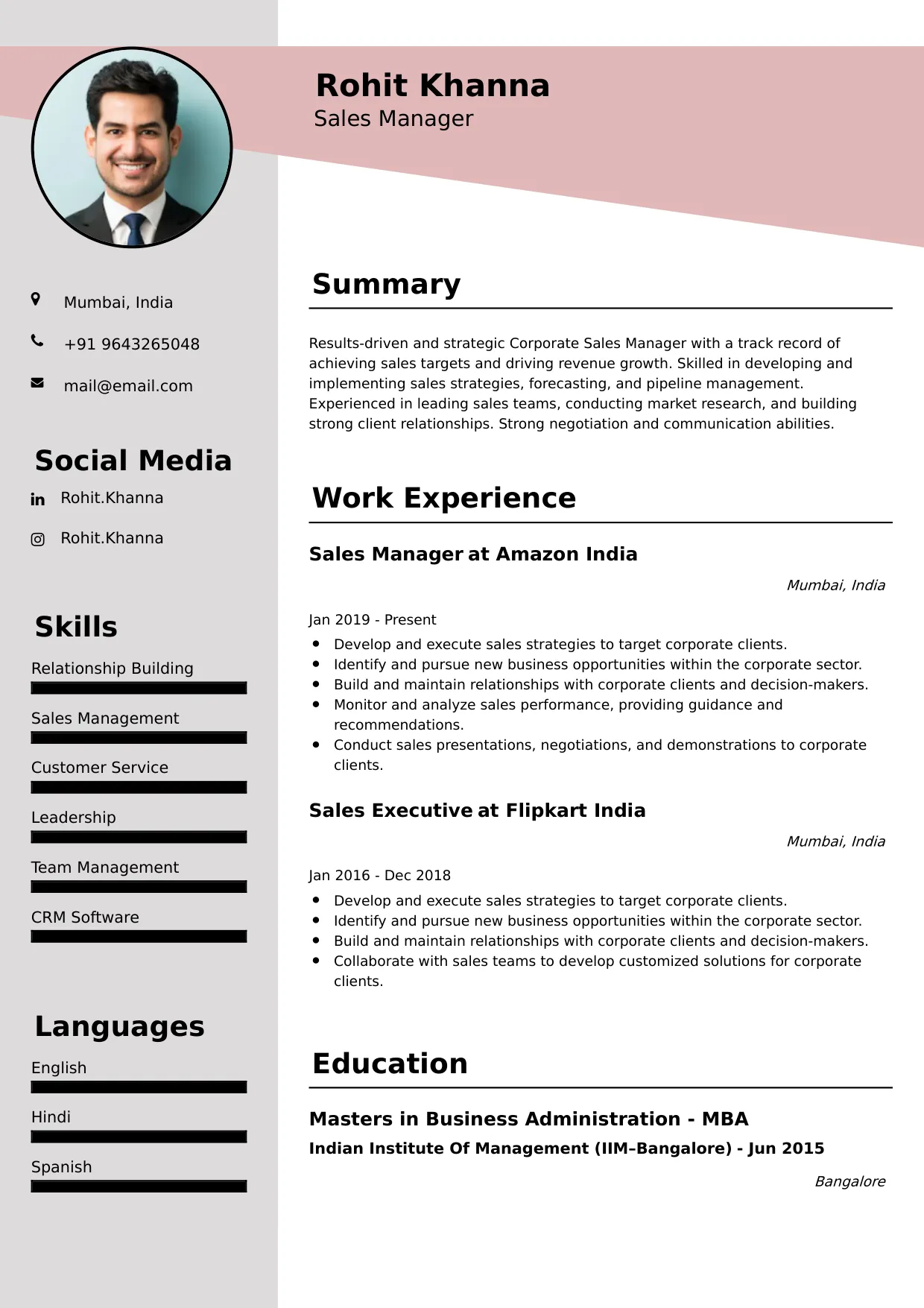
IT Manager
Welcome to our IT Manager resume sample page! This expertly crafted resume template is designed to showcase your expertise in leading the IT department, managing infrastructure, overseeing budgets, mentoring staff, and aligning technology solutions with overall business goals. Whether you manage infrastructure or application development, this sample highlights key skills like Team Leadership, Budget/Vendor Management, IT Strategy, System Uptime/Reliability, Cloud Governance, and ITIL/Service Management tailored to meet top corporate and institutional demands. Use this guide to create a compelling resume that stands out and secures your next career opportunity.
Superbresume.com empowers IT Managers to craft resumes that highlight their strategic leadership and operational accountability. Our platform offers customizable templates tailored for management roles, emphasizing skills like P&L oversight, security policy implementation, Disaster Recovery (DR) planning, and cross-functional project management. With ATS-optimized formats, expert-written content suggestions, and real-time resume analysis, we ensure your resume aligns with job descriptions. Showcase your experience in significantly improving system uptime, achieving major cost savings through cloud adoption, or successfully leading a large-scale technology upgrade project with confidence. Superbresume.com helps you create a polished, results-driven resume that grabs hiring managers’ attention and lands interviews.
How to Write a Resume for an IT Manager
Craft a Targeted Summary: Write a 2-3 sentence summary highlighting your leadership in IT operations/strategy, success in managing budgets and mentoring technical teams, and expertise in system reliability, security governance, and aligning technology with business objectives.
Use Reverse-Chronological Format: List recent IT management, director, or senior engineering roles first, focusing on measurable operational, financial, and leadership achievements.
Highlight Certifications/Training: Include credentials like ITIL v4 Expert, PMP (Project Management Professional), relevant Cloud Certifications (e.g., Azure/AWS), or an MBA/Master’s in MIS to boost credibility.
Quantify Achievements: Use metrics, e.g., “Managed a $2M annual IT budget, reducing CapEx by 15% through strategic cloud migration,” or “Improved critical system uptime from 99.5% to 99.99% through DR plan implementation,” to show impact.
Incorporate Keywords: Use terms like “IT Strategy & Roadmap,” “Team Leadership & Mentoring,” “Budget/Vendor Management (SLA),” “System Uptime/Reliability (DR/BCP),” “Cloud Governance,” “ITIL/Service Management,” or “Cybersecurity Policy” from job roles for ATS.
Detail Leadership/Technical Skills: List expertise in P&L oversight, staff supervision, vendor contract negotiation, security policy development, infrastructure management (Servers/Network), and project management methodology in a dedicated skills section.
Showcase Strategic Projects: Highlight 3-4 key initiatives (e.g., implementing a new service desk, cloud migration, ERP rollout), detailing the business objective, the technology solution, and the quantified financial/operational result.
Emphasize Soft Skills: Include decisive leadership, strategic thinking, financial acumen, communication (to executives/staff), and cross-functional collaboration.
Keep It Concise: Limit your resume to 1-2 pages, focusing on relevant IT leadership, strategic management, and financial accountability experience.
Proofread Thoroughly: Eliminate typos or jargon for a professional document.
Cloud Governance and FinOps: Focus on leading the strategy for cloud adoption (AWS, Azure, GCP), implementing governance policies for cost control, security, and compliance, and utilizing FinOps principles.
Cybersecurity and Zero-Trust Implementation: Highlight leadership in developing and enforcing robust cybersecurity policies (e.g., Zero Trust architecture, privileged access management) and leading the IT team’s security response.
ITIL and Service Management Strategy: Showcase expertise managing the entire service lifecycle, optimizing IT processes (Incident, Problem, Change Management), and utilizing ITSM platforms (ServiceNow) for operational excellence.
Digital Transformation and Automation: Detail leadership in automating IT operations (DevOps, IaC) and supporting the business’s overall digital transformation goals through technology enablement.
Disaster Recovery (DR) and Business Continuity (BCP): Emphasize designing, implementing, and regularly testing robust DR and BCP plans to ensure critical system resilience and minimal downtime.
Metrics-Driven Achievements: Use results like “Reduced annual IT operational costs by 10% by renegotiating key vendor contracts and optimizing licenses” or “Improved average time-to-resolve (MTTR) critical incidents by 50%.”
Team Development and Mentoring: Include experience recruiting, mentoring, and advancing the technical skills of junior administrators and support staff.
Vendor and SLA Management: Highlight expertise defining, monitoring, and enforcing Service Level Agreements (SLAs) with external providers for critical services.
20 Key Skills for an IT Manager Resume
| IT Strategy & Technology Roadmap | Team Leadership & Mentoring (Infrastructure/Support) |
| Budget/P&L Management (OpEx/CapEx) | System Uptime & Disaster Recovery (DR/BCP) |
| Vendor Management & SLA Negotiation | ITIL/Service Management Frameworks |
| Cloud Governance & FinOps (AWS/Azure) | Cybersecurity Policy & Implementation (Zero Trust) |
| Infrastructure Management (Server, Network, Virtualization) | IT Project Management (PMP/Agile) |
| Change Management & Process Optimization | Risk Management (IT/Compliance) |
10 Do’s for an IT Manager Resume
Tailor Your Resume: Customize for the company’s size and primary technology focus (e.g., emphasize application delivery for a software company, emphasize infrastructure for a manufacturing firm).
Highlight Certifications/Training: List ITIL v4 Expert, PMP, and Cloud Certifications prominently.
Quantify Achievements: Include metrics on budget size managed, cost savings achieved, system uptime improvement (percentage/nines), or reduction in incident MTTR.
Use Action Verbs: Start bullet points with verbs like “led,” “managed,” “oversaw,” “reduced,” or “strategized.”
Showcase Strategic Projects: Detail the business objective and the strategic, quantified financial/operational result of 3-4 major technology projects.
Include Soft Skills: Highlight strategic thinking, decisive leadership, financial acumen, and strong executive communication.
Optimize for ATS: Use standard IT/management section titles and incorporate key ITIL, cloud, and project management terms.
Keep It Professional: Use a clean, consistent font and professional layout.
Emphasize Strategy and Financial Acumen: Clearly articulate experience managing technology as a business asset with P&L accountability.
Proofread Thoroughly: Eliminate typos or jargon for a professional document.
10 Don’ts for an IT Manager Resume
Don’t Overload with Jargon: Avoid confusing, internal company acronyms; use standardized ITIL, cloud, and management terminology.
Don’t Exceed Two Pages: Keep your resume concise, focusing on high-level strategy, leadership, and operational results.
Don’t Omit Dates: Include employment dates for career context.
Don’t Use Generic Templates: Tailor your resume specifically to the leadership and strategic management duties of an IT Manager.
Don’t List Irrelevant Skills: Focus on leadership, budget/vendor management, strategy, infrastructure, security, and project management.
Don’t Skip Metrics: Quantify results wherever possible; cost savings, uptime, and efficiency are key metrics.
Don’t Use Complex Formats: Avoid highly stylized elements or confusing graphics.
Don’t Ignore Team Development: Include explicit experience recruiting, mentoring, and managing technical staff.
Don’t Include Outdated Experience: Omit low-level technical support or non-management jobs over 15 years old.
Don’t Forget to Update: Refresh for new ITIL/PMP certification, successful cloud governance implementations, or advanced cybersecurity policy leadership.
5 FAQs for an IT Manager Resume
Prioritize Team Leadership, Budget/Vendor Management, System Uptime/DR planning, IT Strategy, and Cloud Governance.
Use standard IT/management section titles, avoid graphics, and include keywords like “ITIL,” “DRP,” and “Cloud Governance.”
Yes, quantifying the budget managed, cost savings achieved, or project value is crucial for management accountability.
Detail the process implemented (e.g., proactive monitoring, DR testing) and the resulting quantified uptime metric (e.g., 99.99%).
Use a reverse-chronological format to emphasize your most recent, high-level IT leadership and strategic management achievements.
Get 5x more interviews with our crafted Resumes. We make resumes that land jobs.

Get a Free Customized Cover Letter with Resume Expert Advice
with every resume order placed, you will get a free Customized Cover letter.