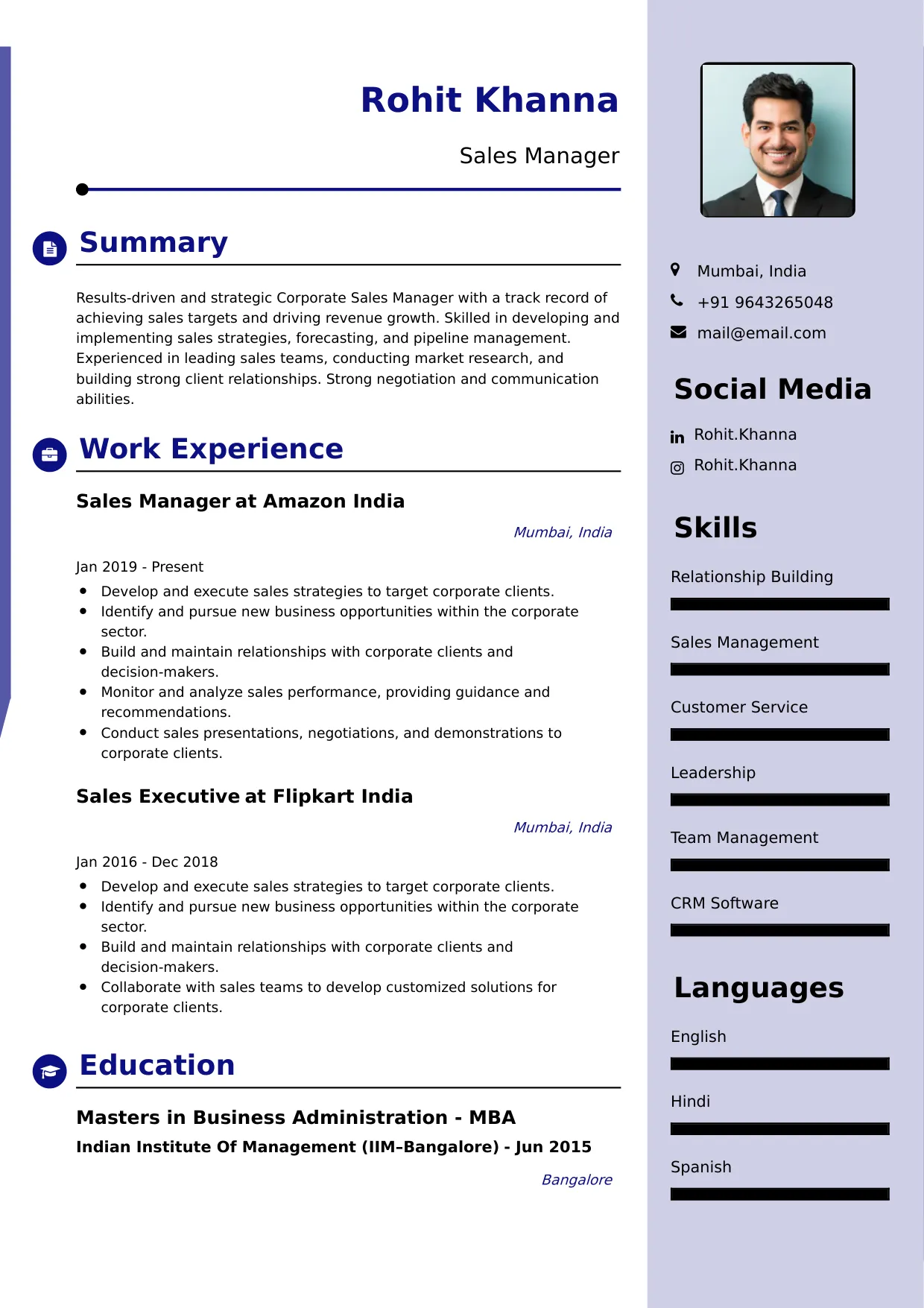
IT Auditor
Welcome to our IT Auditor resume sample page! This expertly crafted resume template is designed to showcase your expertise in planning, executing, and reporting on audits of information technology systems, infrastructure, and processes to assess control effectiveness and regulatory compliance. Whether you're an entry-level candidate or a seasoned professional, this sample highlights key skills like IT General Controls (ITGC), COBIT/NIST Frameworks, SOX Compliance, security risk assessment, and technical audit testing (e.g., network, OS, applications) tailored to meet top corporate, financial, and accounting demands. Use this guide to create a compelling resume that stands out and secures your next career opportunity.
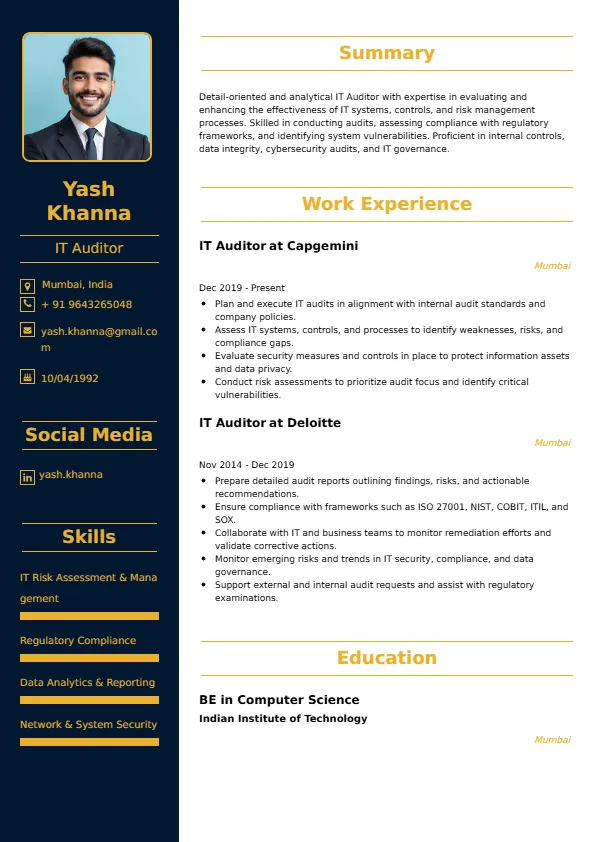
Superbresume.com empowers IT Auditors to craft resumes that highlight their technical control assessment and regulatory compliance expertise. Our platform offers customizable templates tailored for governance and risk roles, emphasizing skills like IT audit planning/scoping, application control testing, cybersecurity risk evaluation, and data analytics for continuous auditing. With ATS-optimized formats, expert-written content suggestions, and real-time resume analysis, we ensure your resume aligns with job descriptions. Showcase your experience in successfully leading end-to-end IT audits, identifying significant control deficiencies in critical systems, or maintaining flawless SOX/NIST compliance with confidence. Superbresume.com helps you create a polished, results-driven resume that grabs hiring managers’ attention and lands interviews.
How to Write a Resume for an IT Auditor
Craft a Targeted Summary: Write a 2-3 sentence summary highlighting your expertise in full-cycle IT auditing, proficiency in IT General Controls (ITGC) and major compliance frameworks (SOX/NIST), and success in assessing technical risks and reporting on control effectiveness.
Use Reverse-Chronological Format: List recent IT audit, external audit (IT specialization), or compliance/risk roles first, focusing on measurable control assessment and regulatory achievements.
Highlight Certifications/Training: Include credentials like CISA (Certified Information Systems Auditor), CISSP (Certified Information Systems Security Professional), CISM, or relevant compliance/cloud audit certifications to boost credibility.
Quantify Achievements: Use metrics, e.g., “Led 10+ ITGC audits annually across 5 major business applications, mitigating 3 high-risk control deficiencies,” or “Reduced the time required to complete the quarterly SOX IT testing cycle by 15% through data automation (ACL/Python),” to show impact.
Incorporate Keywords: Use terms like “IT General Controls (ITGC),” “SOX IT Compliance,” “COBIT/NIST Frameworks,” “Cybersecurity Risk Assessment,” “IT Audit Planning & Execution,” “Application Controls,” or “Data Analytics (ACL/IDEA)” from job descriptions for ATS.
Detail Technical/Audit Skills: List expertise in specific operating systems (Windows/Linux security), database security (SQL), network controls, audit software (ACL, IDEA), cloud security principles, and risk assessment methodology in a dedicated skills section.
Showcase Audit Success: Highlight 3-4 key audit types or process improvement projects (e.g., leading a cloud security audit, implementing a continuous monitoring system for user access, assessing ERP controls), detailing the methodology, the findings, and the resulting risk mitigation.
Emphasize Soft Skills: Include analytical rigor, objectivity, strong written/verbal communication (for reporting findings), attention to detail (control testing), and collaboration (with IT/business owners).
Keep It Concise: Limit your resume to 1-2 pages, focusing on relevant IT audit, control assessment, and compliance experience.
Proofread Thoroughly: Eliminate typos or jargon for a professional document.
Cloud Audit and Security (AWS/Azure/GCP): Focus on expertise auditing cloud environments, assessing security controls (e.g., IAM, network segregation), and ensuring compliance with cloud-specific frameworks (e.g., CIS Benchmarks).
Cybersecurity Controls Assessment: Highlight experience assessing and reporting on the effectiveness of key cybersecurity controls (e.g., threat detection, vulnerability management, incident response) against frameworks like NIST CSF.
Data Analytics for Auditing: Showcase advanced skills in utilizing audit-specific data analysis tools (ACL, IDEA) or programming languages (Python/SQL) to automate control testing, perform 100% population testing, and enable continuous auditing.
Agile and Integrated Auditing: Detail experience auditing systems in agile development environments and integrating IT audit testing seamlessly with financial/operational audits (e.g., auditing automation processes).
ERP Security and Access Controls: Emphasize expertise auditing security roles, segregation of duties (SoD) matrices, and configuration controls within major ERP systems (SAP, Oracle).
Metrics-Driven Achievements: Use results like “Implemented a data-driven test script that reduced audit testing hours by 30% per cycle” or “Identified and mitigated 5 high-risk control deficiencies related to privileged user access.”
Vendor Risk Assessment (Third-Party): Include experience conducting security and control assessments of critical third-party vendors and SaaS providers.
Privacy Compliance Audit: Highlight experience auditing controls related to GDPR, CCPA, or HIPAA to ensure the protection of sensitive personal data.
20 Key Skills for an IT Auditor Resume
| IT General Controls (ITGC) Testing & Design | SOX IT Compliance (Testing & Documentation) |
| CISA/CISSP/CISM Certified | Risk Assessment (IT/Cybersecurity) |
| Audit Planning & Scoping (COBIT/NIST) | Data Analytics for Auditing (ACL/IDEA/SQL) |
| Application Controls & Segregation of Duties (SoD) | ERP Security Auditing (SAP/Oracle) |
| Cloud Security Auditing (AWS/Azure/GCP) | Operating System/Database Security Review |
| Network & Infrastructure Controls | Audit Report Writing & Findings Communication |
| Continuous Auditing/Monitoring | Privacy Compliance (GDPR/HIPAA) |
| Vendor Risk Assessment (Third-Party) | Technical Interviewing & Documentation |
10 Do’s for an IT Auditor Resume
Tailor Your Resume: Customize for the specific compliance framework (e.g., emphasize SOX/PCAOB for public accounting, emphasize NIST/CIS for technology risk).
Highlight Certifications/Training: List CISA, CISSP, and CISM prominently.
Quantify Achievements: Include metrics on audits led/completed, percentage reduction in audit cycle time, number of high-risk deficiencies mitigated, or data volume analyzed.
Use Action Verbs: Start bullet points with verbs like “audited,” “assessed,” “tested,” “reported,” or “mitigated.”
Showcase Audit Success: Detail the methodology and the strategic, quantified risk reduction/compliance result of 3-4 key IT audit engagements.
Include Soft Skills: Highlight analytical rigor, objectivity, strong communication (reporting), and collaboration with technical teams.
Optimize for ATS: Use standard audit/IT section titles and incorporate key framework, compliance, and tool terms.
Keep It Professional: Use a clean, consistent font and professional layout.
Emphasize Controls and Risk: Clearly articulate expertise in assessing ITGCs and connecting technical deficiencies back to business risk (SOX implications).
Proofread Thoroughly: Ensure no typos or errors in technical terms, regulations, or metrics.
10 Don’ts for an IT Auditor Resume
Don’t Overload with Jargon: Avoid confusing, internal company acronyms; use standardized COBIT, NIST, and audit terminology.
Don’t Exceed Two Pages: Keep your resume concise, focusing on high-impact IT audit, control assessment, and risk mitigation achievements.
Don’t Omit Dates: Include employment dates for career context.
Don’t Use Generic Templates: Tailor your resume specifically to the technical control and analytical duties of an IT Auditor.
Don’t List Irrelevant Skills: Focus on ITGC, application controls, security, compliance, and audit data analytics.
Don’t Skip Metrics: Quantify results wherever possible; risk reduction, audit efficiency, and deficiency mitigation are key metrics.
Don’t Use Complex Formats: Avoid highly stylized elements or confusing graphics.
Don’t Ignore Data Analytics: Include explicit experience using specialized software (ACL/IDEA) for audit testing.
Don’t Include Outdated Experience: Omit non-IT or non-audit jobs over 15 years old.
Don’t Forget to Update: Refresh for new CISA/CISSP certification, successful cloud audit projects, or advanced continuous monitoring skills.
5 FAQ's for an IT Auditor Resume
The CISA (Certified Information Systems Auditor).
Mention auditing specific environments: "Cloud (AWS/Azure), ERP (SAP/Oracle), or Database (SQL/NoSQL)."
Yes. Mention "Assessed cybersecurity controls against NIST CSF or ISO 27001 standards."
"Tested automated controls and segregation of duties (SoD) within core financial applications."
Yes. Focus on "CAATTs (Computer-Assisted Audit Tools and Techniques)."
Get 5x more interviews with our crafted Resumes. We make resumes that land jobs.

Get a Free Customized Cover Letter with Resume Expert Advice
with every resume order placed, you will get a free Customized Cover letter.