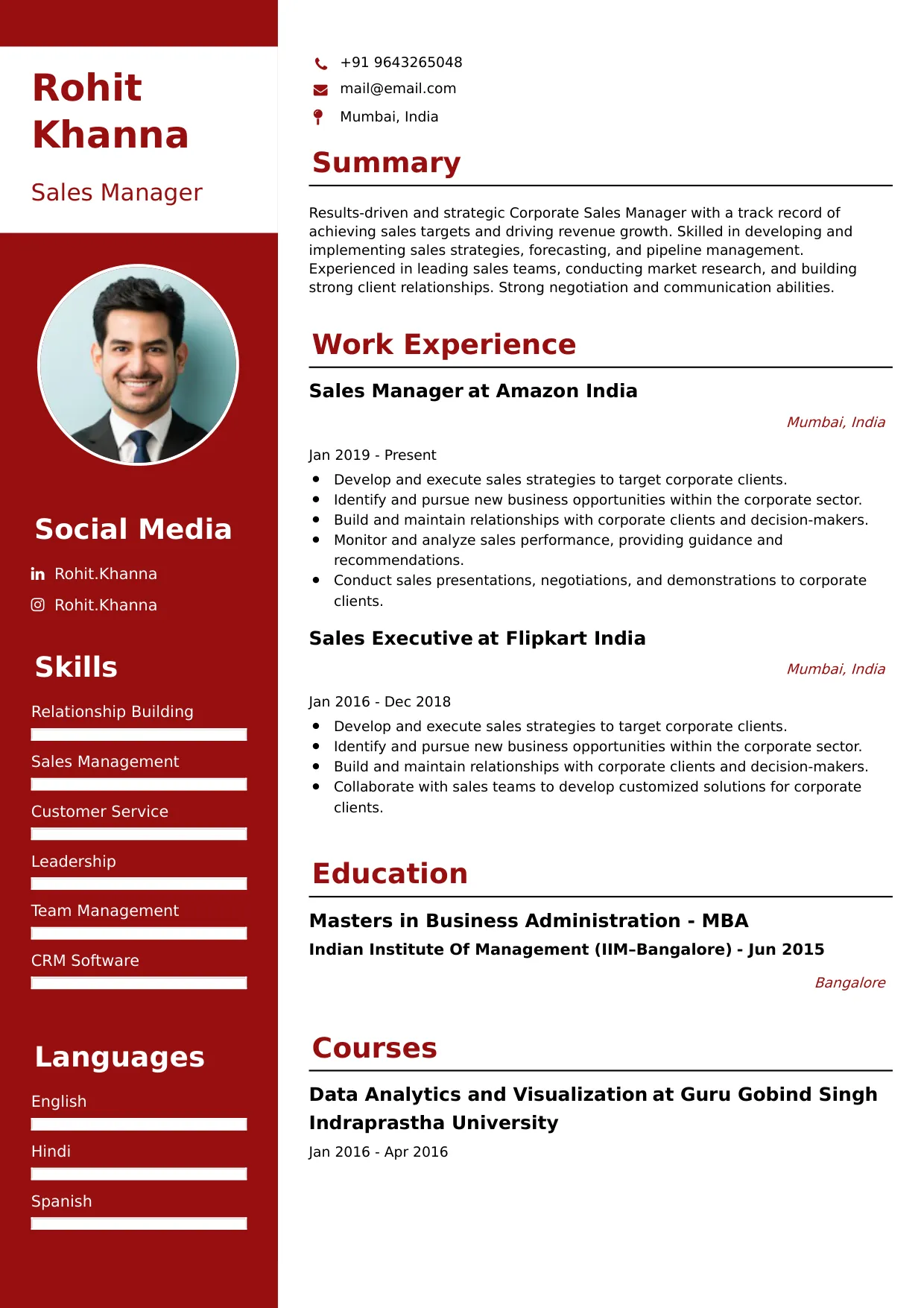
Enterprise Architect
Welcome to our Enterprise Architect (EA) resume sample page! This expertly crafted resume template is designed to showcase your expertise in defining the overall technological strategy, architecture, and roadmap of an organization to align with business goals. Whether you're an ascending Solution Architect or a seasoned executive, this sample highlights key skills like TOGAF, business capability mapping, cloud strategy, governance, and stakeholder management tailored to meet top corporate and consulting demands. Use this guide to create a compelling resume that stands out and secures your next career opportunity.
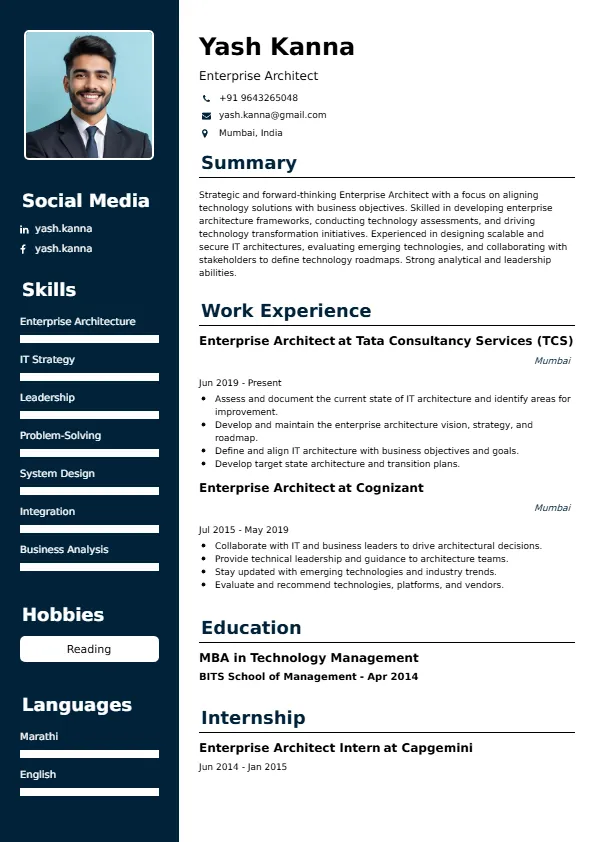
Superbresume.com empowers Enterprise Architects to craft resumes that highlight their strategic technical vision and business transformation expertise. Our platform offers customizable templates tailored for executive IT roles, emphasizing skills like IT governance frameworks, application rationalization, digital transformation, and executive communication. With ATS-optimized formats, expert-written content suggestions, and real-time resume analysis, we ensure your resume aligns with job descriptions. Showcase your experience in leading complex multi-year IT roadmaps, achieving significant cost savings through platform consolidation, or establishing robust architectural governance with confidence. Superbresume.com helps you create a polished, results-driven resume that grabs hiring managers’ attention and lands interviews.
How to Write a Resume for an Enterprise Architect
Use Reverse-Chronological Format: List recent EA, CTO, or senior Solution Architecture roles first, focusing on strategic, organizational, and financial impact.
Highlight Certifications/Frameworks: Include credentials like TOGAF Certification, Zachman Framework knowledge, ITIL, or Cloud Architect certifications (AWS/Azure/GCP) to boost credibility.
Quantify Achievements: Use metrics, e.g., “Led a 5-year digital transformation roadmap, resulting in a 25% reduction in annual IT operating costs,” or “Architected the consolidation of 40 legacy applications into 5 strategic platforms, saving $10M in licensing,” to show impact.
Incorporate Keywords: Use terms like “Enterprise Architecture,” “TOGAF,” “Digital Transformation,” “Business Capability Mapping,” “IT Governance,” “Application Rationalization,” “Cloud Strategy (Hybrid/Multi-Cloud),” or “Technology Roadmap” from job descriptions for ATS.
Detail Strategy/Governance Skills: List expertise in IT financial management, governance model design, security architecture principles, and executive presentation/communication in a dedicated skills section.
Showcase Strategic Initiatives: Highlight 3-4 key architecture projects (e.g., cloud migration, ERP modernization, microservices adoption), detailing the strategic business objective and the quantified result.
Emphasize Soft Skills: Include strategic vision, executive presence, consensus building, complex problem-solving (organizational and technical), and strong communication across all levels.
Keep It Concise: Limit your resume to 1-2 pages, focusing on high-level strategic, financial, and organizational architecture achievements.
Proofread Thoroughly: Eliminate typos or jargon for a professional document.
Data Mesh/Data Fabric Architecture: Highlight experience in structuring data architecture for decentralized ownership, self-service data products, and unified governance across the enterprise.
Security Architecture and Zero Trust: Showcase expertise in embedding security principles (DevSecOps, Zero Trust) into the enterprise architecture blueprint and governance standards.
AI/ML Governance: Detail experience setting policy, standards, and architecture for the ethical and scalable deployment of AI/ML models across business units.
Business Capability Mapping: Emphasize using tools and frameworks to clearly link the application portfolio and underlying technology to core business capabilities, justifying investment decisions.
Metrics-Driven Achievements: Use results like “Accelerated product launch time-to-market by 30% through microservices architecture adoption” or “Achieved 95% compliance with internal IT governance standards.”
Application Portfolio Management (APM): Include experience conducting portfolio analysis (e.g., Gannett charts) to prioritize retirement, renewal, or replacement of applications based on business value and technical debt.
Agile and Lean Architecture: Highlight experience implementing lightweight, agile architectural processes that enable speed without sacrificing governance or consistency.
Choose Superbresume.com to craft an Enterprise Architect resume that stands out in the executive tech strategy field. Our platform offers tailored templates optimized for ATS, ensuring your skills in TOGAF, cloud strategy, and business alignment shine. With expert guidance, pre-written content, and real-time feedback, we help you highlight achievements like reducing IT costs or accelerating digital transformation. Whether you define cloud adoption or application rationalization, our tools make it easy to create a polished, results-driven resume. Trust Superbresume.com to showcase your expertise in defining the strategic technical direction and governance of a large organization. Start building your career today!
20 Key Skills for an Enterprise Architect Resume
| TOGAF/Zachman Framework | IT Strategy & Roadmap Development |
| Business Capability Mapping | Cloud Architecture (AWS/Azure/GCP) |
| IT Governance & Policy Design | Application Portfolio Management (APM) |
| Digital Transformation Leadership | Microservices & API Architecture |
| Security Architecture Principles (Zero Trust) | Financial Management (TCO/ROI) |
| Stakeholder Management (C-Level) | Domain-Driven Design (DDD) |
| Application Rationalization | Architecture Review Board (ARB) Leadership |
| ITIL & Service Management | Data Architecture (Data Fabric/Mesh) |
| Executive Presentation | Consensus Building |
| Systems Thinking | Agile Architecture |
10 Do’s for an Enterprise Architect Resume
Tailor Your Resume: Customize for the company’s primary business objective (e.g., focus on finance/risk architecture for a bank, product agility for a tech company).
Highlight Certifications/Frameworks: List TOGAF Certification and relevant Cloud Architect certifications prominently.
Quantify Achievements: Include metrics on cost savings, efficiency gains, application retirement numbers, or compliance score improvement driven by architectural decisions.
Use Action Verbs: Start bullet points with verbs like “architected,” “defined,” “governed,” “led,” or “rationalized.”
Showcase Strategic Initiatives: Detail key multi-year roadmaps or consolidation projects, emphasizing the financial and business value delivered.
Include Soft Skills: Highlight strategic vision, executive communication, and the ability to drive change across large organizations.
Optimize for ATS: Use standard executive section titles and incorporate key EA framework and technology terms.
Keep It Professional: Use a clean, consistent font and executive-level layout.
Emphasize Business Alignment: Clearly link all architectural decisions to supporting specific business capabilities and financial objectives.
Proofread Carefully: Ensure no typos or errors in complex architectural terms or financial data.
10 Don’ts for an Enterprise Architect Resume
Don’t Overload with Jargon: Avoid confusing, internal company acronyms; use standardized architectural and governance terminology.
Don’t Exceed Two Pages: Keep your resume concise, focusing on high-level strategic and organizational impact.
Don’t Omit Dates: Include employment dates for career context.
Don’t Use Generic Templates: Tailor your resume specifically to the strategic, cross-functional role of an Enterprise Architect.
Don’t List Irrelevant Skills: Focus on architecture frameworks, strategy, governance, finance, and cloud technologies.
Don’t Skip Metrics: Quantify results wherever possible; architecture success is measured by cost, efficiency, and business agility.
Don’t Use Complex Formats: Avoid highly stylized elements or confusing graphics.
Don’t Ignore Governance: Include explicit experience leading Architecture Review Boards (ARBs) and defining technical standards.
Don’t Include Outdated Experience: Omit low-level technical or administrative jobs over 15 years old unless highly relevant to foundational principles.
Don’t Forget to Update: Refresh for new cloud certifications, successful roadmap implementations, or advanced data architecture concepts.
5 FAQs for an Enterprise Architect Resume
Prioritize TOGAF/Architecture framework mastery, Cloud Strategy (multi-cloud/hybrid), IT Governance, Application Rationalization, and Business Capability Mapping.
Use standard executive section titles, avoid graphics, and include keywords like “TOGAF,” “Application Rationalization,” and “IT Governance.”
Yes, always quantify cost savings, budget management scope, or TCO/ROI improvements driven by architectural decisions.
Detail the initial portfolio size, the methodology used (e.g., consolidation, retirement), and the resulting quantified reduction in applications or technical debt.
Use a reverse-chronological format to emphasize your most recent, high-level strategic architecture and governance achievements.
Get 5x more interviews with our crafted Resumes. We make resumes that land jobs.

Get a Free Customized Cover Letter with Resume Expert Advice
with every resume order placed, you will get a free Customized Cover letter.