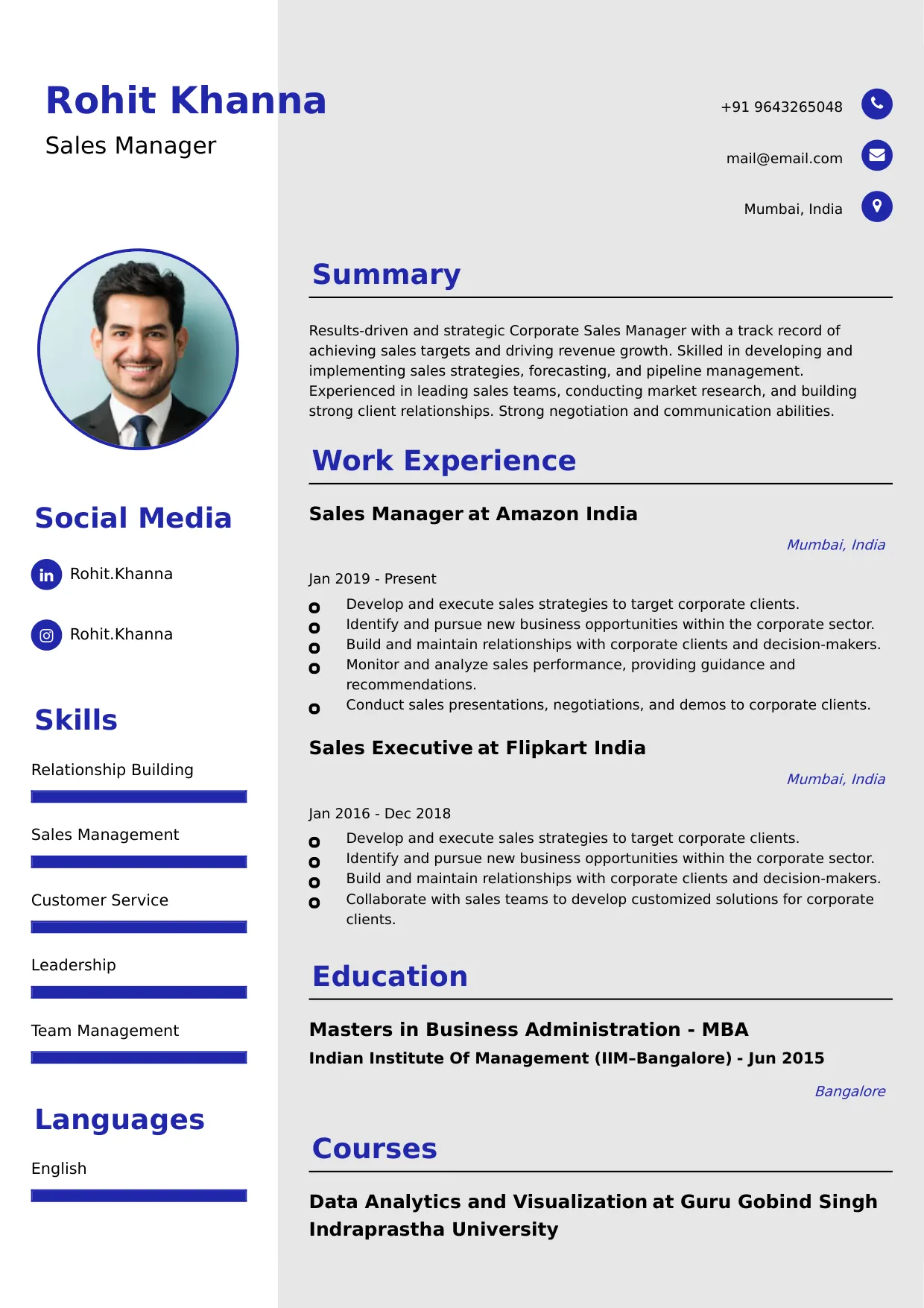
Training Specialist
Welcome to our Training Specialist resume sample page! This expertly crafted resume template is designed to showcase your expertise in designing, developing, and delivering engaging training content, facilitating live/virtual sessions, utilizing the LMS, and tracking learning progress for employee development programs. Whether you focus on compliance, software, or soft skills, this sample highlights key skills like Instructional Design (ID) Principles, E-learning Authoring (Articulate Suite), Facilitation (ILT/VILT), Training Project Management, and LMS Administration tailored to meet top corporate L&D demands. Use this guide to create a polished, results-driven resume that stands out and secures your next career opportunity.
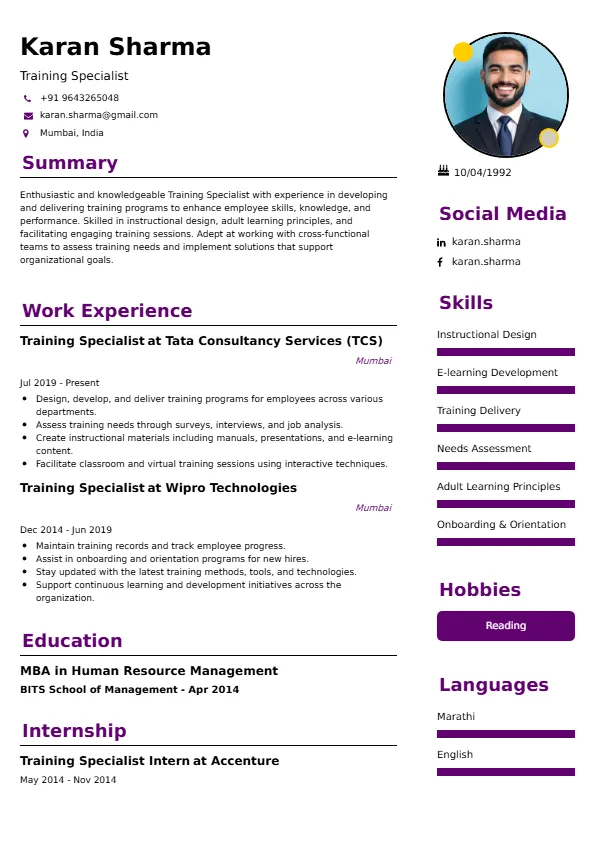
How to Write a Resume for a Training Specialist
Craft a Targeted Summary: Write a 2-3 sentence summary highlighting your expertise in full-cycle training development and delivery, proficiency in instructional design principles and authoring tools, and success in managing projects and utilizing the LMS to track and report on employee competency.
Use Reverse-Chronological Format: List recent Training Specialist, Instructional Designer, or corporate training roles first, focusing on measurable content development and delivery efficacy.
Highlight Certifications/Training: Include credentials like ATD Certified Professional in Training and Development (CPTD/APTD), Articulate Storyline Certification, specialized facilitation training, or relevant ID degrees/certificates to boost credibility.
Quantify Achievements: Use metrics, e.g., “Designed and delivered a new system training curriculum to 300+ end-users, resulting in a 20% increase in end-user proficiency scores,” or “Converted a 4-hour Instructor-Led Training (ILT) course to a 1-hour e-learning module, saving $X in annual travel costs,” to show impact.
Incorporate Keywords: Use terms like “Instructional Design (ID) Principles,” “E-learning Authoring (Articulate Storyline/Rise),” “Facilitation (ILT/VILT),” “Training Project Management,” “LMS Administration & Reporting,” “SME Collaboration,” or “Assessment Design (Level 1/2)” from job descriptions for ATS.
Detail Technical/Delivery Skills: List proficiency with specific authoring tools, virtual classroom platforms (Zoom/Teams), LMS systems, graphic design software (basic), and strong presentation/facilitation techniques in a dedicated skills section.
Showcase Training Projects: Highlight 3-4 key courses or training rollouts, detailing the topic (e.g., compliance, software, sales skills), the delivery method, the ID solution provided, and the measured learning/satisfaction result.
Emphasize Soft Skills: Include strong communication, adaptability, project management, attention to detail (content accuracy), and effective facilitation/presentation delivery.
Keep It Concise: Limit your resume to 1-2 pages, focusing on relevant training development, delivery, and project management experience.
Proofread Thoroughly: Eliminate typos or jargon for a professional document.
Blended Learning Content Creation: Focus on expertise designing integrated learning experiences that seamlessly combine e-learning, virtual instructor-led training (VILT), and job aids/performance support tools.
E-learning Authoring Mastery: Highlight deep technical proficiency utilizing advanced features of Articulate Storyline/Rise (e.g., variables, branching scenarios, accessibility checks) to create highly interactive and accessible content.
Virtual Facilitation and Engagement: Showcase expertise engaging and managing remote audiences in a virtual classroom setting, utilizing tools like breakout rooms, polls, and whiteboards effectively.
Microlearning and Performance Support: Detail experience designing short, focused learning bursts and job aids delivered through mobile or LMS portals to support just-in-time performance needs.
SME Collaboration and Content Curation: Emphasize strong communication skills working with Subject Matter Experts (SMEs) to gather information and translate complex product knowledge into actionable training materials.
Metrics Tracking and Evaluation: Include experience utilizing the LMS and post-training surveys to track completion rates, knowledge gain (Level 2), and basic performance improvement (Level 3, if tracked).
Training Project Management: Highlight experience utilizing project management principles (scope, timeline, stakeholder communication) to manage training content development and deployment projects effectively.
Compliance Training Delivery: Focus on experience delivering mandatory compliance training (e.g., ethics, security) and ensuring accurate completion tracking in the LMS for audit purposes.
Choose Superbresume.com to craft a Training Specialist resume that stands out in the essential corporate training sector. Our platform offers tailored templates optimized for ATS, ensuring your skills in ID principles, authoring tools, and effective facilitation shine. With expert guidance, pre-written content, and real-time feedback, we help you highlight achievements like increasing knowledge scores or reducing training delivery costs. Whether you develop compliance content or soft skills workshops, our tools make it easy to create a polished, results-driven resume. Trust Superbresume.com to showcase your expertise in engineering and delivering high-impact employee training. Start building your career today!
20 Key Skills for a Training Specialist Resume
| Instructional Design (ID) Principles (ADDIE/SAM) | E-learning Authoring (Articulate Storyline/Rise) |
| Facilitation (ILT/VILT) & Presentation Skills | LMS Administration & Reporting (Enrollment/Completion) |
| Training Project Management & Timeline Control | SME Collaboration & Content Gathering |
10 Do’s for a Training Specialist Resume
Tailor Your Resume: Customize for the industry and the primary delivery focus (e.g., emphasize software training, emphasize sales coaching).
Highlight Certifications/Training: List CPTD/APTD, Articulate Storyline, or specialized facilitation certifications prominently.
Quantify Achievements: Include metrics on knowledge check score improvement, completion rates, cost savings from content conversion, or number of training hours/modules delivered.
Use Action Verbs: Start bullet points with verbs like “developed,” “facilitated,” “designed,” “authored,” or “managed.”
Showcase Training Projects: Detail the methodology and the strategic, quantified learning/satisfaction outcome of 3-4 key training projects.
Include Soft Skills: Highlight strong communication, project management, attention to detail (content quality), and effective presentation delivery.
Optimize for ATS: Use standard L&D section titles and incorporate key ID models, software, and delivery terms.
Keep It Professional: Use a clean, consistent font and professional layout.
Emphasize ID and Authoring Tools: Clearly articulate expertise in both the science of learning design and the technical tools for development.
Proofread Thoroughly: Eliminate typos or jargon for a professional document.
10 Don’ts for a Training Specialist Resume
Don’t Overload with Jargon: Avoid confusing, internal company acronyms; use standardized L&D, ID, and assessment terminology.
Don’t Exceed Two Pages: Keep your resume concise, focusing on high-impact training development and delivery achievements.
Don’t Omit Dates: Include employment dates for career context.
Don’t Use Generic Templates: Tailor your resume specifically to the design, execution, and project management duties of a Training Specialist.
Don’t List Irrelevant Skills: Focus on ID models, authoring tools, facilitation, LMS, and project management.
Don’t Skip Metrics: Quantify results wherever possible; link achievements to learning outcomes, completion rates, or efficiency.
Don’t Use Complex Formats: Avoid highly stylized elements or confusing graphics.
Don’t Ignore Technology: Include mastery of specific authoring (Storyline) and virtual classroom tools.
Don’t Include Outdated Experience: Omit non-L&D or non-training jobs over 15 years old.
Don’t Forget to Update: Refresh for new CPTD status, successful e-learning project launches, or advanced virtual facilitation techniques.
5 FAQs for a Training Specialist Resume
Prioritize Instructional Design (ADDIE/SAM), e-learning authoring (Articulate Suite), Facilitation (ILT/VILT), Training Project Management, and LMS Administration.
Use standard L&D section titles, avoid graphics, and include keywords like “Articulate Storyline,” “SCORM/xAPI,” and “VILT.”
Yes, quantifying cost savings from content conversion or the training budget managed for projects demonstrates scope.
Detail the type of content delivered and the techniques used (e.g., managing virtual breakout rooms, applying adult learning principles) to achieve high participant engagement.
Use a reverse-chronological format to emphasize your most recent, high-impact training development and delivery achievements.
Get 5x more interviews with our crafted Resumes. We make resumes that land jobs.

Get a Free Customized Cover Letter with Resume Expert Advice
with every resume order placed, you will get a free Customized Cover letter.