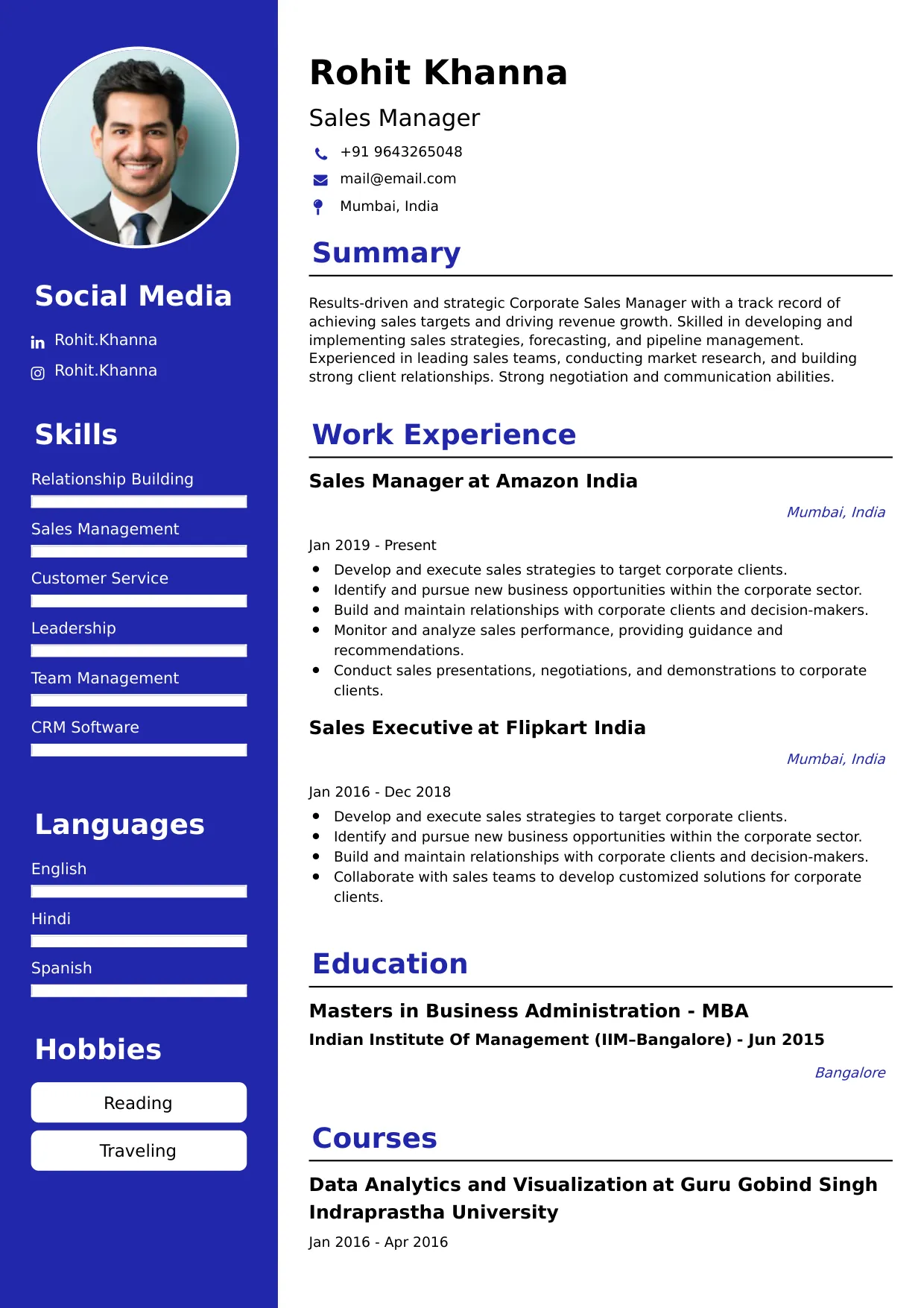
Payroll Administrator
Welcome to our Payroll Administrator resume sample page! This expertly crafted resume template is designed to showcase your expertise in processing payroll (multi-state/international), ensuring tax compliance, managing deductions/garnishments, handling employee payroll inquiries, and maintaining accurate payroll records using specialized software. Whether you work in a corporate finance department or for a payroll service provider, this sample highlights key skills like Payroll Processing (Full Cycle), Tax Compliance (Federal/State), Payroll Software Mastery (ADP, Paychex), General Ledger (GL) Reconciliation, and Data Confidentiality tailored to meet top organizational demands. Use this guide to create a polished, results-driven resume that stands out and secures your next career opportunity.
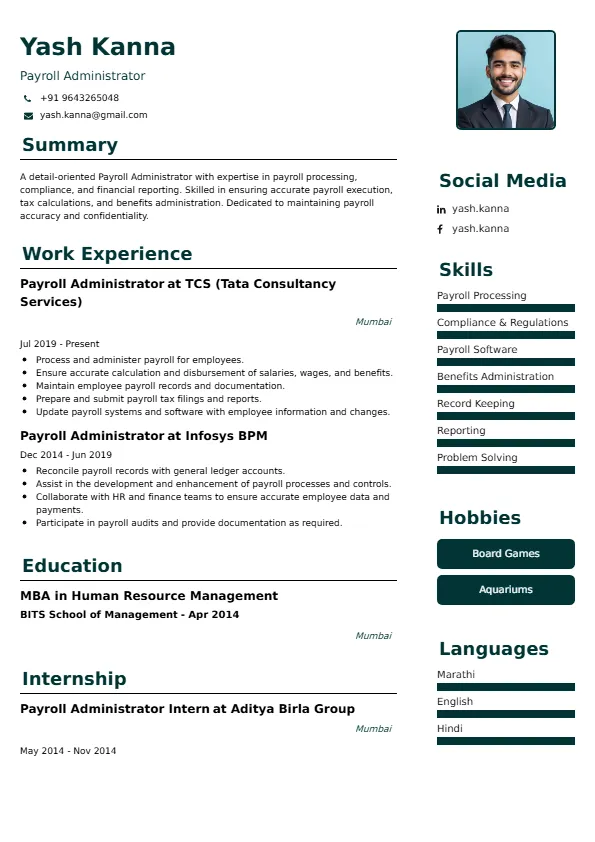
Superbresume.com empowers Payroll Administrators to craft resumes that highlight their processing accuracy and tax compliance expertise. Our platform offers customizable templates tailored for finance and HR roles, emphasizing skills like multi-jurisdiction taxation, benefits deduction management, payroll system optimization, and coordination with HR/Finance for GL posting. With ATS-optimized formats, expert-written content suggestions, and real-time resume analysis, we ensure your resume aligns with job descriptions. Showcase your experience in consistently achieving zero payroll errors, successfully processing multi-state payroll for thousands of employees, or streamlining the timecard approval process with confidence. Superbresume.com helps you create a polished, results-driven resume that grabs hiring managers’ attention and lands interviews.
How to Write a Resume for a Payroll Administrator
Craft a Targeted Summary: Write a 2-3 sentence summary highlighting your expertise in full-cycle payroll processing, proficiency in multi-state tax compliance and specialized payroll software, and success in ensuring accurate, timely, and compliant disbursement for a large employee base.
Use Reverse-Chronological Format: List recent payroll administrator, specialist, or relevant accounting/HR roles first, focusing on measurable accuracy and compliance achievements.
Highlight Certifications/Training: Include credentials like Certified Payroll Professional (CPP), Fundamental Payroll Certification (FPC), specialized software certification (e.g., ADP), or relevant accounting/tax training to boost credibility.
Quantify Achievements: Use metrics, e.g., “Processed bi-weekly payroll for 1,500+ employees across 10 states, maintaining a 99.9% accuracy rate and zero critical errors,” or “Streamlined the timecard approval process, reducing payroll finalization time by 1 day monthly,” to show impact.
Incorporate Keywords: Use terms like “Full-Cycle Payroll Processing,” “Multi-State Tax Compliance (Federal/State/Local),” “Payroll Software (ADP/Paychex/Workday),” “General Ledger (GL) Reconciliation,” “Deduction/Garnishment Management,” “W-2/1099 Reporting,” or “Time & Attendance System” from job descriptions for ATS.
Detail Technical/Compliance Skills: List proficiency with specific payroll systems, advanced Excel (pivot tables, reconciliation), tax reporting procedures, benefits deduction reconciliation, and confidentiality protocols (HIPAA/Data Security) in a dedicated skills section.
Showcase Process Improvements: Highlight 3-4 key projects or responsibilities (e.g., implementing a new time and attendance system, automating GL entries, leading the W-2/year-end processing cycle), detailing the scope and the accuracy/efficiency result.
Emphasize Soft Skills: Include meticulous attention to detail, analytical problem-solving (variance checks), strong communication (employee inquiries), adherence to deadlines, and strict confidentiality.
Keep It Concise: Limit your resume to 1-2 pages, focusing on relevant payroll, compliance, and systems experience.
Proofread Thoroughly: Eliminate typos or jargon for a professional document.
Multi-State and Multi-Jurisdiction Tax: Focus on expertise managing tax compliance, reciprocity, and reporting for employees working in multiple states or international locations.
Payroll System Optimization and Integration: Highlight proficiency utilizing advanced payroll system features (e.g., reporting, configuration) and managing the integration of payroll data with HRIS (Workday) and Finance (GL).
FLSA and Wage & Hour Compliance: Showcase deep knowledge of Federal Labor Standards Act (FLSA) regulations regarding overtime, minimum wage, and state-specific wage payment laws.
Year-End and Tax Reporting Mastery: Detail expertise managing the entire year-end process, including W-2/1099 preparation, tax filings (941, state filings), and balancing procedures.
Automation and Efficiency: Emphasize involvement in automating manual payroll processes, such as general ledger posting, retroactive pay calculations, or timecard data validation.
Metrics-Driven Achievements: Use results like “Maintained 100% compliance with all monthly tax filing deadlines for 5+ years” or “Reduced the time spent resolving employee payroll inquiries by 20% through improved communication/documentation.”
Garnishments and Deduction Management: Include complex experience administering various statutory and voluntary deductions, including tax levies, child support garnishments, and benefits premiums.
Audit Support: Highlight experience compiling payroll documentation, reports, and data required for internal, external (CPA), and governmental audits.
Choose Superbresume.com to craft a Payroll Administrator resume that stands out in the critical corporate finance and HR sector. Our platform offers tailored templates optimized for ATS, ensuring your skills in CPP certification, processing accuracy, and tax compliance shine. With expert guidance, pre-written content, and real-time feedback, we help you highlight achievements like achieving zero payroll errors or streamlining the month-end close process. Whether you handle multi-state payroll or complex deductions, our tools make it easy to create a polished, results-driven resume. Trust Superbresume.com to showcase your expertise in reliable, confidential, and compliant payroll management. Start building your career today!
20 Key Skills for a Payroll Administrator Resume
| Full-Cycle Payroll Processing (Multi-State/Local) | Tax Compliance (Federal/State/Local Filing) |
| Payroll Software Mastery (ADP, Paychex, Workday Payroll) | General Ledger (GL) Reconciliation & Posting |
| Certified Payroll Professional (CPP/FPC) | Deduction & Garnishments Administration |
| Time & Attendance System Management (Integration) | Year-End Processing (W-2/1099) |
| FLSA & Wage & Hour Law Compliance | Confidentiality & Data Security |
| Advanced MS Excel (Data Validation/Pivot Tables) | Employee Payroll Inquiry Resolution |
10 Do’s for a Payroll Administrator Resume
Tailor Your Resume: Customize for the company’s size, industry, and the complexity of its payroll (e.g., multi-state, union, international).
Highlight Certifications/Training: List CPP/FPC certification and specialized payroll software training prominently.
Quantify Achievements: Include metrics on employee volume supported, accuracy rate (percentage), time reduction in processing, or compliance success.
Use Action Verbs: Start bullet points with verbs like “processed,” “ensured,” “managed,” “reconciled,” or “automated.”
Showcase Compliance and Accuracy: Detail the methodology and the strategic, quantified compliance/efficiency result of 3-4 key payroll projects.
Include Soft Skills: Highlight meticulous detail, analytical problem-solving, adherence to deadlines, and strict confidentiality.
Optimize for ATS: Use standard finance/HR section titles and incorporate key payroll, compliance, and system terms.
Keep It Professional: Use a clean, consistent font and professional layout.
Emphasize Systems and Compliance: Clearly articulate expertise in using the payroll system efficiently and maintaining strict tax/FLSA compliance.
Proofread Thoroughly: Eliminate typos or jargon for a professional document.
10 Don’ts for a Payroll Administrator Resume
Don’t Overload with Jargon: Avoid confusing, internal company or software acronyms; use standardized payroll and tax terminology.
Don’t Exceed Two Pages: Keep your resume concise, focusing on high-impact payroll processing, compliance, and system achievements.
Don’t Omit Dates: Include employment dates for career context.
Don’t Use Generic Templates: Tailor your resume specifically to the detailed, accuracy-focused duties of a Payroll Administrator.
Don’t List Irrelevant Skills: Focus on payroll processing, tax compliance, deductions, systems, and GL reconciliation.
Don’t Skip Metrics: Quantify results wherever possible; accuracy, volume, and compliance are key metrics.
Don’t Use Complex Formats: Avoid highly stylized elements or confusing graphics.
Don’t Ignore Multi-State/International: Include explicit experience handling complex jurisdictional tax requirements.
Don’t Include Outdated Experience: Omit non-payroll or low-level administrative jobs over 15 years old.
Don’t Forget to Update: Refresh for new CPP certification, successful tax year-end processing, or advanced payroll system configuration.
5 FAQs for a Payroll Administrator Resume
Prioritize CPP/FPC certification, full-cycle processing (multi-state), tax compliance, GL reconciliation, and payroll software mastery (ADP/Workday).
Use standard finance/HR section titles, avoid graphics, and include keywords like “CPP,” “Multi-State Tax,” and “GL Reconciliation.”
Yes, quantifying the number of employees supported and the accuracy rate achieved is crucial.
Detail a process change (e.g., automating data validation) and the resulting quantified reduction in time (e.g., 1-day reduction in payroll finalization).
Use a reverse-chronological format to emphasize your most recent, high-impact payroll processing and compliance achievements.
Get 5x more interviews with our crafted Resumes. We make resumes that land jobs.

Get a Free Customized Cover Letter with Resume Expert Advice
with every resume order placed, you will get a free Customized Cover letter.