HR Data Analyst
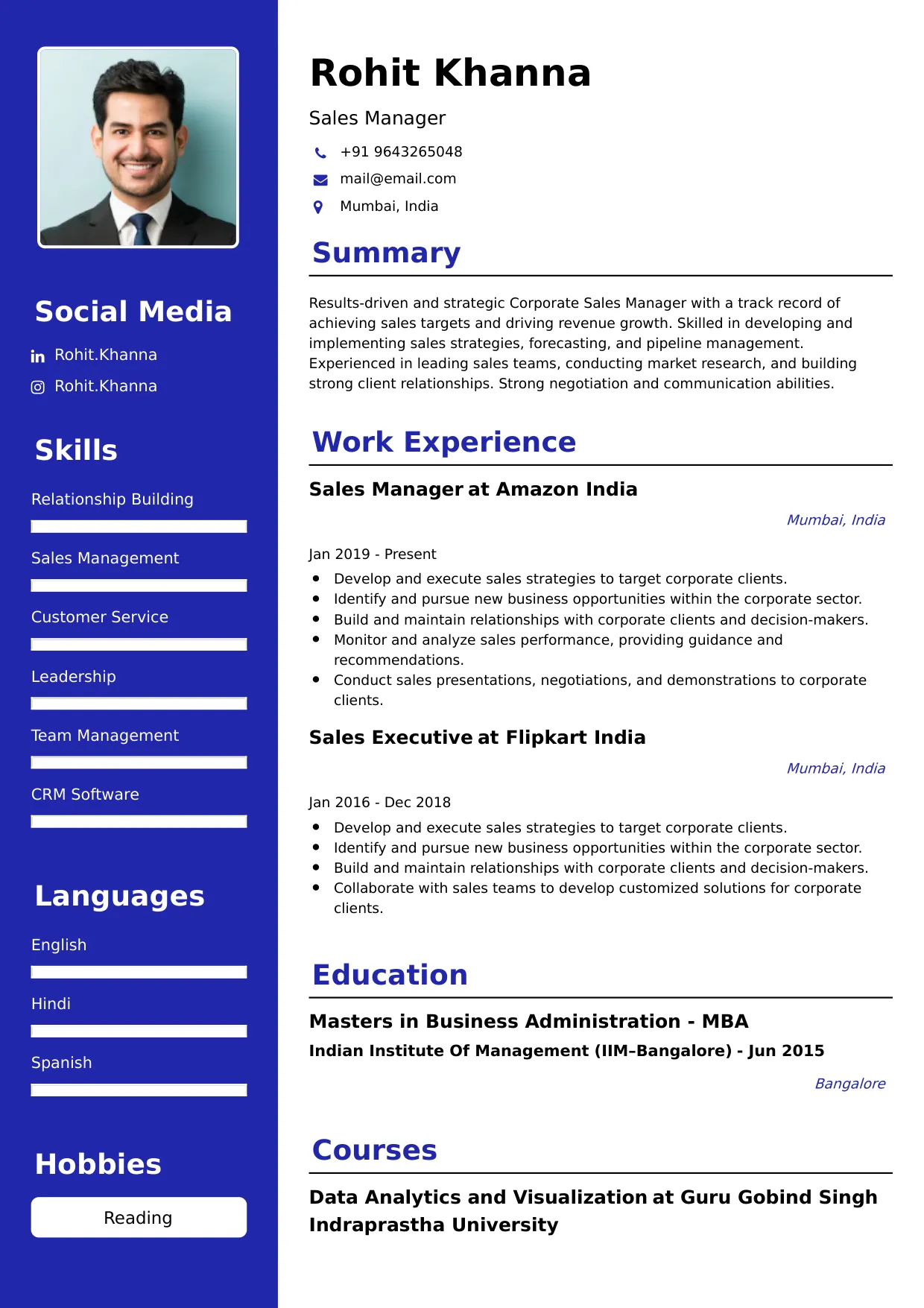
Welcome to our HR Data Analyst resume sample page! This expertly crafted resume template is designed to showcase your expertise in collecting, cleaning, manipulating, and analyzing complex HR and people data to create reports, dashboards, and basic predictive models. Whether you're an entry-level candidate or a seasoned professional, this sample highlights key skills like SQL querying, data visualization (Tableau/Power BI), statistical analysis (correlation, descriptive), data governance, and HRIS reporting (Workday/SAP) tailored to meet top corporate HR demands. Use this guide to create a compelling resume that stands out and secures your next career opportunity.
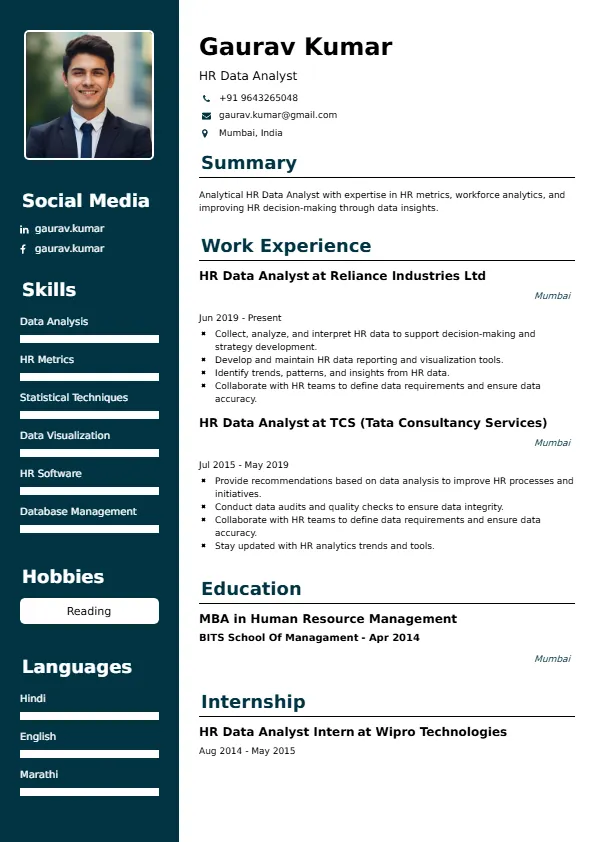
Superbresume.com empowers HR Data Analysts to craft resumes that highlight their data wrangling and analytical insight expertise. Our platform offers customizable templates tailored for technical HR roles, emphasizing skills like advanced SQL reporting, ETL process design, statistical testing, and the creation of actionable dashboards for HR Business Partners. With ATS-optimized formats, expert-written content suggestions, and real-time resume analysis, we ensure your resume aligns with job descriptions. Showcase your experience in delivering comprehensive quarterly talent reports, successfully automating manual data processes, or providing key data analysis that directly informed a talent strategy decision with confidence. Superbresume.com helps you create a polished, results-driven resume that grabs hiring managers’ attention and lands interviews.
How to Write a Resume for an HR Data Analyst
Craft a Targeted Summary: Write a 2-3 sentence summary highlighting your expertise in HR data analysis and reporting, proficiency in SQL and data visualization tools, and success in translating complex HR metrics into clear, actionable business insights.
Use Reverse-Chronological Format: List recent HR analytics, data reporting, or quantitative roles first, focusing on measurable analytical and reporting efficiency achievements.
Highlight Certifications/Training: Include credentials like Tableau Desktop Certified Associate, Advanced SQL certification, SHRM-CP, or relevant degrees (Statistics/Data Science) to boost credibility.
Quantify Achievements: Use metrics, e.g., “Automated the generation of 5 monthly HR reports using SQL and Power BI, saving the HRBP team 20 hours of manual data manipulation monthly,” or “Provided data analysis that led to a 10% reduction in new hire turnover by identifying onboarding gaps,” to show impact.
Incorporate Keywords: Use terms like “SQL Querying,” “HR Data Analysis,” “Data Visualization (Tableau/Power BI),” “HRIS Reporting (Workday/SuccessFactors),” “Statistical Analysis (Correlation),” “Data Integrity/Cleaning,” or “Talent Metrics Reporting” from job descriptions for ATS.
Detail Technical Skills: List proficiency with specific statistical languages (Python/R, if applicable), advanced SQL, BI tools, HRIS reporting functions, data cleaning tools, and Excel for advanced analysis in a comprehensive skills section.
Showcase Analytics Projects: Highlight 3-4 key analytical projects (e.g., compensation correlation study, time-to-fill driver analysis, engagement survey deep dive), detailing the methodology, the challenge, and the quantified HR/business outcome.
Emphasize Soft Skills: Include analytical rigor, attention to detail (data quality), strong communication (explaining findings), and collaboration (with HRBPs/Recruiters).
Keep It Concise: Limit your resume to 1-2 pages, focusing on relevant data analysis, reporting, and problem-solving experience.
Proofread Thoroughly: Eliminate typos or jargon for a professional document.
HRIS Reporting and Data Extraction: Focus on deep technical expertise in extracting and manipulating raw data from complex HRIS/ATS systems, often requiring knowledge of API calls or advanced built-in reporting functions (e.g., Workday Report Writer).
Dashboard Design and Automation: Highlight proficiency creating and maintaining interactive, self-service dashboards (Tableau, Power BI) for HR stakeholders, reducing reliance on manual reports.
Data Quality and Governance: Showcase experience implementing data validation rules, monitoring data quality, and contributing to the governance framework for HR data elements (e.g., ensuring consistency of job title fields).
Basic Predictive/Statistical Modeling: Include experience running basic statistical tests (T-tests, ANOVA, basic regression) to identify drivers of key metrics (e.g., performance, turnover).
DEI and EEO Reporting: Detail experience generating and analyzing reports on diversity metrics, EEO-1 compliance data, and adverse impact analysis.
Metrics-Driven Achievements: Use results like “Reduced manual data preparation time for the monthly board report by 40% using automated SQL scripts” or “Identified a statistically significant link between manager quality and team retention.”
Survey Data Analysis: Emphasize skills in cleaning, coding, and analyzing quantitative and open-text data from employee engagement and pulse surveys.
Cross-Functional Data Linkage: Highlight experience successfully integrating HR data with Finance (e.g., cost of labor) or Operations data to provide holistic business context.
Choose Superbresume.com to craft an HR Data Analyst resume that stands out in the growing HR data field. Our platform offers tailored templates optimized for ATS, ensuring your skills in SQL querying, BI tools, and HRIS reporting shine. With expert guidance, pre-written content, and real-time feedback, we help you highlight achievements like automating reports or providing key data that drove policy changes. Whether you focus on reporting or statistical analysis, our tools make it easy to create a polished, results-driven resume. Trust Superbresume.com to showcase your expertise in translating people data into actionable business intelligence. Start building your career today!
20 Key Skills for an HR Data Analyst Resume
| SQL Querying & Data Manipulation | Data Visualization (Tableau, Power BI, Looker) |
| HRIS Reporting & Data Extraction (Workday Report Writer) | HR Metrics & KPI Reporting (Turnover, Headcount) |
| Statistical Analysis (Correlation, T-Tests) | Data Integrity, Cleaning, & Validation |
| Advanced MS Excel (VLOOKUP, Pivot Tables) | Dashboard Development & Maintenance |
| Survey Data Analysis (Qualtrics, Glint) | EEO/DEI Reporting & Analysis |
| Basic Python/R (Scripting/Statistical Libraries) | Cross-Functional Collaboration (HRBP, Finance) |
| Data Storytelling & Presentation | Data Governance & Confidentiality |
10 Do’s for an HR Data Analyst Resume
Tailor Your Resume: Customize for the company’s HRIS platform (e.g., specifically list Workday or SuccessFactors reporting expertise) and the analytical tools used.
Highlight Certifications/Training: List relevant BI tool (Tableau/Power BI) and SQL certifications prominently.
Quantify Achievements: Include metrics on time savings from automation, percentage reduction in data errors, impact of analysis (e.g., turnover reduction), or complexity of dashboards built.
Use Action Verbs: Start bullet points with verbs like “analyzed,” “visualized,” “queried,” “automated,” or “reported.”
Showcase Analytical Projects: Detail the methodology and the strategic business/HR outcome of 3-4 key analytical or reporting projects.
Include Soft Skills: Highlight analytical rigor, attention to data quality, strong communication (data storytelling), and collaboration with non-technical stakeholders.
Optimize for ATS: Use standard analytics/data section titles and incorporate key software, statistical, and HR metric terms.
Keep It Professional: Use a clean, consistent font and professional layout.
Emphasize SQL and Visualization: Clearly articulate expertise in both the technical data wrangling (SQL) and the presentation layer (BI tools).
Proofread Thoroughly: Ensure no typos or errors in statistical terms, software names, or metrics.
10 Don’ts for an HR Data Analyst Resume
Don’t Overload with Jargon: Avoid confusing, internal company acronyms; use standardized HR analytics and statistical terminology.
Don’t Exceed Two Pages: Keep your resume concise, focusing on high-impact data analysis and reporting achievements.
Don’t Omit Dates: Include employment dates for career context.
Don’t Use Generic Templates: Tailor your resume specifically to the data-driven, problem-solving duties of an HR Data Analyst.
Don’t List Irrelevant Skills: Focus on data analysis, SQL, BI tools, HRIS reporting, and statistical methods.
Don’t Skip Metrics: Quantify results wherever possible; link analysis to efficiency, risk reduction, or decision support.
Don’t Use Complex Formats: Avoid highly stylized elements or confusing graphics.
Don’t Ignore Data Quality: Include explicit experience cleaning, validating, and governing HR data.
Don’t Include Outdated Experience: Omit non-analytical or non-HR reporting jobs over 15 years old.
Don’t Forget to Update: Refresh for new BI dashboard deployments, successful automation scripts, or advanced statistical project completions.
5 FAQs for an HR Data Analyst Resume
Prioritize SQL querying, data visualization (Tableau/Power BI), HRIS reporting expertise, and statistical analysis (correlation/regression).
Use standard analytics/data section titles, avoid graphics, and include keywords like “SQL,” “Data Visualization,” and “HRIS Reporting.”
Yes, listing Python or R is highly valuable for advanced analysis and should be included if proficient.
Detail the manual process, the automation tool/script used (e.g., SQL stored procedure), and the resulting quantified time savings for the end-user.
Use a reverse-chronological format to emphasize your most recent, high-impact data analysis and reporting achievements.
Get 5x more interviews with our crafted Resumes. We make resumes that land jobs.

Get a Free Customized Cover Letter with Resume Expert Advice
with every resume order placed, you will get a free Customized Cover letter.