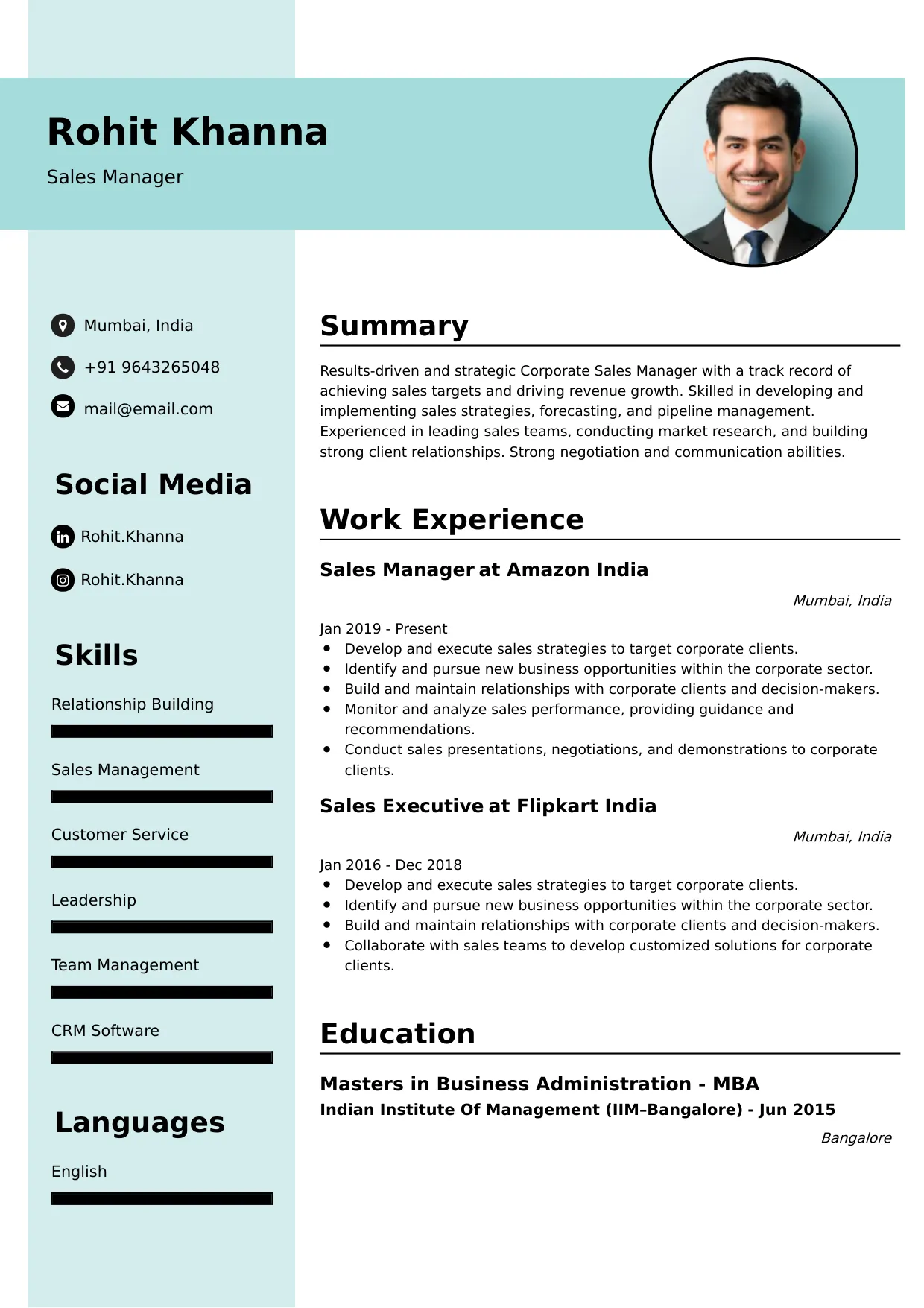
Sports Coach
Welcome to our Sports Coach resume sample page! This expertly crafted resume template is designed to showcase your expertise in developing athletes, managing team operations, designing training programs, leading competitive strategy, and fostering positive team culture and sportsmanship. Whether you coach a high school, club, or collegiate team, this sample highlights key skills like Program Design & Periodization, Team Leadership & Motivation, Strategy/Tactics, Recruitment (if collegiate), and Safety/Risk Management tailored to meet top athletic demands. Use this guide to create a polished, results-driven resume that stands out and secures your next career opportunity.
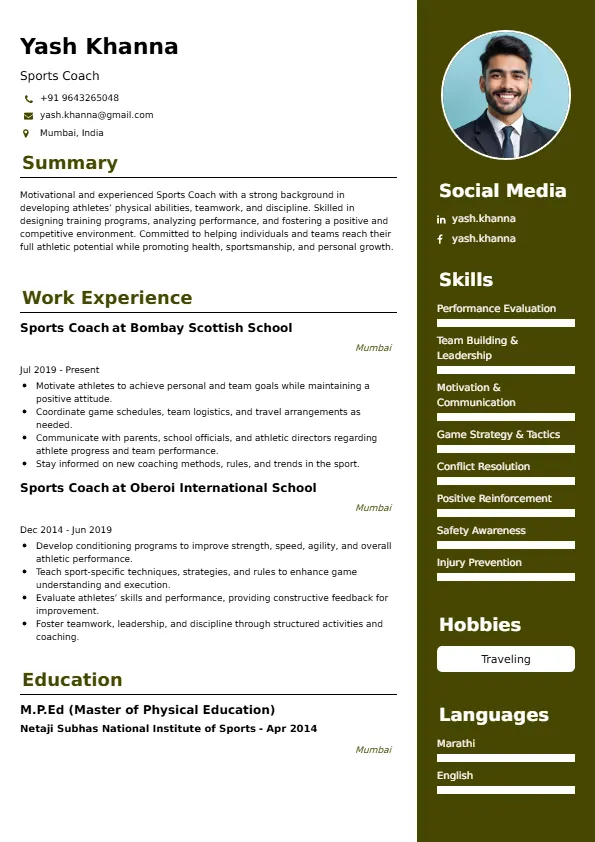
Superbresume.com empowers Sports Coaches to craft resumes that highlight their competitive success and athlete development expertise. Our platform offers customizable templates tailored for athletic leadership roles, emphasizing skills like advanced technical instruction, strength & conditioning oversight, budget/logistics management, and adherence to athletic regulations (NCAA/NFHS). With ATS-optimized formats, expert-written content suggestions, and real-time resume analysis, we ensure your resume aligns with job descriptions. Showcase your experience in consistently achieving winning seasons, developing athletes who advance to higher levels, or leading successful recruitment/fundraising initiatives with confidence. Superbresume.com helps you create a polished, results-driven resume that grabs hiring managers’ attention and lands interviews.
How to Write a Resume for a Sports Coach
Craft a Targeted Summary: Write a 2-3 sentence summary highlighting your active coaching certification, extensive experience coaching (specify sport/level), proficiency in program design and competitive strategy, and success in achieving measurable team wins and athlete development.
Use Reverse-Chronological Format: List recent coaching roles (Head Coach, Assistant Coach, Program Director) first, focusing on measurable team performance and athlete outcome achievements.
Highlight Certifications/Training: Include credentials like Sport-Specific Coaching Certification (e.g., USSF, NFHS), CPR/First Aid Certified, specialized training (e.g., Strength & Conditioning, SafeSport), or relevant degrees (Kinesiology, Sports Management) to boost credibility.
Quantify Achievements: Use metrics, e.g., “Led the Varsity team to 3 consecutive playoff appearances (School X), achieving a 75% win rate over 4 seasons,” or “Successfully developed and transitioned 10+ athletes to compete at the collegiate (NCAA) level,” to show impact.
Incorporate Keywords: Use terms like “Program Design & Periodization,” “Competitive Strategy & Tactics,” “Team Leadership & Motivation,” “Athlete Development (Technical/Skill),” “Recruitment (Collegiate/Club),” “Safety & Risk Management,” or “Budget/Equipment Management” from job descriptions for ATS.
Detail Strategy/Technical Skills: List proficiency with specific sports analysis software, training methods, equipment inventory, budget tracking, communication platforms, and strong injury prevention protocols in a dedicated skills section.
Showcase Team Success: Highlight 3-4 key program achievements (e.g., winning a championship, leading a successful fundraising campaign, implementing a new strength program), detailing the scope, the challenge, and the quantified success metric.
Emphasize Soft Skills: Include motivational leadership, strategic thinking, strong communication (athlete/parent/admin), conflict resolution, discipline, and safety vigilance.
Keep It Concise: Limit your resume to 1-2 pages, focusing on relevant coaching, leadership, and performance experience.
Proofread Thoroughly: Eliminate typos or jargon for a professional document.
Data-Driven Performance Analysis: Focus on expertise utilizing technology (video analysis software, wearable trackers, data platforms) to collect objective performance metrics and inform tactical/training adjustments.
Athlete Development and Long-Term Planning: Highlight skills in designing multi-year training plans (periodization) that integrate sport-specific conditioning, injury prevention, and skill acquisition, focusing on holistic athlete welfare.
Recruitment Strategy and Compliance (NCAA): Showcase advanced expertise in identifying, evaluating, and recruiting prospective athletes, adhering strictly to NCAA or other governing body compliance rules and documentation.
Sports Psychology and Motivation: Detail experience applying principles of sports psychology, goal setting, and motivational techniques to enhance team cohesion, mental toughness, and individual athlete performance.
Safety and Risk Management: Emphasize leadership in developing and enforcing comprehensive safety protocols, managing equipment maintenance, and ensuring swift, effective response to on-field injuries (First Aid/CPR).
Metrics-Driven Achievements: Use results like “Implemented a strength and conditioning program that reduced non-contact injuries by 20%” or “Successfully fundraised $10K annually for program equipment and travel.”
Budget and Equipment Management: Include experience managing operational budgets, negotiating travel contracts, and overseeing the procurement and maintenance of specialized athletic equipment.
Cross-Sport/Strength & Conditioning Knowledge: Highlight proficiency integrating modern strength and conditioning principles into the team's training regimen, often in collaboration with athletic trainers.
Choose Superbresume.com to craft a Sports Coach resume that stands out in the competitive athletic leadership sector. Our platform offers tailored templates optimized for ATS, ensuring your skills in program design, competitive strategy, and athlete development shine. With expert guidance, pre-written content, and real-time feedback, we help you highlight achievements like winning championships or successfully recruiting top talent. Whether you coach team sports or individual disciplines, our tools make it easy to create a polished, results-driven resume. Trust Superbresume.com to showcase your expertise in reliable, motivational, and high-performance athletic leadership. Start building your career today!
20 Key Skills for a Sports Coach Resume
| Program Design & Periodization (Training Plans) | Team Leadership & Motivational Coaching |
| Competitive Strategy & Tactics | Recruitment & Talent Identification (if applicable) |
| Budget & Equipment Management | Technical Skill Instruction (Sport-Specific) |
10 Do’s for a Sports Coach Resume
Tailor Your Resume: Customize for the specific sport (e.g., basketball, soccer, swim) and the level (club, high school, collegiate).
Highlight Certifications/Training: List Sport-Specific Coaching Certification, S&C training, and CPR/First Aid prominently.
Quantify Achievements: Include metrics on win-loss record, championship titles, athlete progression (NCAA), recruitment success, or program budget managed.
Use Action Verbs: Start bullet points with verbs like “coached,” “led,” “designed,” “recruited,” or “won.”
Showcase Competitive Success: Detail the methodology and the strategic, quantified performance result of 3-4 key seasons or program initiatives.
Include Soft Skills: Highlight motivational leadership, strategic thinking, strong communication (parents/athletes/admin), and safety vigilance.
Optimize for ATS: Use standard athletic section titles and incorporate key sport and certification terms.
Keep It Professional: Use a clean, consistent font and professional layout.
Emphasize Strategy and Development: Clearly articulate expertise in competitive planning and improving athlete performance over time.
Proofread Thoroughly: Eliminate typos or jargon for a professional document.
10 Don’ts for a Sports Coach Resume
Don’t Overload with Jargon: Avoid confusing, internal team or league acronyms; use standardized sports management and coaching terminology.
Don’t Exceed Two Pages: Keep your resume concise, focusing on high-impact coaching, leadership, and performance achievements.
Don’t Omit Dates: Include employment dates and season timelines for career context.
Don’t Use Generic Templates: Tailor your resume specifically to the specialized strategic and leadership duties of a Sports Coach.
Don’t List Irrelevant Skills: Focus on coaching, strategy, development, management, and safety.
Don’t Skip Metrics: Quantify results wherever possible; win rate, championships, and athlete progression are key metrics.
Don’t Use Complex Formats: Avoid highly stylized elements or confusing graphics.
Don’t Ignore Safety/Compliance: Include explicit experience with risk management and league/NCAA compliance.
Don’t Include Outdated Experience: Omit non-coaching or non-athletic jobs over 15 years old.
Don’t Forget to Update: Refresh for new certification renewals, successful seasons, or advanced training.
5 FAQ's for a Sports Coach resume
Use stats: "Led team to 3 consecutive regional championships and a cumulative 45-10 record over 4 seasons."
Yes. "Successfully facilitated the recruitment of 12 student-athletes into NCAA Division I and II programs."
Focus on leadership and character building: "Implemented a mentorship program that improved team GPA from 2.8 to 3.4."
"Developed and executed complex offensive and defensive schemes based on advanced scouting and video analysis."
Yes. Prominently list CPR/AED/First Aid and any concussion protocol certifications.
Get 5x more interviews with our crafted Resumes. We make resumes that land jobs.

Get a Free Customized Cover Letter with Resume Expert Advice
with every resume order placed, you will get a free Customized Cover letter.