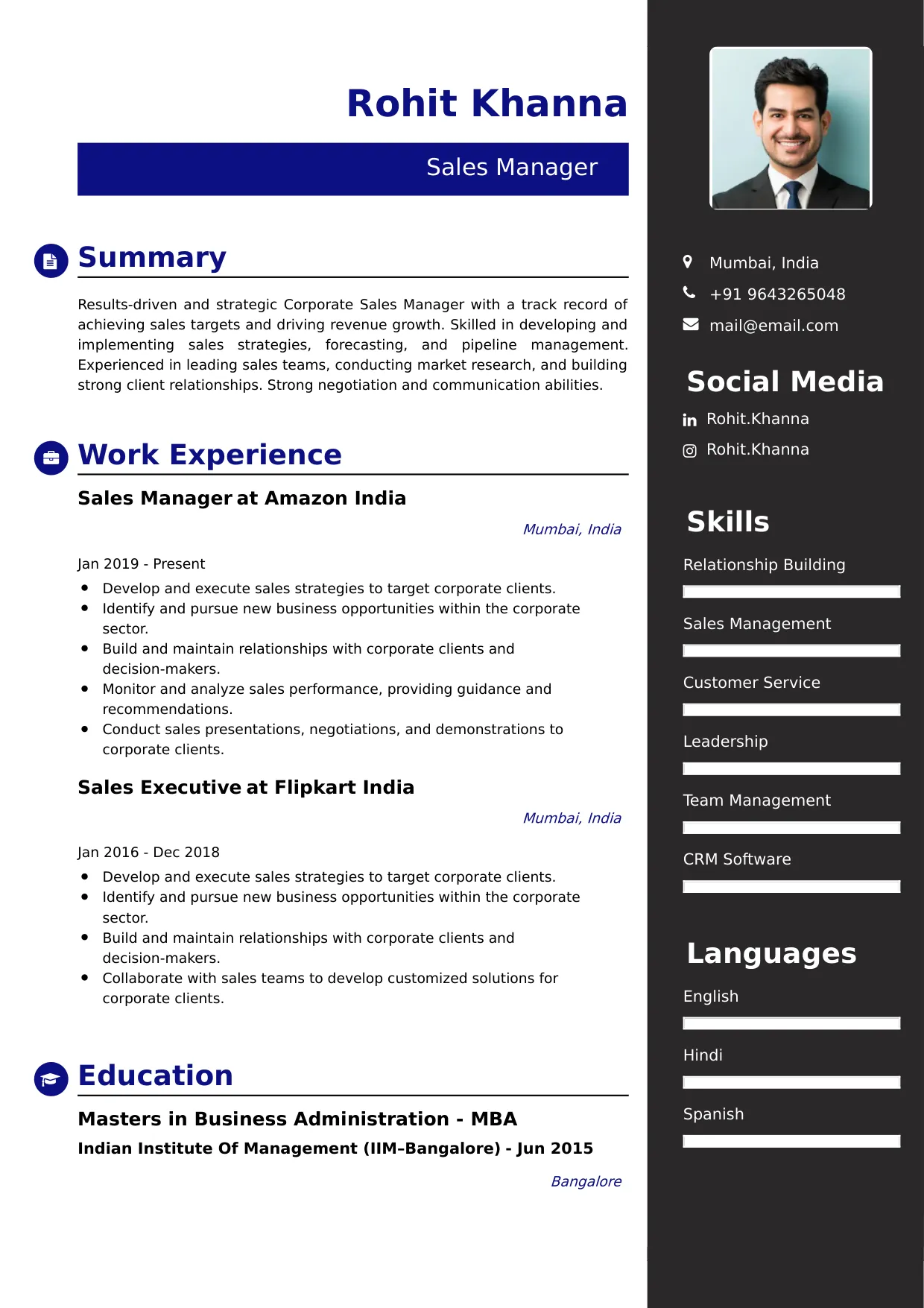
Tailor Your Resume: Customize for each job using keywords like specific orchestration tools or cloud platforms (e.g., “AWS DataOps”).
Highlight Certifications: List credentials like cloud or Kubernetes certifications prominently.
Quantify Achievements: Include metrics, e.g., “Automated deployment of 15 critical data pipelines.”
Use Action Verbs: Start bullet points with verbs like “automated,” “implemented,” “orchestrated,” or “maintained.”
Showcase Projects: Detail full-cycle automation projects from development to production monitoring.
Include Soft Skills: Highlight cross-functional communication and problem-solving in production incidents.
Optimize for ATS: Use standard section titles and incorporate key technical terms throughout the document.
Keep It Professional: Use a clean, consistent font and layout.
Emphasize DevOps Principles: Clearly link your work to CI/CD, IaC, and observability practices in the data domain.
Proofread Carefully: Ensure no typos or errors in technical terms or tool names.
DataOps Engineer
Welcome to our DataOps Engineer resume sample page! This expertly crafted resume template is designed to showcase your expertise in automating data pipelines, CI/CD for data, monitoring, and quality assurance in modern data environments. Whether you're an entry-level candidate or a seasoned professional, this sample highlights key skills like cloud data platforms, orchestration tools, infrastructure as code (IaC), and advanced scripting tailored to meet top employers’ demands. Use this guide to create a compelling resume that stands out and secures your next career opportunity.
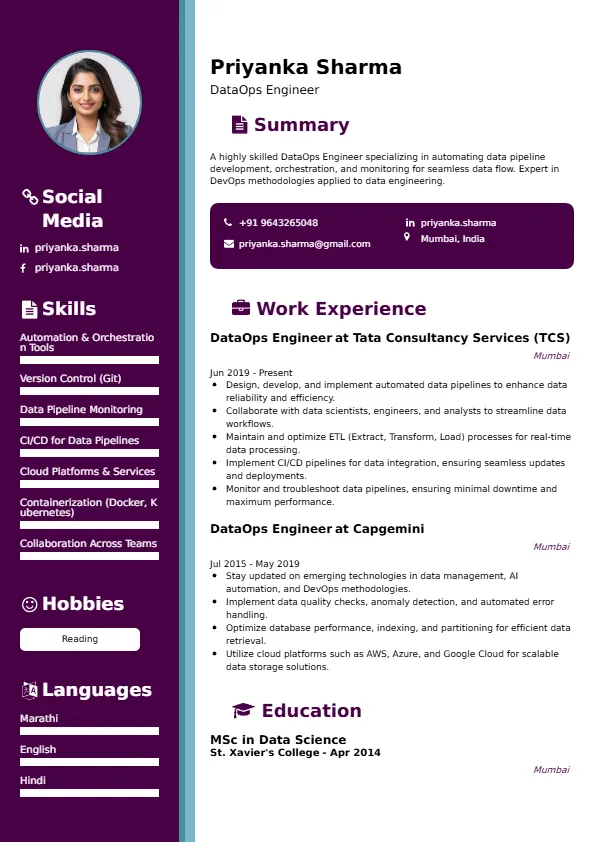
Superbresume.com empowers DataOps Engineers to craft resumes that highlight their data automation and pipeline reliability expertise. Our platform offers customizable templates tailored for tech roles, emphasizing skills like Airflow, Kubernetes, Terraform, and advanced Python/Scala for data orchestration. With ATS-optimized formats, expert-written content suggestions, and real-time resume analysis, we ensure your resume aligns with job descriptions. Showcase your experience in implementing continuous integration for data, managing infrastructure, or ensuring data quality validation with confidence. Whether you’re an entry-level professional or a senior engineer, Superbresume.com helps you create a polished, results-driven resume that grabs hiring managers’ attention and lands interviews.
How to Write a Resume for a DataOps Engineer
Use Reverse-Chronological Format: List recent DataOps or Data Engineering roles first, focusing on automation and MLOps/DataOps practices.
Highlight Certifications: Include credentials like AWS Certified Data Analytics, Google Cloud Professional Data Engineer, or relevant Kubernetes certifications to boost credibility.
Quantify Achievements: Use metrics, e.g., “Reduced data deployment time from 2 hours to 15 minutes using CI/CD,” to show impact.
Incorporate Keywords: Use terms like “Airflow,” “Kubernetes,” “Terraform,” “data lineage,” or “data quality monitoring” from job descriptions for ATS.
Detail Technical Skills: List tools and languages like Python, SQL, Docker, Kafka, Spark, and specific cloud data services (Databricks, Snowflake) in a skills section.
Showcase Projects: Highlight projects like implementing an automated data validation framework or migrating an ETL system to a containerized platform with outcomes.
Emphasize Soft Skills: Include communication and collaboration, demonstrated through working across Data Science, Engineering, and DevOps teams.
Keep It Concise: Limit your resume to 1-2 pages, focusing on relevant automation, infrastructure, and data pipeline management experience.
Proofread Thoroughly: Eliminate typos or jargon for a professional document.
Observability and Monitoring: Highlight skills in implementing data pipeline monitoring and alerting using tools like Prometheus, Grafana, or specialized Data Observability platforms.
Infrastructure as Code (IaC): Emphasize using Terraform or CloudFormation to manage cloud data resources (e.g., S3 buckets, Redshift clusters).
Data Quality & Validation: Showcase developing automated testing frameworks and validation checks (e.g., using Great Expectations or dbt tests).
Containerization and Orchestration: Detail proficiency with Docker and Kubernetes for deploying data services and Airflow/Prefect workers.
Metrics-Driven Achievements: Use results like “reduced data pipeline failures by 30%” or “increased data availability to 99.9%.”
MLOps Integration: Include supporting Machine Learning pipelines and model deployment using tools like MLflow.
Serverless Data Services: Highlight working with AWS Lambda, Azure Functions, or Google Cloud Functions for event-driven data processing.
Choose Superbresume.com to craft a DataOps Engineer resume that stands out in a competitive tech field. Our platform offers tailored templates optimized for ATS, ensuring your skills in pipeline automation, CI/CD, and IaC shine. With expert guidance, pre-written content, and real-time feedback, we help you highlight achievements like streamlining data deployments or improving data quality. Whether you’re an entry-level professional or a senior engineer, our tools make it easy to create a professional, results-driven resume. Trust Superbresume.com to showcase your expertise in managing the full data lifecycle with speed and reliability and land interviews with top employers. Start building your career today!
20 Key Skills for a DataOps Engineer Resume
| Data Pipeline Automation | CI/CD (GitLab, Jenkins) |
| Airflow/Prefect | Data Quality Monitoring |
| Infrastructure as Code (Terraform) | Docker/Kubernetes |
| Python/Bash Scripting | Cloud Data Services (AWS/Azure/GCP) |
| Spark/Databricks | SQL/NoSQL |
| Data Orchestration | Streaming Data (Kafka/Kinesis) |
| Data Lineage Tools | ELT/ETL |
| Prometheus/Grafana | MLOps (MLflow) |
| Great Expectations | Data Warehouse (Snowflake) |
| Collaboration | System Design |
10 Do’s for a DataOps Engineer Resume
10 Don’ts for a DataOps Engineer Resume
5 FAQs for a DataOps Engineer Resume
Prioritize pipeline orchestration (Airflow/Prefect), IaC (Terraform), containerization (Docker/K8s), and strong Python scripting for automation.
Use standard section titles, avoid graphics, and include keywords like “CI/CD for Data,” “Kubernetes,” and specific cloud platform names.
Yes, experience in supporting ML pipelines (MLflow, Kubeflow) is highly valuable and demonstrates full-stack automation capability.
Detail the manual process you replaced, the tools used (e.g., CI/CD pipelines), and the quantified reduction in deployment time or failure rate.
Use a reverse-chronological format to emphasize recent, high-impact automation and infrastructure management achievements.
Get 5x more interviews with our crafted Resumes. We make resumes that land jobs.

Get a Free Customized Cover Letter with Resume Expert Advice
with every resume order placed, you will get a free Customized Cover letter.