Multimedia Developer
Welcome to our Multimedia Developer resume sample page! This expertly crafted resume template is designed to showcase your expertise in designing, developing, and integrating various media elements (video, audio, animation, interactive graphics) into web applications, e-learning platforms, and digital products. Whether you focus on front-end development, instructional technology, or digital content, this sample highlights key skills like HTML5/CSS3/JavaScript, Video Editing (Adobe Premiere/After Effects), Graphic Design (Adobe Creative Suite), Interactive Development (Articulate/Captivate), and UI/UX Principles tailored to meet top tech, L&D, and digital agency demands. Use this guide to create a compelling resume that stands out and secures your next career opportunity.
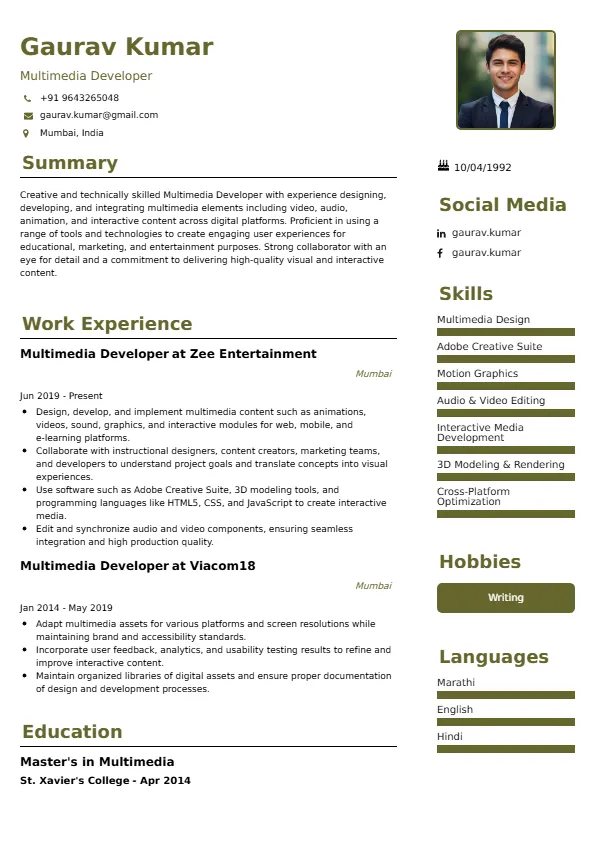
Superbresume.com empowers Multimedia Developers to craft resumes that highlight their creative technical integration and performance expertise. Our platform offers customizable templates tailored for digital content roles, emphasizing skills like responsive media design, SCORM/xAPI packaging, front-end optimization (for media loading), and cross-browser compatibility. With ATS-optimized formats, expert-written content suggestions, and real-time resume analysis, we ensure your resume aligns with job descriptions. Showcase your experience in launching high-engagement interactive learning modules, optimizing video delivery for mobile performance, or contributing to a scalable digital content library with confidence. Superbresume.com helps you create a polished, results-driven resume that grabs hiring managers’ attention and lands interviews.
How to Write a Resume for a Multimedia Developer
Craft a Targeted Summary: Write a 2-3 sentence summary highlighting your expertise in full-cycle multimedia development and integration, proficiency in core web technologies and media production tools, and success in building engaging, performant, and cross-platform digital content.
Use Reverse-Chronological Format: List recent multimedia, front-end development, or instructional technology roles first, focusing on measurable content delivery and technical achievements.
Highlight Certifications/Portfolio: Include credentials like Adobe Certified Professional (ACP), relevant web development certifications, Articulate Storyline Certification, or feature a digital portfolio link showcasing interactive projects/videos to boost credibility.
Quantify Achievements: Use metrics, e.g., “Optimized video compression and delivery, reducing media load times by 40% on mobile devices,” or “Developed 10 interactive e-learning modules that increased user engagement metrics by 25%,” to show impact.
Incorporate Keywords: Use terms like “HTML5/CSS3/JavaScript,” “Video Editing & Production (Premiere/After Effects),” “Interactive Development (Articulate/Captivate),” “UI/UX Implementation,” “SCORM/xAPI,” “Responsive Media Design,” or “Adobe Creative Suite” from job descriptions for ATS.
Detail Technical Skills: List proficiency with specific software (Premiere Pro, After Effects, Audition, Storyline, Figma), programming languages (JavaScript/React), web performance tools, and media compression/delivery formats in a comprehensive skills section.
Showcase Multimedia Projects: Highlight 3-4 key projects (e.g., interactive data visualization, e-learning course, promotional video series), detailing the technologies used, the media elements integrated, and the measurable user/business outcome.
Emphasize Soft Skills: Include creativity, technical problem-solving (browser compatibility), attention to detail (visual/audio fidelity), strong communication (with designers/SMEs), and commitment to clean, performant code.
Keep It Concise: Limit your resume to 1-2 pages, focusing on relevant multimedia development, technical integration, and content creation experience.
Proofread Thoroughly: Eliminate typos or jargon for a professional document.
Interactive E-learning and SCORM/xAPI: Focus on expertise developing complex, highly interactive e-learning modules using authoring tools (Articulate, Captivate) and ensuring SCORM/xAPI tracking standards are correctly implemented for LMS integration.
Web Performance for Media: Highlight deep technical skills in optimizing digital media (video formats, adaptive streaming, image compression) to ensure fast load times and high Core Web Vitals scores without sacrificing quality.
Video Production and Motion Graphics: Showcase advanced proficiency in the full video workflow, from storyboarding and shooting (basic) to professional editing, motion graphics (After Effects), and sound design.
Accessibility (WCAG/Section 508): Detail experience ensuring all interactive media, videos (captioning, transcripts), and digital assets meet WCAG/Section 508 accessibility standards.
UI/UX and Responsive Design: Emphasize expertise implementing pixel-perfect interfaces that integrate multimedia elements seamlessly and are fully responsive across desktop, tablet, and mobile devices.
Metrics-Driven Achievements: Use results like “Reduced video buffering rate by 50% across the user base by implementing adaptive bit rate streaming” or “Achieved a 95% course completion rate for a mandatory interactive compliance module.”
3D/Immersive Media Integration: Include experience utilizing WebGL, Three.js, or related technologies to integrate 3D models or basic augmented/virtual reality (AR/VR) elements into web experiences.
SME Collaboration and Storyboarding: Highlight strong communication skills working with Subject Matter Experts (SMEs) and designers to translate raw content into engaging, sequenced storyboards and scripts.
Choose Superbresume.com to craft a Multimedia Developer resume that stands out in the competitive digital content and L&D sectors. Our platform offers tailored templates optimized for ATS, ensuring your skills in web technology, video production, and interactive content design shine. With expert guidance, pre-written content, and real-time feedback, we help you highlight achievements like boosting user engagement or optimizing media performance. Whether you specialize in e-learning or digital marketing assets, our tools make it easy to create a polished, results-driven resume. Trust Superbresume.com to showcase your expertise in engineering captivating and functional user experiences. Start building your career today!
20 Key Skills for a Multimedia Developer Resume
| HTML5/CSS3/JavaScript (Front-End) | Video Editing & Production (Adobe Premiere Pro) |
| Motion Graphics & Animation (Adobe After Effects) | Interactive Development (Articulate Storyline/Captivate) |
| SCORM/xAPI Packaging & LMS Integration | Adobe Creative Suite (Photoshop/Illustrator) |
| UI/UX Implementation & Responsive Design | Web Performance Optimization (Media Loading) |
| Audio Editing & Sound Design (Audition) | Accessibility (WCAG/508) Compliance |
| Version Control (Git) | SME Collaboration & Storyboarding |
10 Do’s for a Multimedia Developer Resume
Tailor Your Resume: Customize for the primary focus (e.g., emphasize e-learning development, emphasize video production/motion graphics).
Highlight Certifications/Portfolio: List Articulate/Adobe ACP certifications and include a digital portfolio link showcasing interactive projects/videos prominently.
Quantify Achievements: Include metrics on media load time reduction, user engagement increase, course completion rates, or efficiency gains in production time.
Use Action Verbs: Start bullet points with verbs like “developed,” “integrated,” “optimized,” “produced,” or “designed.”
Showcase Integration Projects: Detail the technologies used and the measurable user/business outcome of 3-4 key multimedia applications.
Include Soft Skills: Highlight creativity, technical problem-solving, attention to detail (fidelity), and collaboration.
Optimize for ATS: Use standard creative/technology section titles and incorporate key software and media terms.
Keep It Professional: Use a clean, consistent font and professional layout.
Emphasize Performance and Interactivity: Clearly articulate expertise in creating dynamic content that loads fast and engages the user.
Proofread Thoroughly: Eliminate typos or jargon for a professional document.
10 Don’ts for a Multimedia Developer Resume
Don’t Overload with Jargon: Avoid confusing, internal company or project-specific acronyms; use standardized media and web development terminology.
Don’t Exceed Two Pages: Keep your resume concise, focusing on high-impact multimedia development and integration achievements.
Don’t Omit Dates: Include employment dates for career context.
Don’t Use Generic Templates: Tailor your resume specifically to the creative and technical integration duties of a Multimedia Developer.
Don’t List Irrelevant Skills: Focus on media tools, web technologies, instructional design principles, and production pipeline management.
Don’t Skip Metrics: Quantify results wherever possible; link achievements to engagement, load time, or completion rates.
Don’t Use Complex Formats: Avoid highly stylized elements or confusing graphics.
Don’t Ignore Web Skills: Include explicit experience with HTML/CSS/JavaScript and front-end optimization.
Don’t Include Outdated Experience: Omit low-level or non-media production/development jobs over 15 years old.
Don’t Forget to Update: Refresh for new software feature mastery, successful interactive course launches, or advanced performance optimization skills.
5 FAQ's for a Multimedia Developer Resume
Prioritize the Adobe Creative Cloud (Premiere, After Effects, Animate), alongside web languages like HTML5, CSS3, and JavaScript for interactive content.
Mention how you "optimized asset loading speeds by 40% while maintaining high visual fidelity" or "designed intuitive navigation for interactive e-learning modules."
Yes. A visual role requires a link to a reel or a website.
Use terms like "established a centralized digital asset management (DAM) system for 5,000+ files to streamline production workflows."
If you have it, list it. Mentioning Blender, Maya, or Cinema 4D can differentiate you for high-end digital production roles.
Get 5x more interviews with our crafted Resumes. We make resumes that land jobs.

Get a Free Customized Cover Letter with Resume Expert Advice
with every resume order placed, you will get a free Customized Cover letter.