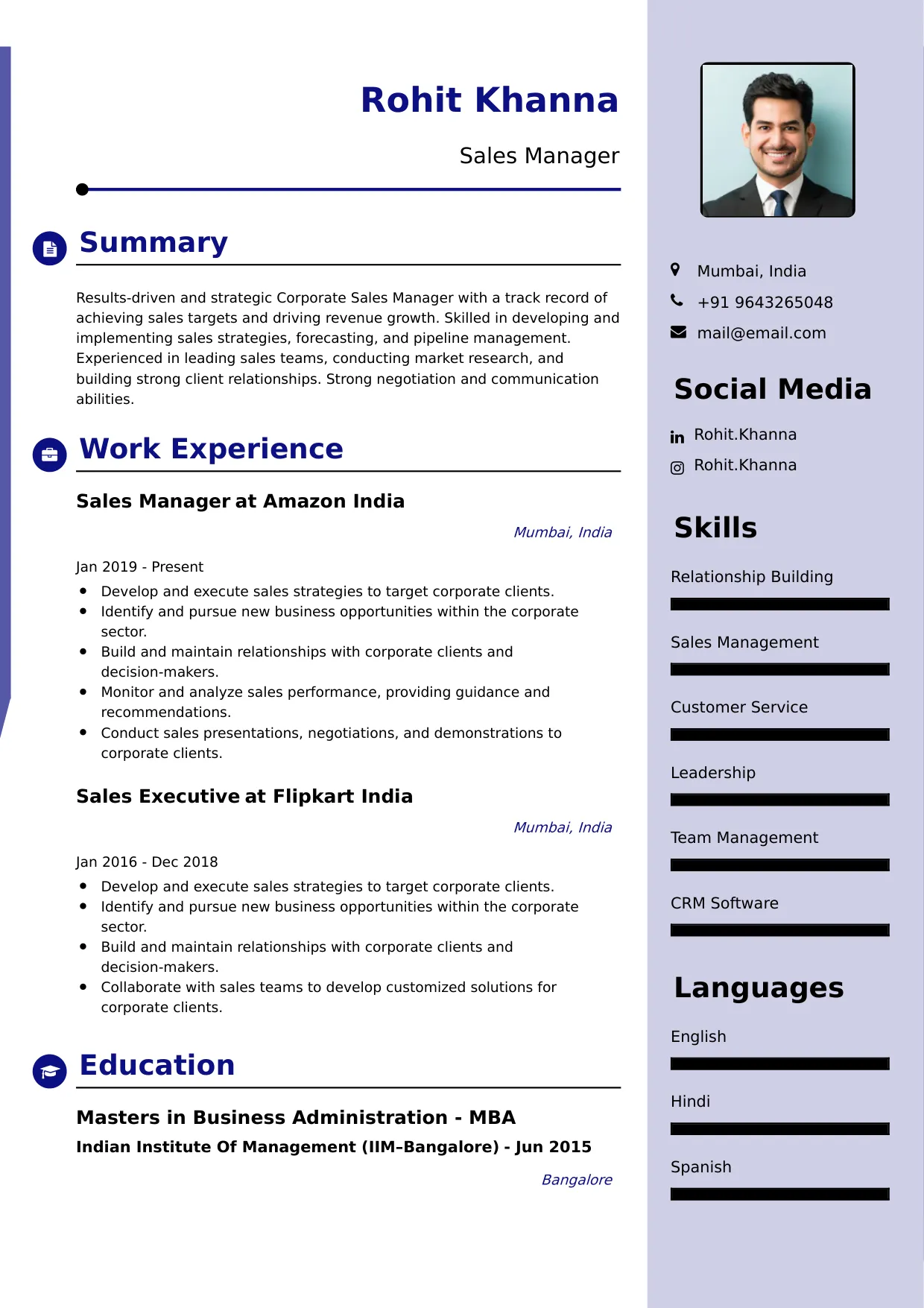
Digital Product Designer
Welcome to our Digital Product Designer resume sample page! This expertly crafted resume template is designed to showcase your expertise in User Experience (UX) design, User Interface (UI) design, user research, prototyping, and design thinking in agile development environments. Whether you're an entry-level candidate or a seasoned professional, this sample highlights key skills like Figma/Sketch, interaction design, usability testing, and cross-functional collaboration tailored to meet top tech companies’ demands. Use this guide to create a compelling resume that stands out and secures your next career opportunity.
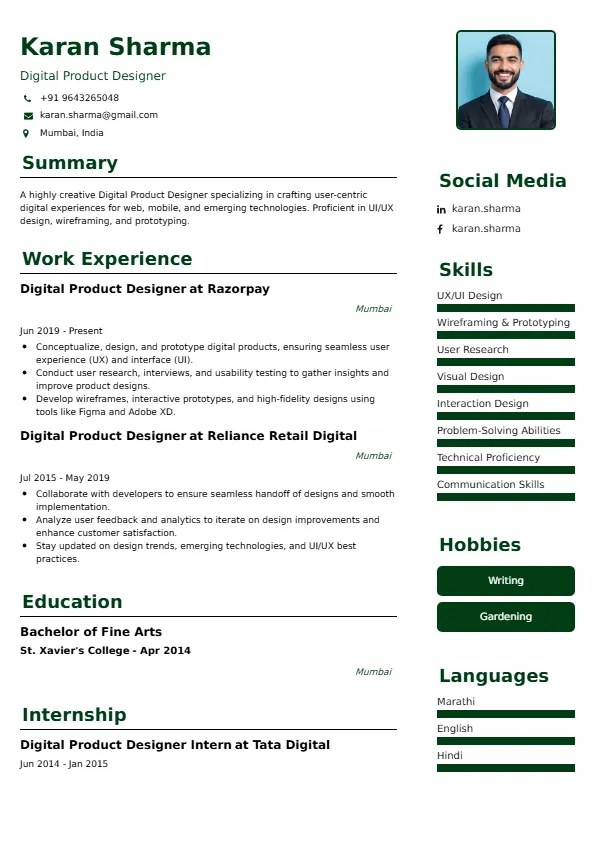
Superbresume.com empowers Digital Product Designers to craft resumes that highlight their human-centered design process and measurable product impact. Our platform offers customizable templates tailored for design roles, emphasizing skills like design systems, information architecture (IA), accessibility (WCAG), and qualitative/quantitative research. With ATS-optimized formats, expert-written content suggestions, and real-time resume analysis, we ensure your resume aligns with job descriptions. Showcase your experience in leading design sprints, improving user flows, or increasing key performance indicators (KPIs) like conversion or task completion with confidence. Whether you’re specializing in mobile or enterprise software, Superbresume.com helps you create a polished, results-driven resume that grabs hiring managers’ attention and lands interviews.
How to Write a Resume for a Digital Product Designer
Use Reverse-Chronological Format: List recent design roles first, focusing on specific products or features you designed and shipped.
Highlight Certifications/Portfolio: Include certifications (e.g., Nielsen Norman Group UX Certificate) and prominently feature a link to your design portfolio to boost credibility.
Quantify Achievements: Use metrics, e.g., “Improved user task completion rate by 20% by redesigning the checkout flow,” or “Reduced customer support tickets by 15% through clearer interface design,” to show impact.
Incorporate Keywords: Use terms like “UX Design,” “UI Design,” “User Research,” “Prototyping,” “Figma/Sketch,” “Design System,” or “Usability Testing” from job descriptions for ATS.
Detail Technical Skills: List proficiency with specific tools (Figma, Sketch, Adobe XD, Miro), coding knowledge (HTML/CSS), and research methodologies in a dedicated skills section.
Showcase Case Studies: For each role, summarize key design projects, the problem addressed, your process (research, wireframing, testing), and the final, measurable outcome.
Emphasize Soft Skills: Include empathy, communication (articulating design decisions), curiosity, and collaboration with engineers and product managers.
Keep It Concise: Limit your resume to 1-2 pages, focusing on relevant, impactful design projects and shipped products.
Proofread Thoroughly: Eliminate typos or jargon for a professional document.
Design Systems Ownership: Highlight experience creating, maintaining, or contributing significantly to a scalable, cross-platform design system (e.g., component libraries).
Advanced Prototyping and Interaction: Showcase skills in high-fidelity animation, micro-interactions, and complex state management in tools like Framer or Figma variants.
Accessibility (A11y/WCAG): Detail experience in ensuring designs meet WCAG compliance standards and advocating for inclusive design practices.
Quantitative Data Analysis: Emphasize ability to interpret A/B test results, Google Analytics data, and heatmaps to inform design iteration.
Metrics-Driven Achievements: Use results like “increased conversion rate by 5 points” or “designed a new feature adopted by 70% of the user base within 3 months.”
Cross-Platform Design: Include experience designing for multiple contexts: web, iOS, Android, and responsive web.
Product Discovery Leadership: Highlight experience leading discovery phases, unmoderated user testing, and defining Minimum Viable Products (MVPs).
Choose Superbresume.com to craft a Digital Product Designer resume that stands out in the competitive tech design industry. Our platform offers tailored templates optimized for ATS, ensuring your skills in UX research, UI execution, and product impact shine. With expert guidance, pre-written content, and real-time feedback, we help you highlight achievements like optimizing user flows or contributing to scalable design systems. Whether you’re specializing in research or visual design, our tools make it easy to create a professional, results-driven resume. Trust Superbresume.com to showcase your expertise in human-centered design and land interviews with top product organizations. Start building your career today!
20 Key Skills for a Digital Product Designer Resume
| UX Design & Strategy | UI Design & Visual Hierarchy |
| Figma/Sketch/Adobe XD | User Research (Qualitative/Quantitative) |
| Prototyping & Wireframing (Low/High Fidelity) | Design Systems & Component Libraries |
| Usability Testing & Heuristic Evaluation | Interaction Design & Micro-interactions |
| Information Architecture (IA) | Accessibility (WCAG) Compliance |
| Design Thinking & Sprints | A/B Testing & Data Analysis |
| Agile/Scrum Methodologies | Cross-Functional Collaboration |
| HTML/CSS (Front-end Handoff) | Design Documentation |
| Empathy & User Advocacy | Visual Design & Branding |
| Complexity Reduction | Product Strategy Alignment |
10 Do’s for a Digital Product Designer Resume
Tailor Your Resume: Customize for each job, emphasizing the design stage (e.g., research-heavy or visual-UI focused) most relevant to the role.
Highlight Certifications/Portfolio: List relevant UX training and prominently include a link to your design portfolio or case studies.
Quantify Achievements: Include metrics on user success (completion rates), business impact (conversion, revenue), or efficiency gains (reduced design debt).
Use Action Verbs: Start bullet points with verbs like “designed,” “led,” “tested,” “optimized,” or “iterated.”
Showcase Case Studies: Briefly describe the problem, your design solution, and the measurable outcome for key projects.
Include Soft Skills: Highlight communication (explaining design decisions) and collaboration with technical and business stakeholders.
Optimize for ATS: Use standard section titles and incorporate key design tools and methodologies throughout the document.
Keep It Professional: Use a clean, consistent font and a visually appealing, yet simple, layout.
Emphasize Tools: Clearly list the design, prototyping, and research software you are proficient with (e.g., “Figma Expert”).
Proofread Carefully: Ensure no typos or errors in design terms or portfolio links.
10 Don’ts for a Digital Product Designer Resume
Don’t Overload with Jargon: Avoid confusing internal design or product-specific terms; use standardized UX/UI language.
Don’t Exceed Two Pages: Keep your resume concise; let your portfolio do the heavy lifting for detailed work.
Don’t Omit Dates: Include employment dates for career context.
Don’t Use Generic Templates: Tailor your resume specifically to the Product Designer’s unique blend of strategy and execution.
Don’t List Irrelevant Skills: Focus on design, research, prototyping, and collaboration, not unrelated general IT skills.
Don’t Skip Metrics: Quantify results wherever possible; design work should demonstrate business or user value.
Don’t Use Complex Formats: Avoid highly stylized elements or confusing tables that might confuse ATS or create visual clutter.
Don’t Ignore the User: Always frame your work in terms of solving user problems and improving their experience.
Don’t Include Outdated Experience: Omit non-design jobs over 10–15 years old unless highly relevant to product management or research.
Don’t Forget to Update: Refresh for new design system contributions, successful A/B test results, or modern tool proficiency.
5 FAQs for a Digital Product Designer Resume
Prioritize end-to-end UX/UI skills, proficiency in a modern design tool (Figma), user research, and A/B testing/data interpretation.
Use standard section titles, avoid graphics, and include keywords like “Design System,” “Usability Testing,” and “Information Architecture.”
Yes, a portfolio link is mandatory. It is the single most important part of a designer’s application and should be clearly visible.
Detail your specific contribution (e.g., created 50+ scalable components, documented governance, reduced design/dev handoff time by 30%).
Use a reverse-chronological format to emphasize recent, high-impact design projects and shipped product features.
Get 5x more interviews with our crafted Resumes. We make resumes that land jobs.
Get a Free Customized Cover Letter with Resume Expert Advice
with every resume order placed, you will get a free Customized Cover letter.