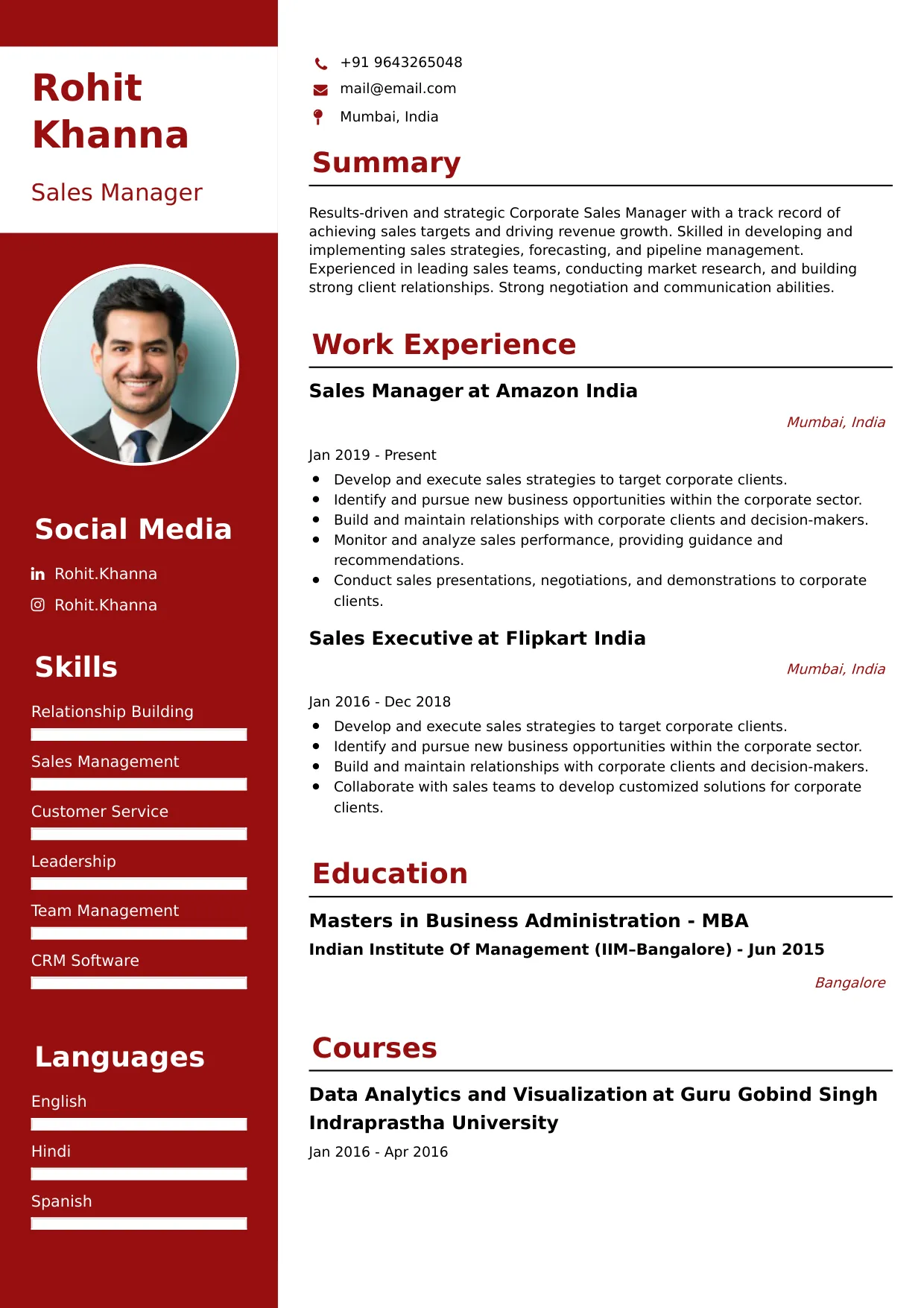
Fixed Asset Accountant
Welcome to our Fixed Asset Accountant resume sample page! This expertly crafted resume template is designed to showcase your expertise in managing the entire fixed asset lifecycle (acquisition, depreciation, disposal), maintaining the fixed asset subledger, and ensuring GAAP/IFRS compliance. Whether you're an entry-level candidate or a seasoned professional, this sample highlights key skills like fixed asset modules (ERP), depreciation methods, CapEx tracking, ledger reconciliation, and internal controls (SOX) tailored to meet top corporate accounting and audit demands. Use this guide to create a compelling resume that stands out and secures your next career opportunity.Build a Standout Fixed Asset Accountant Resume with Superbresume.com
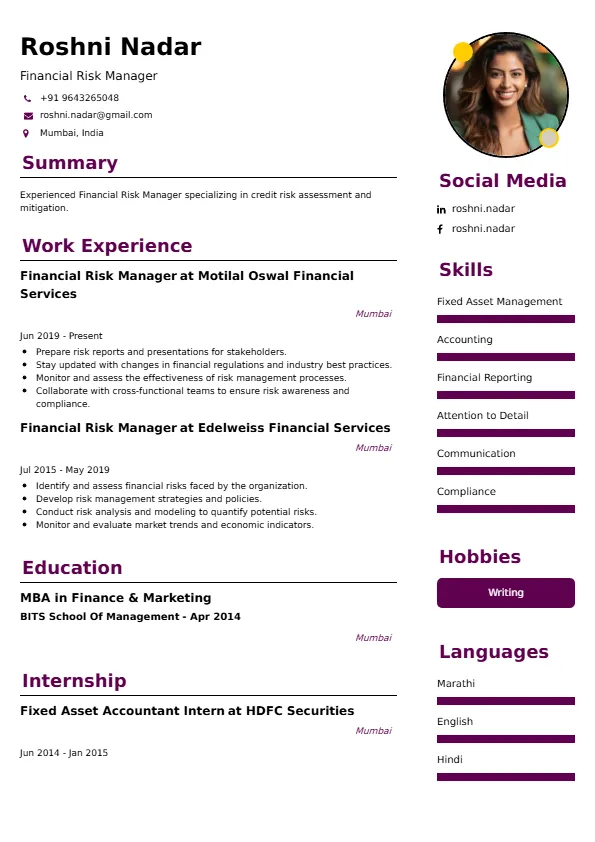
Superbresume.com empowers Fixed Asset Accountants to craft resumes that highlight their technical accounting and subledger accuracy expertise. Our platform offers customizable templates tailored for corporate accounting roles, emphasizing skills like CapEx budget tracking, impairment analysis, asset tagging/physical inventory, and tax depreciation knowledge. With ATS-optimized formats, expert-written content suggestions, and real-time resume analysis, we ensure your resume aligns with job descriptions. Showcase your experience in streamlining the fixed asset closing process, managing large CapEx budgets, or successfully implementing a new fixed asset module with confidence. Superbresume.com helps you create a polished, results-driven resume that grabs hiring managers’ attention and lands interviews.
How to Write a Resume for a Fixed Asset Accountant
Use Reverse-Chronological Format: List recent fixed asset, corporate accounting, or staff accounting roles first, focusing on measurable asset management and closing achievements.
Highlight Certifications/Degrees: Include credentials like CPA (Certified Public Accountant), Master’s Degree (Accounting/Finance), or specialized ERP/Fixed Asset system certifications (e.g., SAP FA, Oracle Fixed Assets) to boost credibility.
Quantify Achievements: Use metrics, e.g., “Managed the fixed asset subledger for $500M in assets across 10 locations,” or “Reduced fixed asset close time by 2 days through implementation of automated reconciliation scripts,” to show impact.
Incorporate Keywords: Use terms like “Fixed Asset Management,” “Depreciation Calculation (GAAP/Tax),” “Capital Expenditures (CapEx),” “Fixed Asset Subledger (SAP/Oracle),” “Internal Controls (SOX),” “Asset Disposal/Impairment,” or “General Ledger Reconciliation” from job descriptions for ATS.
Detail Technical/System Skills: List expertise in specific ERP fixed asset modules, depreciation methods (straight-line, DDB, MACRS), Excel for modeling/reconciliation, and coordination with engineering/operations teams in a dedicated skills section.
Showcase Closing/Audit Success: Highlight 3-4 key responsibilities or projects (e.g., leading the annual physical inventory, managing a complex asset retirement obligation, coordinating the external audit of fixed assets), detailing the scope and the compliance/accuracy result.
Emphasize Soft Skills: Include meticulous attention to detail, strong analytical ability, adherence to deadlines, cross-functional collaboration, and technical accounting rigor.
Keep It Concise: Limit your resume to 1-2 pages, focusing on relevant fixed asset, accounting, and system proficiency experience.
Proofread Thoroughly: Eliminate typos or jargon for a professional document.
Automation of Reconciliation: Highlight experience using advanced Excel (VBA, Power Query) or specialized tools (BlackLine) to automate the reconciliation between the fixed asset subledger and the general ledger.
Asset Tagging and Physical Inventory: Showcase experience leading or coordinating the physical verification of assets, ensuring accurate tagging, and resolving discrepancies with the subledger.
Impairment and Valuation Analysis: Detail involvement in testing assets for impairment (ASC 360) and performing basic valuation analysis for asset disposals or acquisitions.
Tax Depreciation vs. Financial Reporting: Emphasize knowledge of and experience managing the difference between GAAP/IFRS depreciation and tax depreciation schedules (MACRS).
Metrics-Driven Achievements: Use results like “Maintained 99.9% fixed asset subledger accuracy across all month-end closes” or “Managed the fixed asset component of a $50M annual CapEx budget.”
Lease Accounting (ASC 842) Integration: Include experience managing assets acquired through capital leases and ensuring their proper classification and depreciation under the new standard.
System Implementation and Integration: Highlight experience supporting the implementation, configuration, or testing of a new ERP fixed asset module.
Choose Superbresume.com to craft a Fixed Asset Accountant resume that stands out in the corporate accounting sector. Our platform offers tailored templates optimized for ATS, ensuring your skills in fixed asset lifecycle, depreciation technicals, and subledger reconciliation shine. With expert guidance, pre-written content, and real-time feedback, we help you highlight achievements like reducing close time or managing large capital projects efficiently. Whether you focus on GAAP compliance or system integrity, our tools make it easy to create a polished, results-driven resume. Trust Superbresume.com to showcase your expertise in maintaining accurate, compliant, and well-controlled fixed asset records. Start building your career today!
20 Key Skills for a Fixed Asset Accountant Resume
| Fixed Asset Subledger Management (Acquisition to Disposal) | Depreciation Calculation (GAAP/IFRS) |
| Capital Expenditures (CapEx) Tracking & Budgeting | General Ledger (GL) Reconciliation |
| Fixed Asset Modules (SAP FA/Oracle Fixed Assets) | Internal Controls Over Fixed Assets (SOX) |
| Asset Tagging & Physical Inventory Coordination | Technical Accounting (ASC 360/842) |
| Asset Impairment Analysis | Tax Depreciation (MACRS) Familiarity |
| Excel Modeling & Advanced Functions | Audit Coordination (Fixed Assets) |
| Accounting Close Cycle Management | Fixed Asset Rollforward Preparation |
| System Implementation Support | Cross-Functional Collaboration (Eng/Ops) |
| Meticulous Attention to Detail | Data Integrity & Accuracy |
10 Do’s for a Fixed Asset Accountant Resume
Tailor Your Resume: Customize for the company’s industry (e.g., manufacturing/utility with high CapEx, tech with complex software capitalization) and ERP system.
Highlight Certifications/Training: List CPA license (or progress) and relevant ERP/Fixed Asset certifications prominently.
Quantify Achievements: Include metrics on the size of the asset base managed (dollar value), CapEx budget tracked, close time reduction, or accuracy rate.
Use Action Verbs: Start bullet points with verbs like “managed,” “calculated,” “reconciled,” “streamlined,” or “oversaw.”
Showcase Audit/Closing Success: Detail responsibilities involving annual audits, physical counts, or critical period-end closing tasks.
Include Soft Skills: Highlight meticulous attention to detail, analytical rigor, and adherence to deadlines.
Optimize for ATS: Use standard accounting section titles and incorporate key fixed asset, compliance, and system terms.
Keep It Professional: Use a clean, consistent font and professional accounting layout.
Emphasize Subledger Mastery: Clearly articulate experience managing the fixed asset module and ensuring its integrity.
Proofread Carefully: Ensure no typos or errors in financial data, terminology, or compliance references.
10 Don’ts for a Fixed Asset Accountant Resume
Don’t Overload with Jargon: Avoid confusing, internal company acronyms; use standardized GAAP/IFRS and fixed asset terminology.
Don’t Exceed Two Pages: Keep your resume concise, focusing on high-impact fixed asset and technical accounting achievements.
Don’t Omit Dates: Include employment dates for career context.
Don’t Use Generic Templates: Tailor your resume specifically to the technical and control duties of a Fixed Asset Accountant.
Don’t List Irrelevant Skills: Focus on fixed assets, CapEx, depreciation, reconciliation, and ERP systems.
Don’t Skip Metrics: Quantify results wherever possible; link achievements to asset value, accuracy, or closing speed.
Don’t Use Complex Formats: Avoid highly stylized elements or confusing graphics.
Don’t Ignore Controls: Include explicit experience maintaining SOX/internal controls over the fixed asset process.
Don’t Include Outdated Experience: Omit low-level bookkeeping or non-accounting jobs over 15 years old.
Don’t Forget to Update: Refresh for new CapEx budget cycles, successful system implementations, or advanced technical accounting knowledge (ASC 842).
5 FAQs for a Fixed Asset Accountant Resume
Prioritize ERP Fixed Asset module proficiency, depreciation calculation (GAAP/Tax), CapEx tracking, GL reconciliation, and internal controls (SOX).
Use standard accounting section titles, avoid graphics, and include keywords like “Fixed Asset Subledger,” “CapEx,” and “Depreciation.”
Yes, knowledge of tax depreciation methods (MACRS) and deferred tax is valuable and should be highlighted.
Detail the complexity of the close (e.g., large volume, multiple entities) and the resulting quantified reduction in time (e.g., 2-day reduction in close cycle).
Use a reverse-chronological format to emphasize your most recent, high-impact fixed asset and technical accounting achievements.
Get 5x more interviews with our crafted Resumes. We make resumes that land jobs.

Get a Free Customized Cover Letter with Resume Expert Advice
with every resume order placed, you will get a free Customized Cover letter.